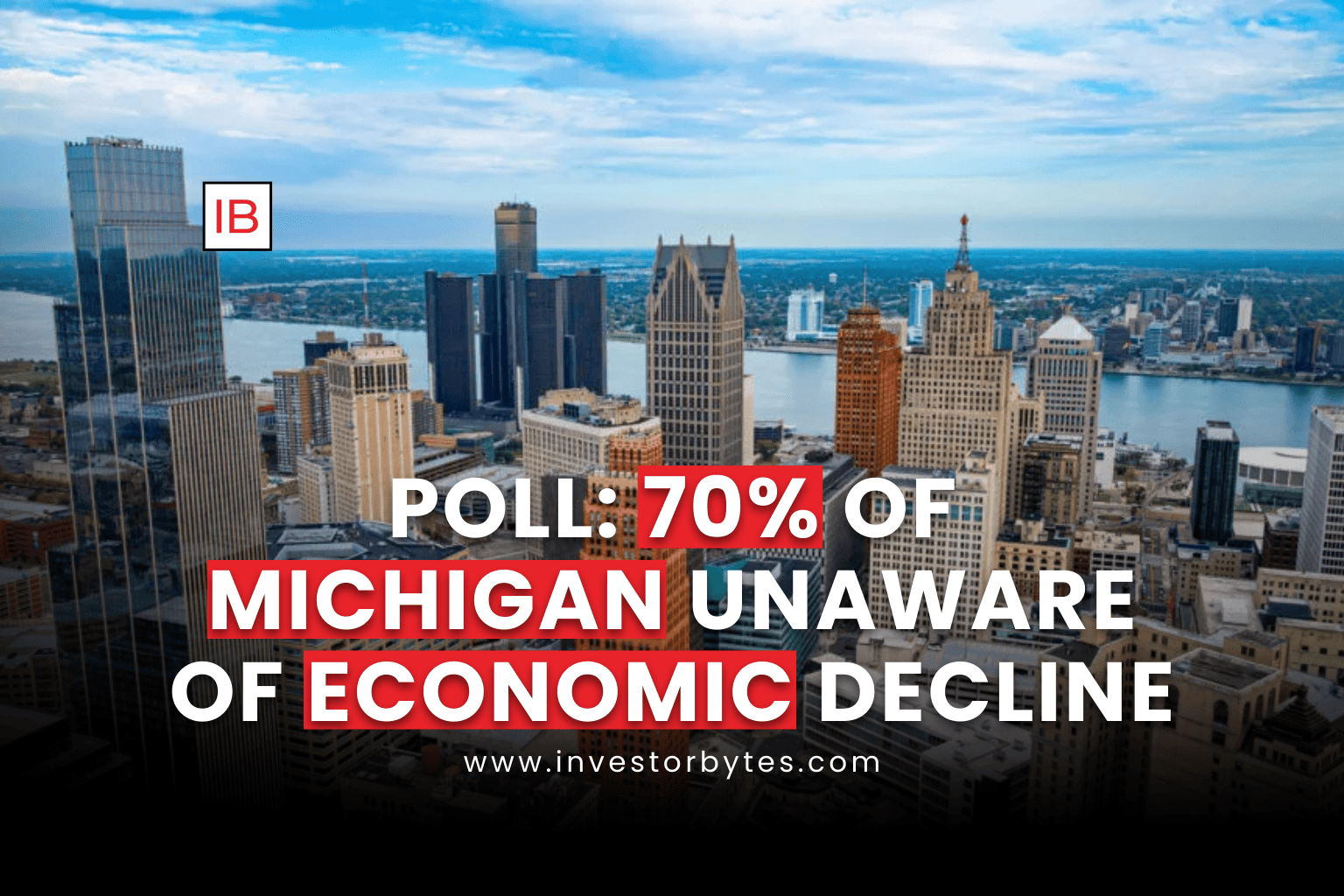
Detroit Regional Chamber released a statewide poll that has ignited a major debate regarding the gap between public perception and economic reality in Michigan. The data reveals that while Michigan’s actual national rankings in education and income have plummeted to the bottom quartile, nearly 70% of voters are either unaware of this decline or believe the state is performing significantly better than it is.
The poll, conducted by the Glengariff Group, describes a state in a “quiet crisis,” where business and education leaders are now sounding the alarm to a population that largely views the state’s performance as “middle of the pack.”
The Perception Gap: Rankings vs. Reality
The poll asked 600 registered voters to estimate where Michigan ranks among the 50 states on key metrics. On average, residents guessed the state ranked between 25th and 28th. However, actual data from the 2026 report tells a much grimmer story:
| Metric | Voter Perception (Avg) | Actual 2026 National Ranking |
| Student Performance in Reading | ~26th | 44th |
| Average Income Per Person | ~27th | 40th |
| Unemployment Rate | ~28th | 45th |
| Attracting High-Tech Jobs | ~25th | 45th |
| College Degree Attainment | ~27th | 33rd |
Sandy K. Baruah, CEO of the Detroit Regional Chamber, stated that “our house is on fire,” noting that in just one generation, Michigan has fallen from a top 20 state to a bottom 10 state in per capita income and educational achievement.
Economic Sentiment and Partisan Divides
Despite the poor rankings, the poll found that Michiganders are deeply divided on the current trajectory of the state, often influenced by political affiliation rather than economic data:
Right Track vs. Wrong Track: Approximately 49.6% of voters believe the state is on the “right track” generally, while 42.1% say the economy is on the “wrong track.”
The Inflation Factor: Among those pessimistic about the economy, 34.8% cited the high cost of goods and inflation as their primary concern.
The Wealth Gap: Consumer sentiment in February 2026 showed a stark divergence; sentiment among stockholders and college graduates is 30% higher than those without equities or degrees, who feel more vulnerable to economic risks.
The “Wake-Up Call” for Policy
The Detroit Regional Chamber is using these findings to advocate for a “K-12 + 2” culture, emphasizing that a high school diploma is no longer sufficient for the 2026 innovation economy. Experts argue that without a massive push toward postsecondary credentials and skills training, Michigan risks being “dead last” in a changing global market.