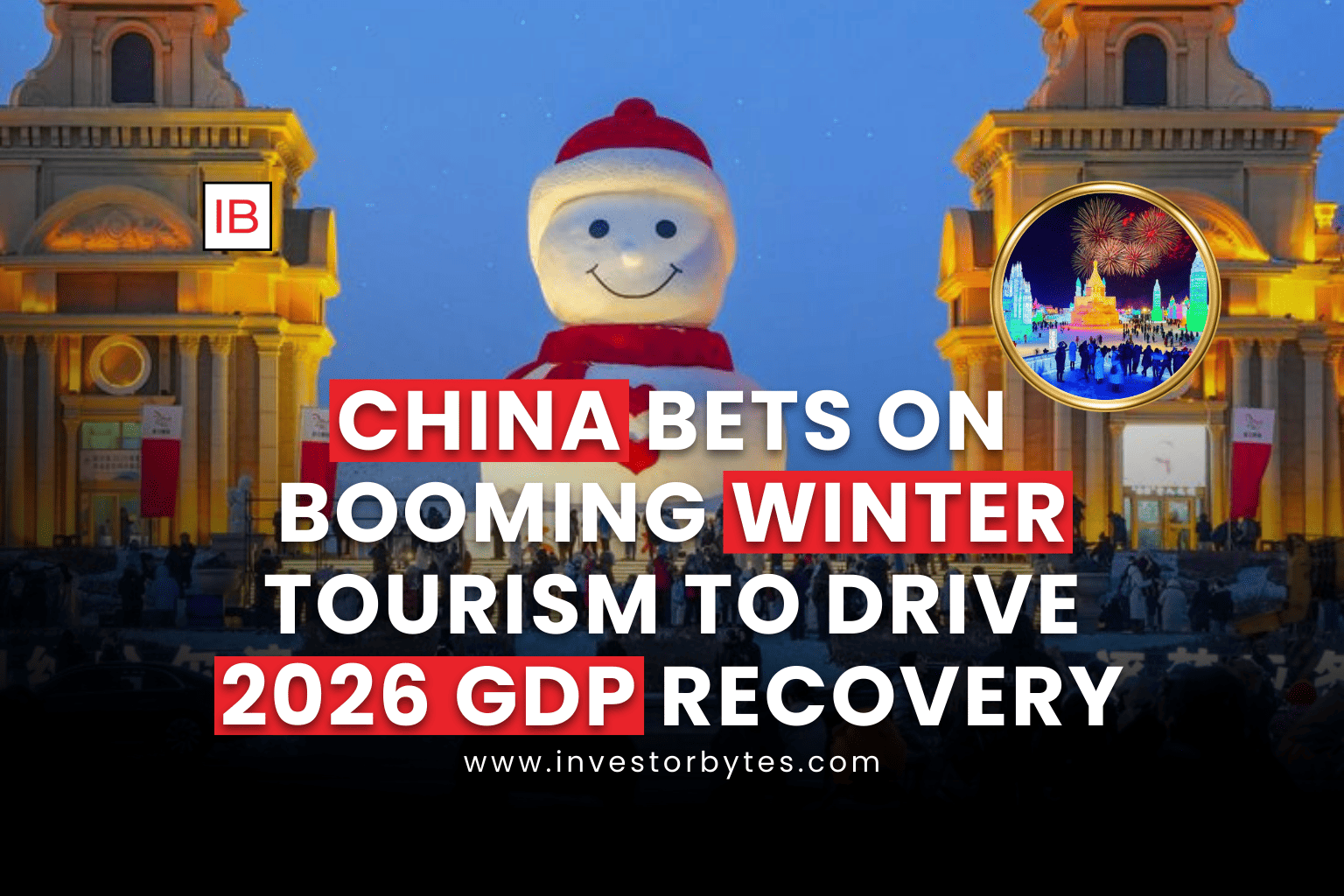
In mid-February 2026, the Chinese government has intensified its strategic pivot toward the “winter economy,” positioning ice-and-snow tourism as a primary engine to stabilize Q1 GDP and offset the ongoing contraction in the real estate sector.
According to the China Tourism Academy (CTA) report released in Harbin, the scale of the country’s ice-and-snow economy officially surpassed the 1 trillion yuan mark at the end of 2025. For the current 2025–2026 winter season, authorities project 360 million leisure trips, generating direct revenue of approximately 450 billion yuan ($62.5 billion).
The “Ice-and-Snow” Economic Engine
The strategy focuses on transforming “cold resources” into “hot growth” by shifting from simple sightseeing to high-value service consumption.
Harbin as the 2026 Benchmark: Harbin has maintained its status as the top winter destination. During the recent three-day New Year period, the city welcomed 4.1 million travelers, who spent a record 5.56 billion yuan. The Harbin Ice and Snow World expanded to a record 1.2 million square meters this season to meet surging demand.
The “Southward Expansion” Strategy: A key development in 2026 is the explosion of indoor winter sports in southern China. Regions like Guangdong and Zhejiang now account for 30% of national investment in winter infrastructure, allowing residents in warmer climates to contribute to the winter economy year-round.
Inbound Tourism Surge: Driven by optimized visa-free entry policies, inbound bookings for winter destinations have nearly doubled year-on-year. Travelers from Southeast Asia (Thailand, Vietnam, and Malaysia) represent nearly 70% of foreign winter tourists, seeking “snow experiences” unavailable in their home regions.
Macroeconomic Impact: Offsetting the Property Slump
The “winter economy” is a central pillar of China’s 15th Five-Year Plan (2026–2030), which prioritizes services-led growth over traditional property investment.
| Metric | 2025/2026 Season Forecast | Growth / Impact |
| Total Revenue | 450 Billion Yuan | Vital for Q1 GDP stabilization. |
| Total Industry Scale | 1.1 Trillion Yuan | 11% increase in related enterprises since 2025. |
| Participant Count | 360 Million People | Driven by a 74.8% participation intent rate. |
| Property Context | -19.9% Construction | Winter services act as a “counter-cyclical” buffer. |
Strategic Policy Support for 2026
To ensure the momentum lasts beyond the seasonal peak, Beijing has introduced several “Consumption Stimulus” measures:
“Shopping in China” Initiative: Launched in Harbin in January 2026, this program integrates winter travel with subsidized retail and cultural spending.
Infrastructure Subsidies: The Ministry of Finance extended interest subsidies for service-sector loans through the end of 2026, specifically targeting MSMEs in the tourism and equipment manufacturing chains.
Winter Sports Culture: Specialized “snow holiday” school breaks and subsidized transport for heavy winter gear (skis/snowboards) have been implemented to foster long-term grassroots demand.