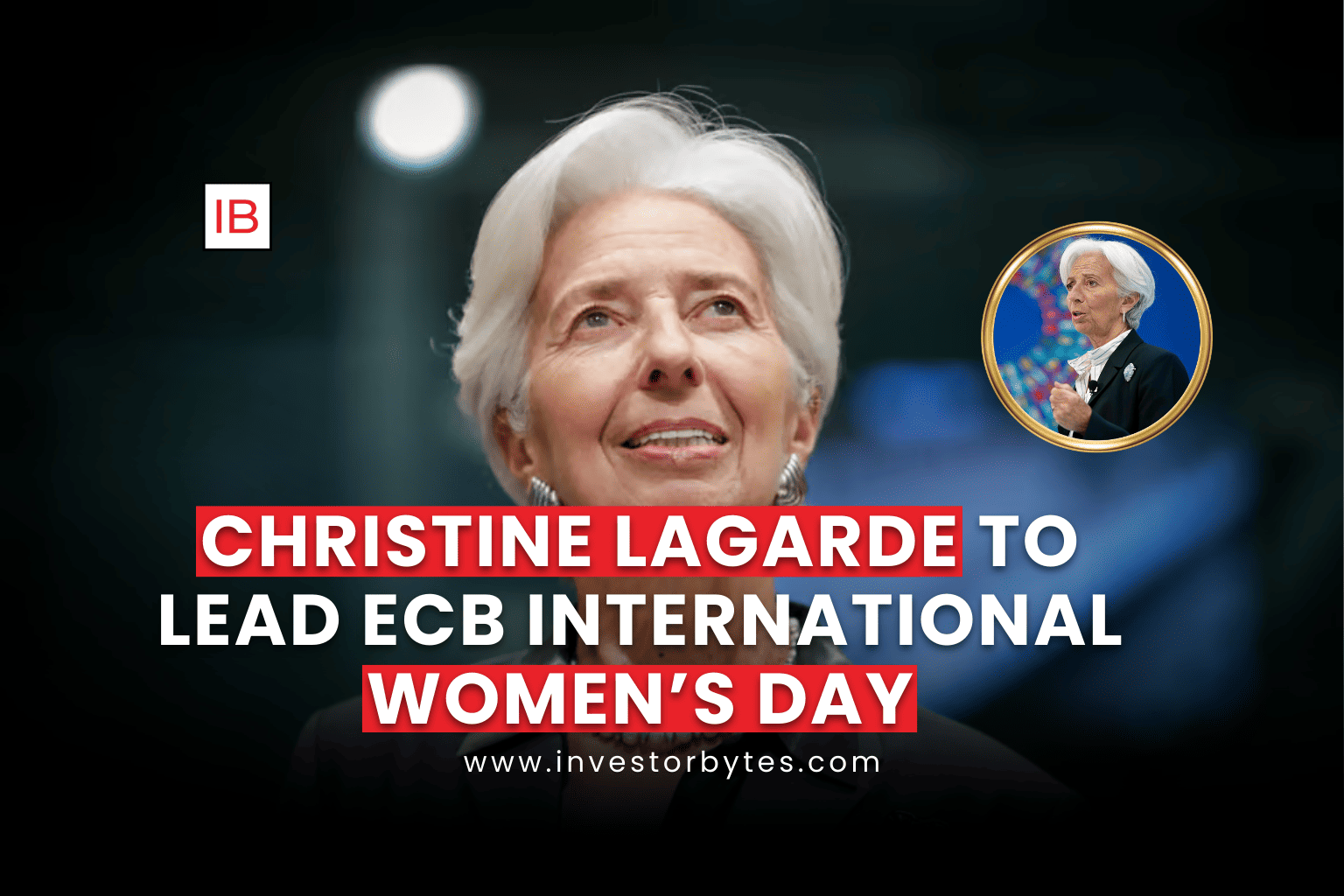
The European Central Bank (ECB) kicked off its high-profile celebrations for International Women’s Day (IWD) 2026 with a landmark event in Frankfurt. While global IWD festivities culminate on March 8, ECB President Christine Lagarde led a preemptive, strategic discussion centered on a critical economic barrier: the gender gap in financial literacy.
This 2026 summit, titled “Closing the Gender Gap in Financial Literacy,” marks a significant transition in Lagarde’s leadership—moving beyond simple representation toward “reality-based” economic empowerment for women across the Eurosystem.
The Lagarde Vision: Financial Literacy as Economic Power
Under Christine Lagarde’s presidency, the ECB has redefined diversity not just as a social goal, but as a “strategic performance driver.” In her 2026 address, Lagarde emphasized that in an era of high inflation and digital currency evolution, financial knowledge is the ultimate form of protection for women.
The Current Reality: A 12% Understanding Gap
The data presented at the 3-2-26 roundup highlights a persistent “stunning” disparity in how economic concepts are understood across genders:
The Literacy Divide: Only 15% of women in Europe demonstrate a high level of financial literacy, compared to 27% of men.
The Inflation Penalty: Previous Eurobarometer data found women are 12 percentage points less likely to accurately define the concept of inflation, a gap that Lagarde noted has direct consequences for household savings and long-term wealth.
Poverty Risks: Women in Europe are 80% more likely to retire in poverty, largely due to a combination of the gender pay gap and a lack of confidence in complex investment products.
The Five Commitments: A 2026 Progress Report
A major highlight of the event was the review of the Five Commitments established by the ECB and National Central Banks a year prior. These commitments serve as a professional roadmap for coordinated action across the Eurozone:
Awareness & Advocacy: Raising the profile of financial education within national communities.
The Literacy Network: Establishing a formal Eurosystem network to share best practices and resources.
National Integration: Leveraging national competent authorities to use their consumer protection functions to educate women.
Harmonized Data: Developing a standardized European dataset to track financial literacy progress with professional accuracy.
Teachable Moments: Focusing education on three life-altering phases: early education, taking out major loans (mortgages/business), and building a pension.
Key Speakers and Global Leadership
The discussion, moderated by Patrick Jenkins of the Financial Times, featured a panel of “glass-ceiling breakers” and central banking heavyweights:
Tabea Bucher-Koenen: Professor at the Mannheim Institute for Financial Education, who provided analytical depth on persistent gender disparities.
Joachim Nagel: President of the Deutsche Bundesbank, discussing national strategies for school-based financial education.
Yannis Stournaras: Governor of the Bank of Greece, focusing on financial inclusion in Southern Europe.
This gathering underscores the unique position of Europe in 2026, where four of the continent’s most powerful institutions—the ECB, European Commission, European Parliament, and the IMF—are all led by women for the first time in history.