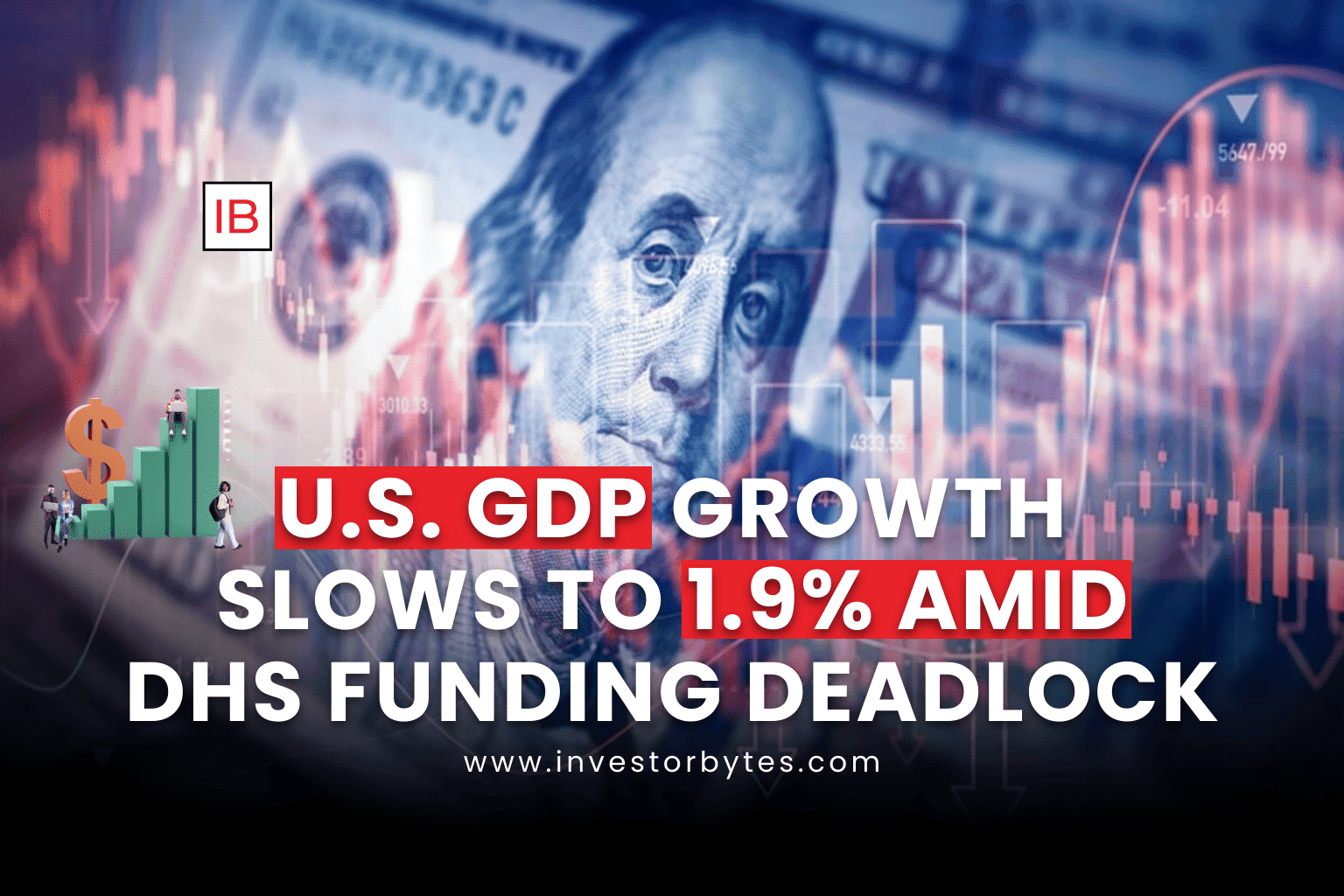
On Monday, February 23, 2026, the United States economy is operating under a “split-screen” reality. While long-term indicators like business investment in AI remain robust, the immediate landscape is marred by a partial government shutdown and a high-stakes legal battle over trade tariffs.
The current economic climate is defined by a sharp cooling in growth, with the Q4 2025 GDP recently reported at a sluggish 1.4%, a significant drop from the 4.4% seen earlier in the year.
The Fiscal Standoff: DHS Shutdown & Global Entry Suspension
As of today, the Department of Homeland Security (DHS) has been partially shut down for 10 days, following a funding lapse on February 14.
The Impasse: Negotiations between the White House and Congressional Democrats are currently stalled over demands for a formal “Code of Conduct” for federal agents and a requirement for officers to show identification during immigration enforcement.
Operational Chaos: Earlier today, the DHS announced the immediate suspension of Global Entry and TSA PreCheck enrollments, a move that has drawn sharp criticism from the travel industry.
The “Quiet” Shutdown: Unlike previous shutdowns, over 95% of the federal government remains funded through September 30. However, the DHS lapse is creating significant friction at ports of entry and airports, specifically as a Major Nor’easter complicates travel along the East Coast.
The Tariff Whiplash: From SCOTUS to Section 122
The economic outlook took another turn on Friday, February 20, when the U.S. Supreme Court struck down President Trump’s sweeping global tariffs, ruling that the administration had exceeded its authority under the IEEPA.
The Pivot: In an immediate counter-move, the President invoked Section 122 of the Trade Act of 1974, upping a new temporary global tariff from 10% to 15%, effective tomorrow, February 24.
Implication: While the court ruling provided a temporary legal victory for importers, the new 15% surcharge ensures that inflationary pressure remains a concern. JPMorgan research indicates that midsize U.S. businesses saw their tariff payments triple over the last year, with 90% of the costs being absorbed by domestic firms and consumers.
Consumer Resiliency vs. The “K-Shaped” Reality
Despite the political and trade volatility, American consumers have not yet fully retreated, though their behavior is shifting.
| Economic Metric | 2026 Current Reading | Market Sentiment |
| GDP Growth (Q4 2025) | 1.4% (Actual) | Bearish / Slowdown |
| Consumer Spending | 2.2% (Decelerating) | Cautious / Price-Sensitive |
| Unemployment Rate | 4.3% | Stable / Historically Low |
| Inflation (PCE Index) | 2.9% (Rising) | Hawkish / Fed Watch |
The Spending Gap: While upper-income households continue to drive growth—bolstered by a surging stock market and AI-related investments—lower-income consumers are increasingly turning to warehouse retailers and discounters to manage elevated cost pressures.