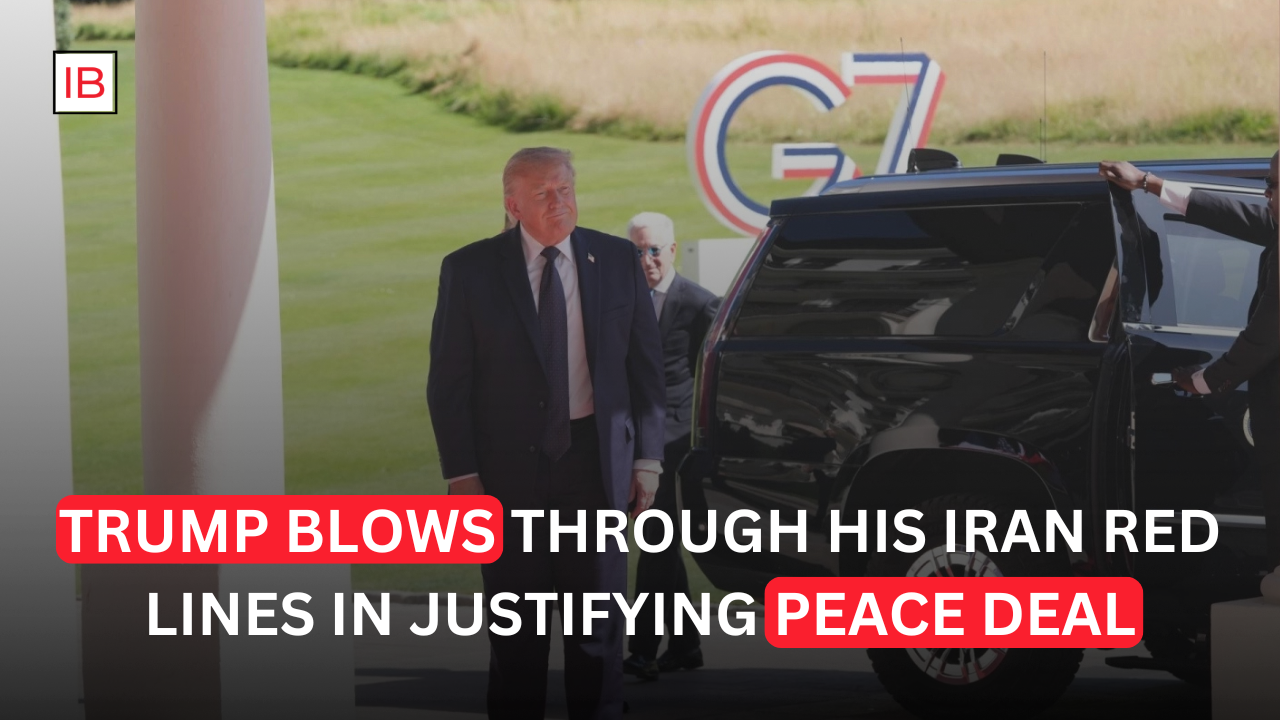
President Faces Criticism Over Concessions to Tehran. President Donald Trump is defending the newly announced US-Iran peace agreement after critics argued that the deal relaxes several positions that Washington had previously described as non-negotiable.
Speaking after the agreement was unveiled, Trump maintained that the deal achieves its primary objective of preventing Iran from obtaining a nuclear weapon. However, he also signaled a more flexible approach on issues that have long been at the center of US policy toward Tehran, including uranium enrichment, ballistic missiles and access to frozen Iranian assets.
Shift in Position Raises Questions
Before the conflict, Trump and several senior US officials had repeatedly argued that Iran should not be allowed to enrich uranium and that its ballistic missile capabilities posed a major security threat.
Under the new framework, however, Iran appears likely to retain the ability to enrich uranium for civilian purposes under future monitoring arrangements. Trump suggested that allowing limited enrichment for energy production could be acceptable if Iran remains committed to not developing nuclear weapons.
The agreement has also drawn attention because it does not require the immediate dismantling of Iran’s ballistic missile program. Trump downplayed the significance of the issue, arguing that broader security concerns and regional stability were more important priorities at this stage of negotiations.
Frozen Assets and Economic Relief Included
Another controversial aspect of the deal involves financial relief for Iran. The framework is expected to provide sanctions relief and could allow access to billions of dollars in Iranian assets that have remained frozen abroad for years.
Supporters of the agreement argue that economic incentives are necessary to secure cooperation and maintain the ceasefire. Critics, however, warn that releasing funds too early could reduce Washington’s leverage in future negotiations.
The broader agreement also includes provisions aimed at restoring oil exports, reopening trade routes and supporting economic recovery after months of conflict. These measures are expected to have significant implications for global energy markets.
White House Emphasizes End of Conflict
Administration officials have defended the agreement as a practical solution to end a costly war that disrupted global energy supplies and increased geopolitical tensions.
Trump argued that avoiding a prolonged conflict and stabilizing international markets were among the most important reasons for reaching the deal. He has also pointed to the reopening of the Strait of Hormuz as a major achievement that could help reduce pressure on global oil prices.
Political Backlash Emerging
The agreement is generating criticism from both political opponents and some traditional supporters of the administration. Several lawmakers and foreign policy analysts have questioned whether the concessions offered to Tehran are consistent with earlier US objectives.
Some critics argue that the framework resembles previous diplomatic efforts that Trump himself once criticized, while supporters contend that the agreement reflects the realities of ending a conflict without further escalation.
Future Negotiations Will Be Crucial
The current agreement is considered an interim framework rather than a final settlement. Negotiators are expected to spend the next 60 days working on unresolved issues, including Iran’s nuclear program, regional security concerns and long-term sanctions policy.
For now, the deal represents a significant diplomatic breakthrough that has reduced the immediate risk of renewed conflict. Whether it ultimately delivers lasting peace or becomes a source of new political disputes will depend on the outcome of the next round of negotiations.