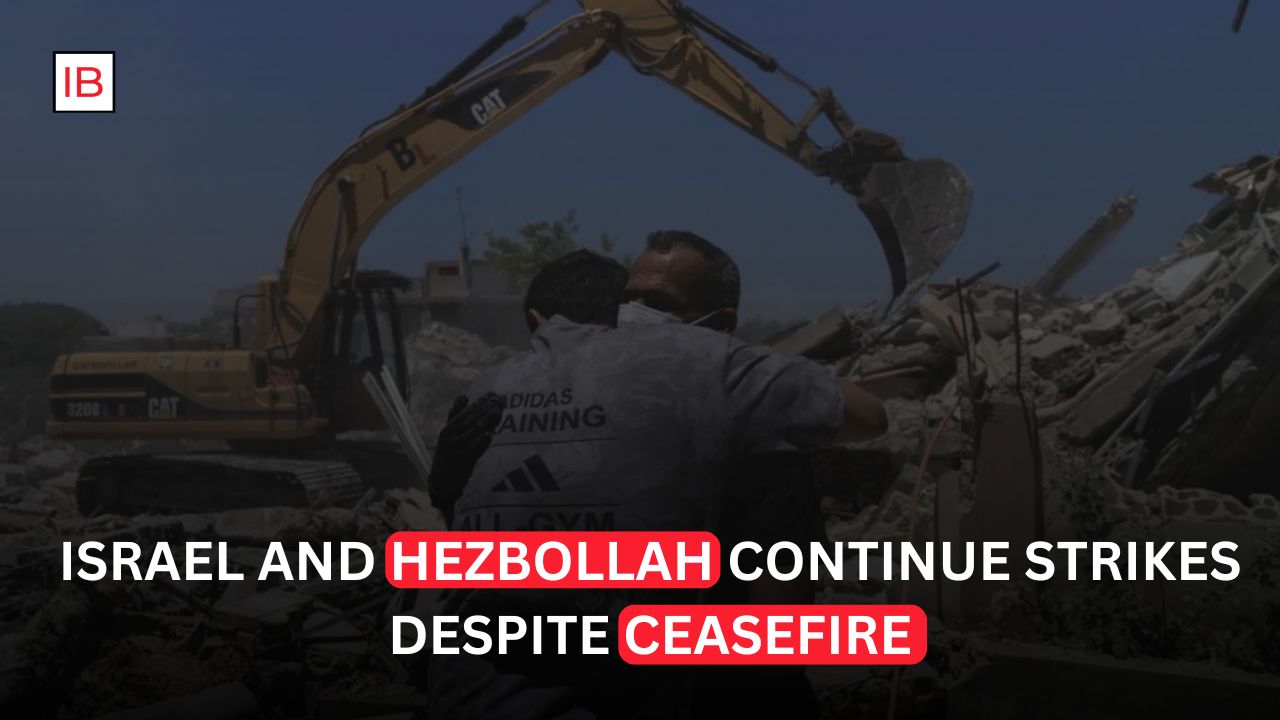
Renewed Violence Raises Doubts About Regional Peace Efforts. Less than 24 hours after a new ceasefire agreement was announced, Israel and Hezbollah exchanged fresh attacks across southern Lebanon, raising concerns about the durability of the truce and the future of wider regional peace efforts.
Lebanese officials reported that at least 23 people were killed in Israeli airstrikes across southern Lebanon, including 16 deaths in the Nabatieh district and seven in the Saida region. Dozens more were injured as warplanes, drones and artillery targeted multiple locations.
Among the victims was a family of four, including two children, who were killed in the town of Barish, according to Lebanese state media.
Israel Says Strikes Targeted Hezbollah Positions
The Israeli military said it launched attacks on dozens of Hezbollah targets after the group fired more than 50 projectiles at Israeli forces operating in southern Lebanon.
According to the Israel Defense Forces (IDF), the strikes were aimed at Hezbollah infrastructure and fighters responsible for violating the ceasefire agreement. Israeli officials accused the group of repeatedly breaching the terms of the truce through rocket and artillery attacks.
The military also reported that four Israeli soldiers were killed during recent fighting in southern Lebanon.
Hezbollah Rejects Ceasefire Terms
Despite the ceasefire announcement, Hezbollah officials said they do not recognize the agreement as presented by the United States.
Senior Hezbollah official Hassan Fadlallah stated that the group reserves the right to respond to Israeli military actions and insisted that Israel must fully respect the ceasefire by ending attacks and avoiding any expansion of its military presence in Lebanon.
Hezbollah has repeatedly argued that its operations are linked to Israel’s continued presence in southern Lebanon and has vowed to continue resistance if military operations persist.
US Concerned About Impact on Iran Peace Deal
The renewed fighting has alarmed US officials, who fear the escalation could undermine the recently signed peace agreement between Washington and Tehran.
The deal includes commitments aimed at reducing regional conflicts, including fighting involving Lebanon. American diplomats are now working to prevent the violence from spreading and jeopardizing ongoing negotiations with Iran.
US envoy Steve Witkoff is expected to travel to Switzerland for discussions intended to strengthen the agreement and address unresolved security concerns.
Humanitarian Situation Worsens
The latest wave of strikes has placed additional pressure on hospitals and emergency services across southern Lebanon.
Medical facilities continue treating large numbers of injured civilians while rescue workers search damaged areas for survivors. In several towns, recovery operations have replaced rescue efforts as crews retrieve victims from destroyed buildings.
Local Red Cross workers described the attacks as some of the most intense they have experienced in recent years, highlighting the growing humanitarian toll of the conflict.
Longstanding Disputes Remain Unresolved
Although the ceasefire may have temporarily reduced the risk of a broader regional war, several key disputes remain unresolved.
Among the most contentious issues are Israel’s military presence in southern Lebanon and the future of Hezbollah’s armed capabilities. Both sides continue to accuse each other of violating previous ceasefire agreements, contributing to a cycle of retaliation and renewed violence.
Earlier attempts to halt the fighting have repeatedly collapsed, with cross-border strikes continuing despite diplomatic efforts.
Uncertain Path Forward
The latest escalation highlights the fragile nature of the ceasefire and the challenges facing regional peace efforts.
While diplomats continue working to preserve the agreement, ongoing military operations suggest that a lasting resolution remains difficult to achieve. Analysts warn that unless underlying political and security disputes are addressed, further violence could threaten broader diplomatic progress across the Middle East.
For now, civilians on both sides of the border remain caught between ceasefire declarations and continuing military action, as hopes for lasting peace face another major test.