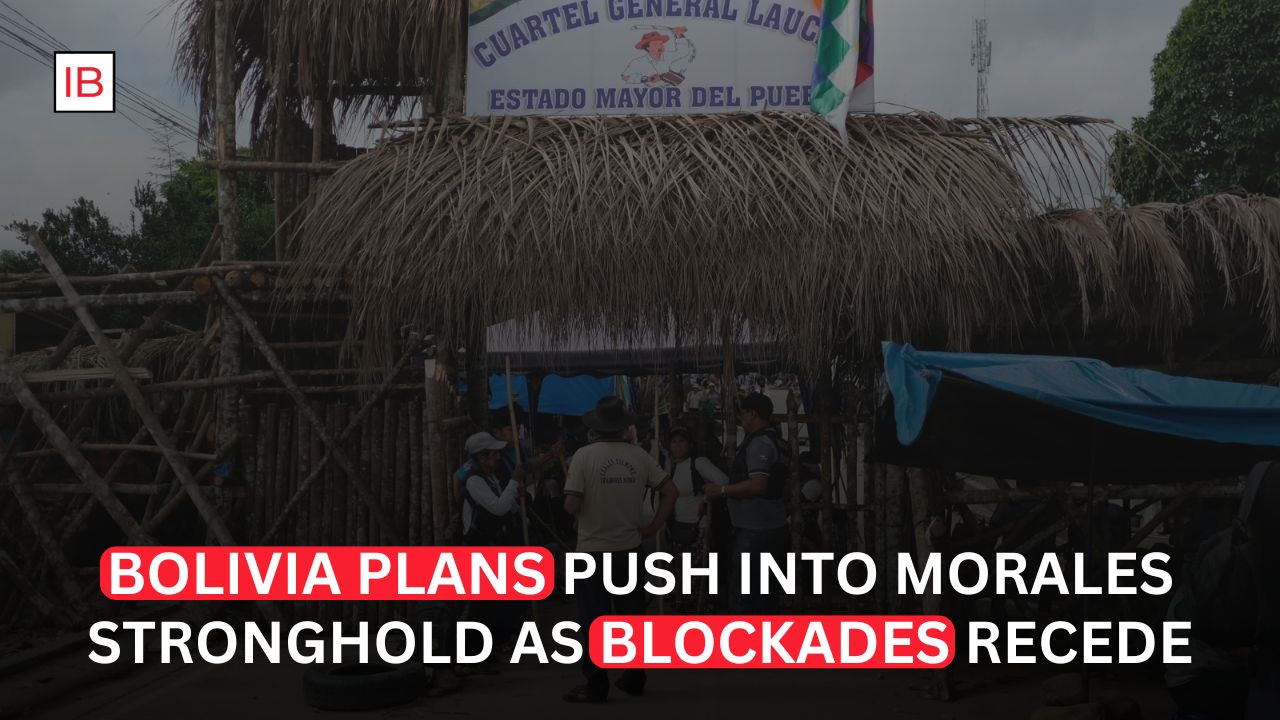
Government Targets Protest Areas After Weeks of Unrest and Economic Disruption. Bolivia’s government is preparing to expand operations into the Chapare region, a stronghold of former President Evo Morales, as nationwide blockades begin to decline following weeks of political unrest and economic disruption.
President Rodrigo Paz’s administration has moved to restore transport routes after declaring a state of emergency, giving security forces greater authority to clear roads blocked by protesters. The government says the measures are necessary to restore supplies of fuel, food and medicine, while opposition groups accuse authorities of escalating tensions.
Chapare Remains Center of Resistance
The next major challenge for the government is the Chapare region, where Morales retains strong political influence among coca growers and rural communities.
While many roadblocks across Bolivia have been removed or reduced, resistance remains concentrated in Morales’ traditional base. Authorities are considering further action in the area as they attempt to fully reopen key transportation routes.
Morales, who remains a major political figure despite being out of office, has denied accusations that he is organizing unrest and has argued that the protests reflect public anger over economic hardships and government policies.
Blockades Ease After Emergency Measures
The protests, which lasted for several weeks, severely affected Bolivia’s economy by blocking highways and disrupting the movement of essential goods.
Government officials reported progress after negotiations with some protest groups, reducing the number of active blockades. However, major demands from protesters, including economic relief and opposition to government reforms, remain unresolved.
The unrest was initially triggered by President Paz’s economic measures, including the removal of long-standing fuel subsidies, which increased pressure on households already facing inflation and shortages.
Government Faces Political Pressure
The crisis has become a major test for President Rodrigo Paz, who came to power promising economic reforms and investment growth.
Supporters of the government argue that the reforms are needed to stabilize Bolivia’s finances, while critics say the measures have placed too much pressure on ordinary citizens.
The administration has accused some protest leaders of attempting to destabilize the country, while opposition groups say the government must address the economic problems behind the unrest.
Economic Damage Mounts
The prolonged blockades have caused significant disruption across Bolivia.
Fuel shortages, supply problems and transportation delays have affected businesses, hospitals and communities. The government has prioritized reopening highways to restore normal movement and prevent further economic damage.
Morales’ Influence Remains Strong
Despite leaving office years ago, Evo Morales continues to influence Bolivia’s political landscape.
His supporters remain powerful in rural areas, particularly in Chapare, where many view him as a defender of indigenous and working-class interests. Critics, however, accuse him of using social unrest to challenge the current government.
Uncertain Path Ahead
Although the reduction in blockades has lowered immediate pressure on the government, Bolivia’s political crisis is far from over.
The government’s approach toward Morales’ stronghold could determine whether tensions continue to decline or trigger a new wave of confrontation.
For now, authorities are focused on restoring stability, while opposition movements remain determined to push for changes in economic and political policies.