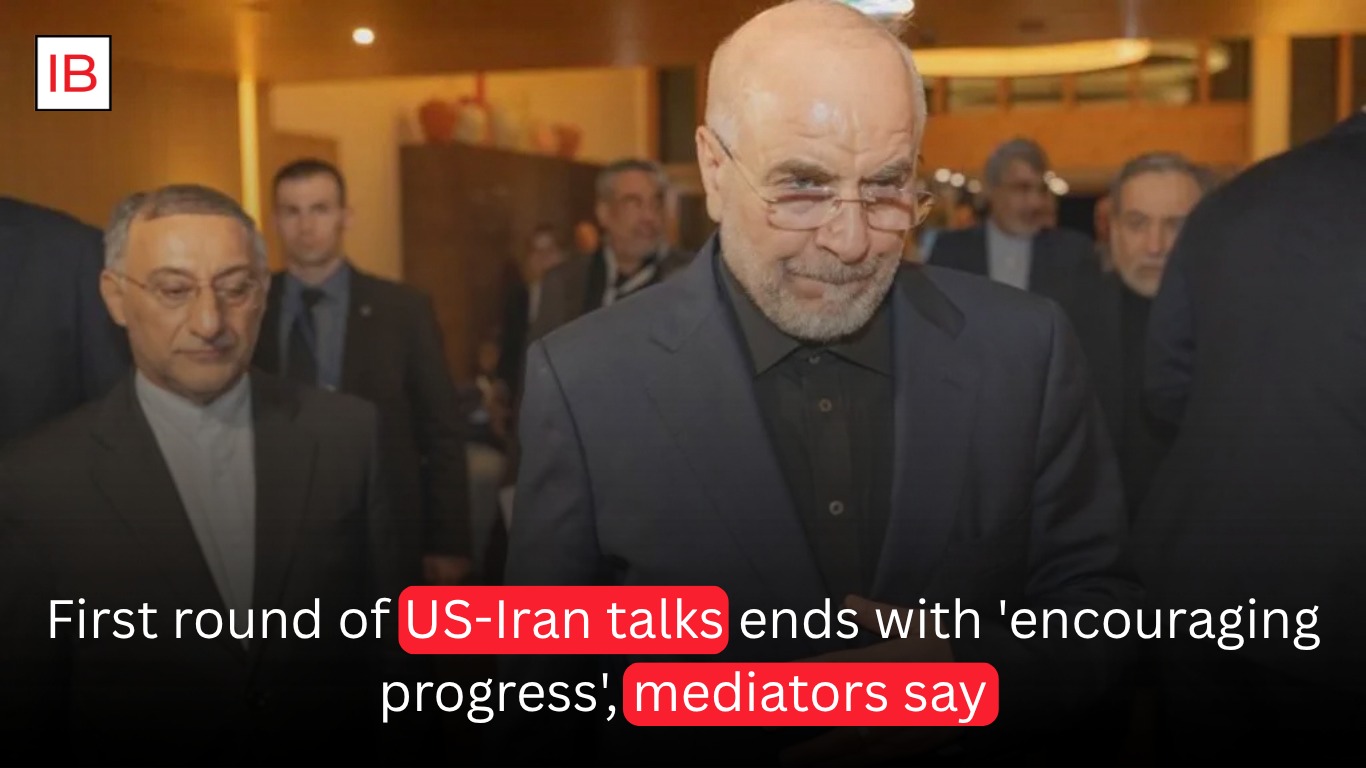
Mediators Announce 60-Day Roadmap Toward Final Agreement. The first round of high-level negotiations between the United States and Iran has concluded in Switzerland with what mediators described as “encouraging progress,” raising hopes for a lasting agreement to end months of conflict and regional instability.
Qatar and Pakistan, which are jointly mediating the talks, announced that both sides had agreed on a roadmap aimed at reaching a comprehensive deal within 60 days. Technical discussions are expected to continue throughout the week as negotiators work on unresolved issues.
Roadmap Agreed for Final Deal
According to a joint statement from the mediators, a newly established High-Level Committee approved a framework designed to guide negotiations toward a permanent settlement.
The agreement lays the foundation for continued technical talks covering security, economic cooperation and nuclear-related issues. Both sides described the discussions as constructive despite ongoing disagreements on several sensitive topics.
Focus Turns to Lebanon
One of the most significant areas of progress involved efforts to reduce violence in Lebanon.
Iranian Foreign Minister Seyed Abbas Araghchi said mediation efforts had produced major advances toward ending the conflict involving Israel and Hezbollah. Negotiators agreed to establish a “de-confliction cell” involving the United States, Iran and Lebanon, with support from Qatar and Pakistan, to help prevent further military escalation.
The mechanism is intended to monitor ceasefire commitments and address security incidents before they develop into wider confrontations.
Strait of Hormuz Remains Key Issue
The talks also focused heavily on the Strait of Hormuz, one of the world’s most important energy shipping routes.
Negotiators agreed to establish a direct communication channel aimed at preventing misunderstandings and ensuring the safe passage of commercial vessels through the waterway. The move comes after recent disputes over the status of the strait raised concerns about global energy supplies and maritime security.
Although Iran previously claimed to have restricted access to the route, shipping data continues to show vessels moving through the strait.
Economic Relief Measures Advance
Iranian officials also highlighted progress on economic issues.
According to Tehran, discussions included sanctions relief, expanded oil and petrochemical exports, partial access to frozen Iranian assets and support for a broader reconstruction and development program. These measures are viewed as important incentives for maintaining diplomatic momentum.
The original memorandum signed earlier this month included provisions aimed at restoring trade and reducing economic pressure on Iran while broader negotiations continue.
Nuclear Talks Still Ahead
Despite progress in several areas, negotiators acknowledged that the most difficult discussions have yet to take place.
Future rounds of talks are expected to focus heavily on Iran’s nuclear program, including uranium enrichment activities, monitoring mechanisms and long-term security guarantees. These issues remain among the most challenging obstacles to a permanent agreement.
US Vice President JD Vance, who is leading the American delegation, said Washington remains interested in transforming relations with Tehran if meaningful progress can be achieved on regional security and nuclear concerns.
Markets React Positively
The signs of diplomatic progress were welcomed by financial markets.
Oil prices declined as investors responded to expectations that tensions in the Middle East could ease and that energy supplies would remain stable. Regional stock markets also recorded modest gains following the announcement of the 60-day roadmap.
Critical Weeks Ahead
While the first round of talks has generated optimism, major challenges remain before a final agreement can be reached.
The success of the negotiations will depend on maintaining stability in Lebanon, ensuring freedom of navigation through the Strait of Hormuz and finding common ground on Iran’s nuclear activities. With technical talks continuing this week, diplomats now face the difficult task of turning early progress into a lasting peace settlement.