A Decade After Brexit, Economists Are Still Debating Its Economic Impact
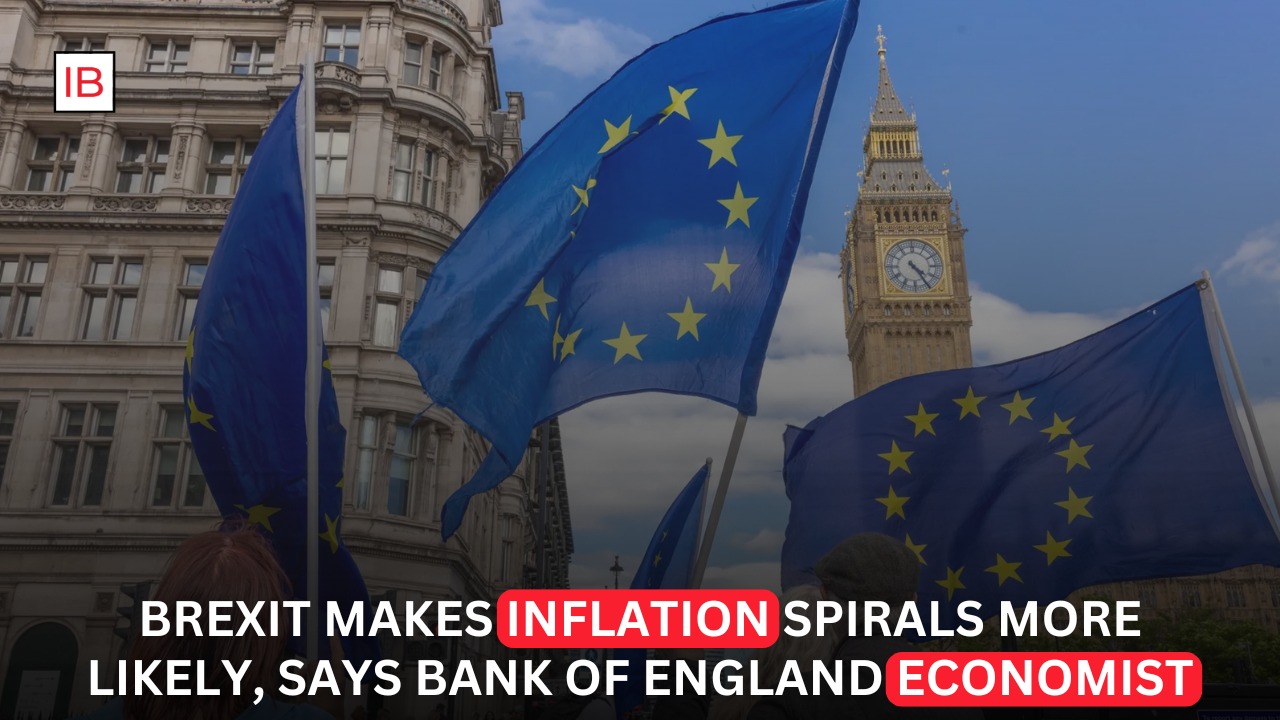
Ten years after the Brexit referendum, the economic consequences of the United Kingdom’s departure from the European Union remain a subject of intense debate. Now, one of the Bank of England’s most senior policymakers has added a new dimension to that discussion: the possibility that Brexit has made inflation more persistent and difficult to control.
Huw Pill, Chief Economist at the Bank of England, recently suggested that Brexit may have increased the likelihood of inflation “spirals” in the UK economy. His comments highlight concerns that structural changes brought about by Brexit have altered the way businesses, workers, and consumers respond to economic shocks.
What Is an Inflation Spiral?
An inflation spiral occurs when rising prices lead workers to demand higher wages, prompting businesses to increase prices further to cover rising labor costs. This cycle can become self-reinforcing, making inflation harder to bring back under control.
Central banks closely monitor these dynamics because persistent inflation often requires higher interest rates and tighter monetary policy, both of which can slow economic growth.
According to Pill, Brexit may have changed the economic environment in ways that make these inflationary pressures more likely to emerge and persist.
How Brexit Could Affect Inflation
One of the key arguments is that Brexit has introduced new trade barriers between the UK and its largest trading partner, the European Union. Increased customs procedures, regulatory differences, and higher administrative costs can raise the cost of importing goods and services.
At the same time, changes in labor mobility have reduced the availability of workers in some sectors, contributing to labor shortages and stronger wage pressures. When businesses face both higher operating costs and higher wage demands, they may pass those costs on to consumers through higher prices.
Economists have long argued that reduced trade efficiency tends to lower productivity and increase costs across the economy. Several studies and analyses published since Brexit suggest that the UK economy has experienced weaker trade growth and investment compared with what might have occurred had the country remained in the EU.
Why This Matters for the Bank of England
The Bank of England’s primary objective is to keep inflation close to its 2% target. However, inflation remains above that level, and policymakers continue to debate how restrictive monetary policy should be.
Pill has repeatedly warned against becoming complacent about inflation risks. He has argued that policymakers should remain cautious because underlying inflationary pressures may be more deeply embedded in the economy than headline figures suggest.
If Brexit has indeed increased the economy’s sensitivity to supply shocks and labor shortages, the Bank may need to maintain tighter monetary conditions for longer periods when inflation rises.
Not the Only Cause of Inflation
It is important to note that Brexit is far from the only factor behind recent inflationary pressures. The UK, like many countries, has faced the economic effects of the COVID-19 pandemic, global supply-chain disruptions, energy market shocks, and geopolitical tensions.
These events contributed significantly to the surge in inflation seen across advanced economies during the early 2020s. However, some economists argue that Brexit amplified these pressures within the UK by reducing economic flexibility and increasing business costs.
Looking Ahead
As the UK economy continues to adapt to life outside the European Union, questions about Brexit’s long-term impact are unlikely to disappear. While opinions differ on the overall costs and benefits of leaving the EU, there is growing evidence that Brexit has altered the structure of the British economy in ways that policymakers must take into account.
For the Bank of England, understanding these structural changes is crucial. If inflation behaves differently in a post-Brexit economy, future interest-rate decisions may need to reflect a new economic reality—one where inflation is not only driven by global events, but also by the lasting effects of a major political and economic transformation.
The debate over Brexit’s economic legacy is far from settled, but one thing is clear: its influence on inflation and monetary policy remains a critical issue for businesses, investors, and households across the United Kingdom.