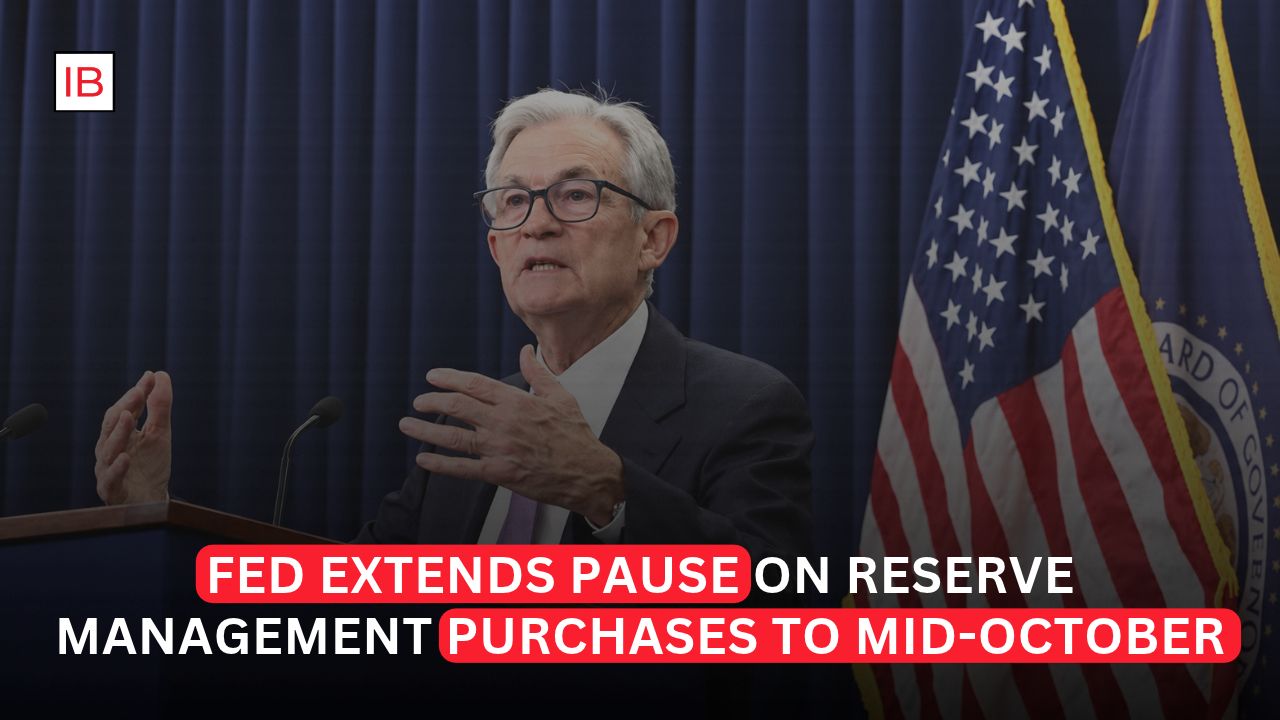
The Federal Reserve is extending its pause on purchases of short-term Treasury securities used to manage banking-system reserves, keeping the program on hold as financial markets face renewed inflation and liquidity concerns.
Fed Keeps Reserve Purchases on Hold
The Federal Reserve has decided to continue holding reserve-management purchases at zero, extending the pause that began in August.
The program was introduced in late 2025 after the Fed determined that bank reserves had moved into an “ample” range. The purchases are designed primarily to ensure that the financial system has enough liquidity rather than to provide traditional economic stimulus.
The New York Fed’s latest operating plans also show that the central bank continues to conduct Treasury reinvestment purchases while setting reserve-management purchases at zero.
What Are Reserve Management Purchases?
Reserve management purchases, or RMPs, are purchases of short-term Treasury securities by the Federal Reserve intended to maintain an adequate level of reserves in the banking system.
Unlike traditional quantitative easing, the program is not primarily designed to push down long-term interest rates or stimulate economic activity.
Instead, the Fed uses the purchases as part of its framework for keeping short-term interest rates under control and ensuring that banks have sufficient reserves to meet payment and liquidity needs.
Program Had Expanded Earlier in 2026
The Fed began RMPs in December 2025 after ending its balance-sheet reduction program.
The purchases initially increased as policymakers sought to maintain an ample level of reserves and prepare the financial system for seasonal changes in liquidity, including the large movements in reserves that can occur around tax deadlines.
By the spring, the Fed had purchased roughly $120 billion through the program, according to Federal Reserve research. The purchases helped increase reserves while reducing the amount of Treasury bills held by private investors.
Why the Pause Matters
Keeping RMP purchases at zero means the Fed is not currently adding additional liquidity through this channel.
That does not mean the central bank has stopped managing its balance sheet altogether. Treasury securities that mature are still being handled through the Fed’s reinvestment operations.
The distinction is important because reserve-management purchases are intended to support the functioning of the monetary system rather than represent a broad return to quantitative easing.
Fed Faces New Inflation Pressure
The decision comes as the Federal Reserve confronts a rapidly changing economic environment.
Recent inflation data have increased expectations that the Fed may need to maintain or even raise interest rates rather than move toward cuts.
Economists surveyed by Reuters on September 14 were widely expecting the Fed to raise its benchmark rate at the September 15-16 meeting, with inflation and higher energy prices adding to pressure on policymakers.
Oil prices have also climbed sharply amid escalating tensions in the Middle East, increasing concerns that higher energy costs could keep inflation elevated for longer.
Bond Markets Under Pressure
The shift in expectations for monetary policy has also affected US government bonds.
The yield on the 10-year Treasury note rose above 5% on September 14, reaching its highest level since 2023. Investors are demanding higher returns as they reassess the outlook for inflation, interest rates and government borrowing.
Higher Treasury yields can translate into more expensive borrowing for households, companies and the US government.
The move therefore adds another layer of pressure for Federal Reserve officials as they attempt to balance inflation control with financial-market stability.
Reserve Levels Remain a Key Focus
The Fed’s challenge is to maintain enough reserves without allowing the banking system to become excessively liquid.
When reserves become too scarce, money-market rates can become volatile and the Fed can lose greater control over its policy rate. If reserves are excessively abundant, however, the central bank’s balance sheet becomes larger than necessary.
The RMP framework was created to navigate that balance.
Federal Reserve officials have emphasized that purchase volumes can be adjusted depending on reserve conditions and developments in money markets.
Markets Watch the Fed’s Next Move
The extension of the pause comes at a particularly sensitive moment for investors.
Markets are now watching not only whether the Fed changes interest rates, but also how policymakers manage the central bank’s balance sheet and liquidity conditions.
Any decision to restart reserve-management purchases could be interpreted as a response to tighter liquidity conditions. Conversely, maintaining the pause could signal that officials believe the banking system currently has sufficient reserves.
What Happens Next
The Fed’s immediate focus will remain on inflation, employment, financial conditions and the availability of reserves across the banking system.
The central bank could eventually resume purchases if reserve levels fall toward uncomfortable levels or money-market conditions become strained.
For now, however, the pause continues.
The decision highlights a significant change in the Fed’s balance-sheet strategy: the central bank is no longer automatically expanding reserves, but is instead waiting for market conditions to determine when additional purchases are necessary.
With inflation pressures rising and Treasury yields reaching multi-year highs, investors will be closely watching the Fed’s next decisions on both interest rates and its balance sheet.