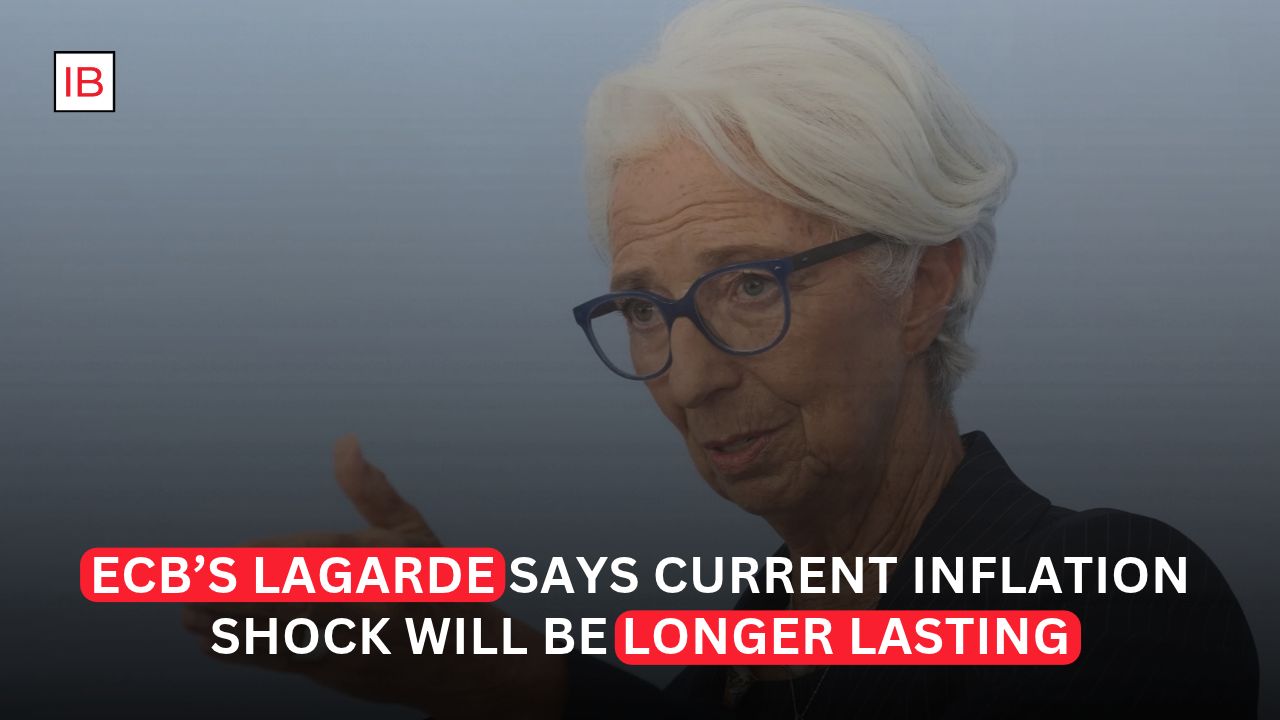
ECB President Christine Lagarde says the latest inflation shock is proving more persistent than previously expected as higher energy prices and the conflict in the Middle East put renewed pressure on the euro-area economy.
ECB Raises Interest Rates
The European Central Bank has raised its key interest rate by 0.25 percentage points to 2.5%, its second increase this year, as policymakers respond to renewed inflationary pressure.
The move comes after a sharp rise in energy prices linked to the conflict involving Iran and disruptions around major regional shipping routes. Euro-area inflation reached 3.3% in August, well above the ECB’s 2% target.
Lagarde described the inflation outlook as unusually uncertain, with policymakers facing the difficult task of containing price pressures without causing unnecessary damage to economic growth.
Inflation May Remain Elevated
Lagarde warned that the current inflation shock could last longer than the ECB had previously anticipated.
The central bank now expects headline inflation to average around 3% in 2026 and 2.5% in 2027, before moving closer to its 2% target in 2028. The ECB’s latest projections indicate that inflation may not return sustainably to target until late 2027.
The change reflects the growing impact of higher oil and gas prices on households and businesses across the euro area.
Middle East Conflict Drives Energy Costs
Energy prices have become the biggest source of concern for European policymakers.
The escalation of the conflict in the Middle East has pushed oil prices above $100 a barrel and raised concerns about disruptions to energy supplies and shipping through the Strait of Hormuz.
For Europe, which imports much of its energy, prolonged high oil and gas prices could feed directly into transportation, electricity and production costs.
That creates the risk that an initial energy shock could eventually spread into broader inflation across the economy.
ECB Faces a Difficult Balancing Act
The latest rate increase highlights the challenge facing the ECB.
Higher interest rates can help control inflation by reducing demand and limiting the ability of businesses and consumers to raise spending. However, tighter monetary policy can also slow economic activity and increase borrowing costs.
ECB policymakers therefore have to balance the need to contain inflation against the risk of weakening the euro-area economy.
Some officials have already warned that additional rate increases could put too much pressure on economic growth.
Growth Has Remained Resilient
Despite the inflation shock, the euro-area economy has shown more resilience than some policymakers expected.
Lagarde said economic activity remained relatively strong during the second quarter, with growth spread across countries and sectors. The ECB expects that underlying momentum to continue into the third quarter.
The central bank’s latest projections put euro-area GDP growth at around 0.9% in 2026 and 1.4% in 2027, suggesting that policymakers do not currently expect a major recession.
However, prolonged energy inflation could weaken that outlook if high costs begin to reduce consumer spending and business investment.
Further Rate Hikes Remain Possible
The ECB has not committed to a specific path for interest rates.
Lagarde said future decisions will depend on incoming economic data and developments in the inflation outlook. The central bank will therefore continue assessing energy prices, wages, demand and the broader impact of the Middle East conflict before deciding whether further increases are necessary.
Financial markets are already considering the possibility of additional rate increases later this year and into 2027.
Energy Shock Creates New Risks
The current situation differs from the inflation surge experienced during the pandemic.
The ECB has noted that the latest rise is being driven primarily by an energy supply shock, rather than unusually strong domestic demand. That distinction makes the central bank’s response more complicated because monetary policy cannot directly increase oil or gas supplies.
Policymakers are therefore particularly concerned about so-called second-round effects, where higher energy costs begin influencing wages, services and other prices.
Markets Closely Watch ECB Policy
The ECB’s tougher stance has already affected European financial markets.
Higher expected interest rates have pushed government bond yields higher, while investors are reassessing the outlook for European borrowing costs and economic growth.
Businesses and households are also likely to face higher financing costs if interest rates remain elevated for an extended period.
What Happens Next
The coming months will be critical for the ECB.
If energy prices remain high and inflation stays above target, policymakers could face pressure to raise interest rates further. But if the energy shock fades, aggressive tightening could unnecessarily weaken economic activity.
For now, Lagarde’s message is clear: the latest inflation shock is proving more persistent than expected, and the ECB is prepared to keep monetary policy restrictive for as long as necessary.
The central bank’s next challenge will be determining whether higher energy prices remain a temporary shock or become a longer-lasting source of inflation across the euro area.