AI Power Demand Fuels €400 Million Funding Round for Europe’s Fastest-Growing Fusion Company
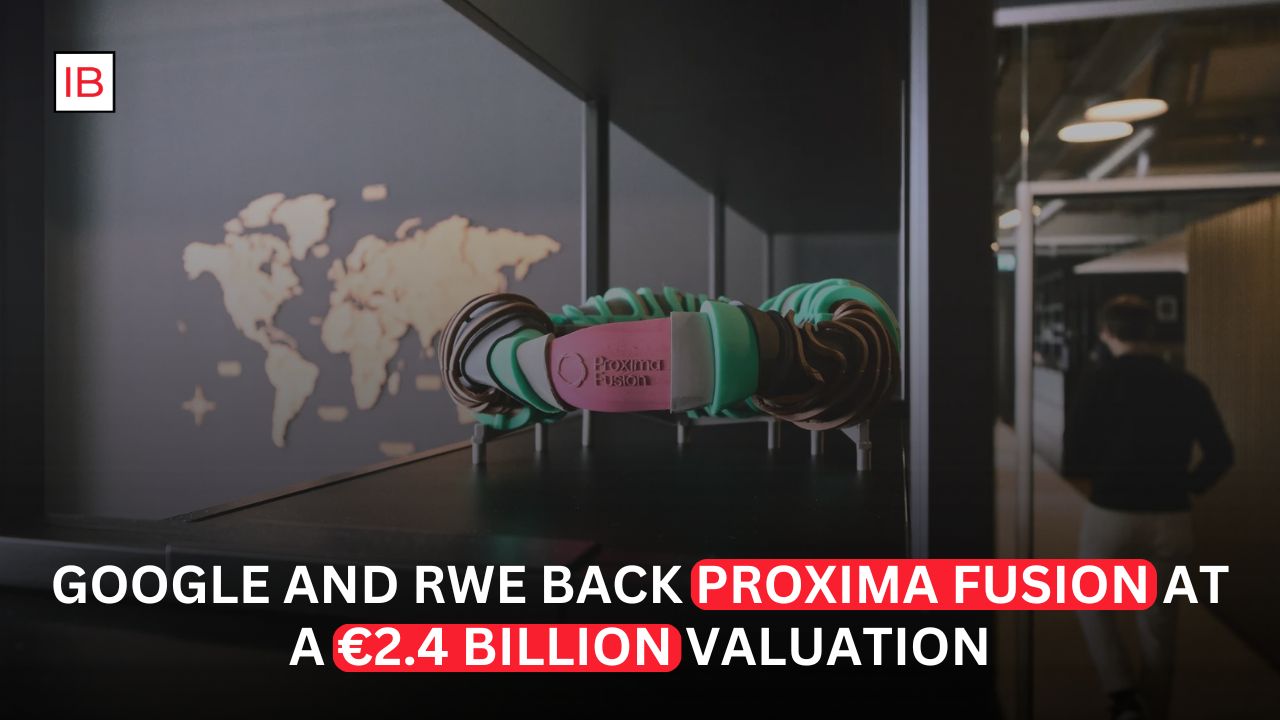
German nuclear fusion startup Proxima Fusion has raised €400 million ($470 million) in a landmark funding round backed by Google, RWE, and several major international investors, lifting the company’s valuation to approximately €2.4 billion and making it one of Europe’s most valuable clean-energy startups.
The financing underscores growing investor confidence that nuclear fusion could become a long-term solution to the rapidly rising electricity demand driven by artificial intelligence, cloud computing, and data centers.
Major Investors Join Funding Round
The Series B funding round was led by XTX Markets and East X Ventures, with participation from:
- Google (strategic investor)
- RWE
- Plural
- Balderton Capital
- Cherry Ventures
- Other European institutional investors
The new investment brings Proxima Fusion’s valuation to €2.4 billion, placing it among Europe’s growing list of “unicorn” technology companies.
AI Boom Driving Interest in Fusion Energy
Technology companies are increasingly investing in next-generation energy sources as AI systems dramatically increase electricity consumption.
Fusion energy has attracted attention because it promises:
- Carbon-free electricity
- Virtually limitless fuel supply
- Minimal long-lived radioactive waste
- Stable baseload power for data centers
Google has already invested in several U.S.-based fusion companies and described Proxima as its first strategic investment in a European fusion startup.
Building Europe’s First Commercial Stellarator
Founded in 2023 as a spin-off from the Max Planck Institute for Plasma Physics, Proxima Fusion is developing a stellarator, a magnetic confinement fusion reactor that differs from the more common tokamak design.
Its roadmap includes:
- Construction of the Alpha demonstration reactor in Garching by 2031
- Development of Stellaris, a commercial fusion power plant in Bavaria during the late 2030s
- Eventual connection of fusion-generated electricity to the European power grid
The company estimates the Alpha demonstration facility will require around €2 billion in investment.
Partnership With RWE Strengthens Commercial Plans
German energy giant RWE is playing a strategic role beyond financial backing.
Earlier this year, RWE signed an agreement with Proxima and the Bavarian government to develop the future Stellaris commercial plant at the site of the former Gundremmingen nuclear power station, currently undergoing decommissioning.
The collaboration combines:
- Proxima’s fusion engineering
- RWE’s experience operating power plants
- Public-sector support from Bavaria
- Scientific expertise from the Max Planck Institute
The project aims to establish Europe as a leader in commercial fusion technology.
Europe Seeks Leadership in Fusion Race
The funding comes as Europe attempts to compete with well-financed American and Chinese fusion companies.
Governments across the continent have increased support for fusion research, viewing the technology as strategically important for:
- Energy independence
- Industrial competitiveness
- Climate targets
- Future AI infrastructure
Germany has pledged billions of euros toward fusion research and pilot projects over the coming decade.
Challenges Remain
Despite rapid investment, commercial fusion remains technically unproven.
Scientists must still demonstrate:
- Net energy production exceeding energy input
- Stable long-duration plasma confinement
- Commercially viable operating costs
- Large-scale deployment suitable for national grids
No private fusion company has yet produced sustained commercial electricity.
Looking Ahead
The €400 million funding round marks one of the largest investments ever made in a European fusion company and reflects the growing intersection of artificial intelligence and clean energy.
As AI data centers place unprecedented demands on electricity systems, investors increasingly view fusion as a potential long-term solution. While commercial deployment remains years away, Proxima Fusion’s latest financing positions Germany and Europe as serious contenders in the global race to build the world’s first commercially viable fusion power plant.