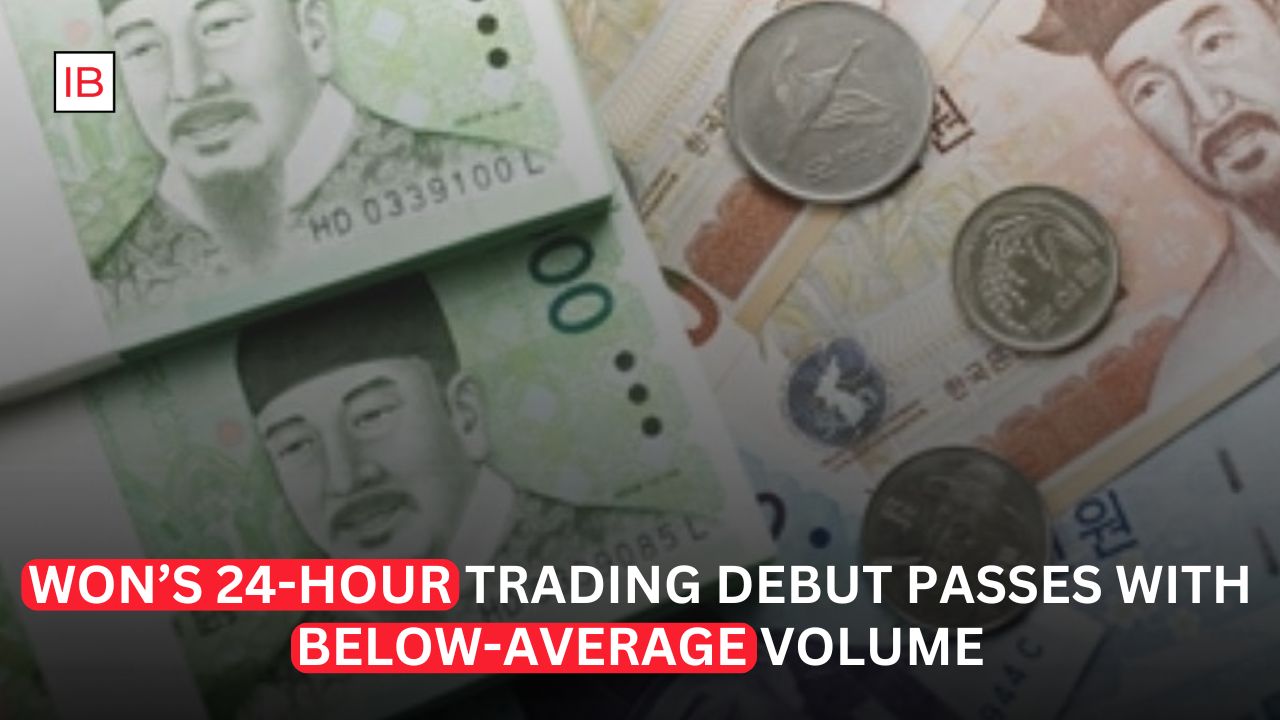
Extended Currency Trading Begins Smoothly as Seoul Pushes for Developed-Market Status
South Korea’s first day of 24-hour trading for the Korean won (KRW) passed without major disruption, although trading volumes during the newly added overnight session were below market expectations, according to people familiar with the market.
Despite the relatively light activity, officials and market participants described the launch as an important milestone in South Korea’s long-term effort to modernize its foreign exchange market and strengthen its case for inclusion in MSCI’s developed-market index.
Historic Shift to Round-the-Clock Trading
Beginning July 6, South Korea extended onshore KRW–USD spot trading from limited daytime hours to a continuous weekday schedule:
- Trading now runs from 6:00 a.m. Monday until 6:00 a.m. Saturday
- The previous market operated only during domestic business hours with an overnight extension
- The reform is intended to improve access for international investors
- Authorities expect greater liquidity over time rather than immediately
Overnight Trading Volume Below Expectations
While the market functioned smoothly, dealers reported that participation during the new overnight session remained relatively thin.
Several factors contributed:
- Many global investors are still adapting to the new trading structure
- Banks are gradually expanding overnight trading operations
- Liquidity traditionally remains strongest during Asian business hours
- Investors are taking a cautious approach during the market’s first weeks
Officials emphasized that building meaningful overnight liquidity is expected to take months rather than days.
Reform Aims to Attract Global Investors
The trading overhaul is part of a broader financial liberalization program designed to make Korean markets more accessible.
Key objectives include:
- Improving foreign investor participation
- Increasing the won’s international usability
- Reducing barriers cited by global index providers
- Supporting South Korea’s campaign for MSCI developed-market classification
Finance Minister Koo Yun-cheol described the launch as the “starting point for the won’s global leap.”
Currency Remains Under Pressure
The reform comes during a challenging period for the Korean currency.
Recent market conditions include:
- The won remaining among Asia’s weaker-performing currencies this year
- Continued foreign selling of Korean equities
- Strong U.S. dollar demand
- Higher overseas investment by Korean institutions increasing dollar demand
Analysts note that extending trading hours alone is unlikely to reverse exchange-rate weakness without broader improvements in capital flows.
Banks Expand Around-the-Clock Operations
To support continuous trading, major Korean banks have significantly expanded staffing.
Institutions including Hana Bank, Woori Bank, Shinhan Bank, and KB Kookmin Bank have introduced rotating shifts and strengthened overseas dealing desks to provide uninterrupted market coverage.
Long-Term Success Depends on Liquidity
Market participants say the true test of the reform will be whether:
- Overseas institutions actively participate during London and New York hours
- Bid-ask spreads remain competitive overnight
- Market depth improves over time
- International investors increase holdings of Korean financial assets
If liquidity steadily develops, the reform could become one of South Korea’s most significant financial market liberalization measures in decades.
Looking Ahead
Although the debut produced below-average overnight trading volumes, policymakers view the smooth launch as an encouraging first step rather than a disappointment.
Success will ultimately be judged not by the first day’s turnover but by whether continuous trading enhances the won’s global role, attracts international investors, and strengthens South Korea’s bid to join the world’s developed financial markets.