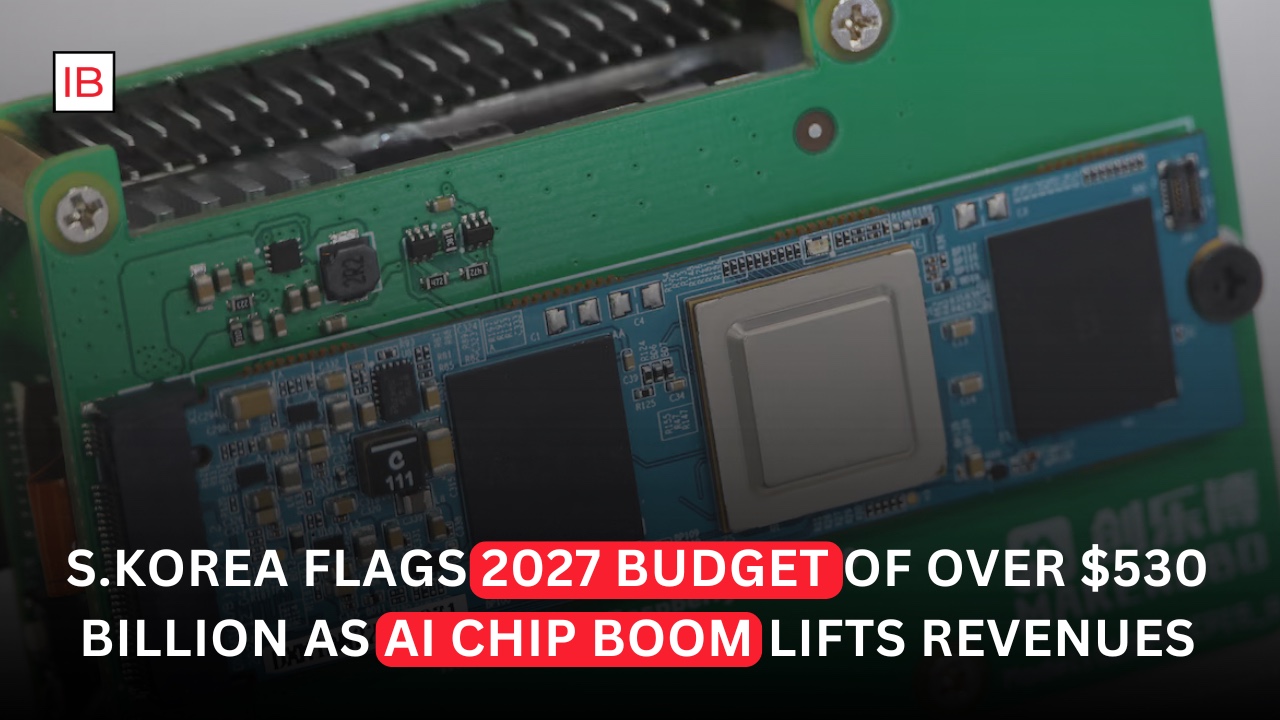
Government to Increase Spending on AI, Semiconductors, and Innovation Following Strong Revenue Growth
South Korea has announced plans for a record 2027 national budget exceeding 800 trillion won (approximately $531 billion), supported by a surge in tax revenues generated by the country’s booming artificial intelligence (AI) and semiconductor industries.
The government said stronger fiscal revenues, fueled by robust growth in the chip sector, will allow it to expand investment in strategic industries without relying solely on higher taxes. The proposed budget marks a significant increase from the 727.9 trillion won allocated for 2026.
AI and Chip Industry Drive Revenue Growth
South Korea’s semiconductor industry has become one of the country’s biggest economic engines as global demand for AI infrastructure continues to rise.
The rapid expansion of AI has boosted demand for:
- Memory chips
- AI processors
- Data center infrastructure
- Advanced semiconductor manufacturing
- High-performance computing
Higher corporate earnings across the technology sector have significantly increased government tax revenues, providing additional resources for future investment.
Record Budget Targets Future Growth
The 2027 budget will prioritize investments designed to strengthen South Korea’s long-term competitiveness in emerging technologies.
Key priorities include:
- Semiconductor research and development
- Artificial intelligence projects
- AI data centers
- Physical AI infrastructure
- Innovation and advanced technology
Officials said these investments are intended to secure South Korea’s position as one of the world’s leading technology economies.
Government Plans Major Spending Reforms
Alongside increased investment, the government plans to improve spending efficiency by restructuring approximately 50 trillion won in existing expenditures.
The reforms will include:
- Reviewing discretionary spending
- Cutting underperforming programs
- Improving budget efficiency
- Redirecting funds toward strategic industries
- Strengthening long-term fiscal sustainability
Officials believe these measures will help finance new priorities while maintaining responsible public finances.
New Future Response Fund Announced
South Korea also plans to establish a Future Response Fund, which will channel surplus tax revenues into projects supporting long-term economic development.
The fund is expected to focus on:
- Youth development
- Innovation
- Regional growth
- Workforce training
- Emerging technologies
The initiative reflects the government’s broader strategy of preparing the economy for future technological transformation.
AI Strategy Remains a National Priority
President Lee Jae Myung has identified artificial intelligence and semiconductors as central pillars of South Korea’s future economic strategy.
Government leaders believe continued investment in these sectors will:
- Strengthen global competitiveness
- Create high-value jobs
- Expand exports
- Increase technological leadership
- Support long-term economic growth
The strategy builds on South Korea’s position as a global leader in memory chip production and advanced semiconductor manufacturing.
Strong Chip Industry Supports Economic Outlook
The continued AI investment cycle has benefited major South Korean technology companies, helping drive export growth and stronger government revenues.
Industry analysts expect demand for AI chips, memory products, and advanced computing infrastructure to remain strong as businesses worldwide continue expanding artificial intelligence capabilities.
Looking Ahead
South Korea’s record 2027 budget highlights the growing economic impact of the global AI boom. By using higher tax revenues from its thriving semiconductor industry to fund strategic investments, the government aims to strengthen the country’s leadership in artificial intelligence, chip manufacturing, and advanced technology.
As worldwide demand for AI infrastructure continues to accelerate, South Korea is positioning itself to remain one of the key beneficiaries of the next wave of technological innovation.