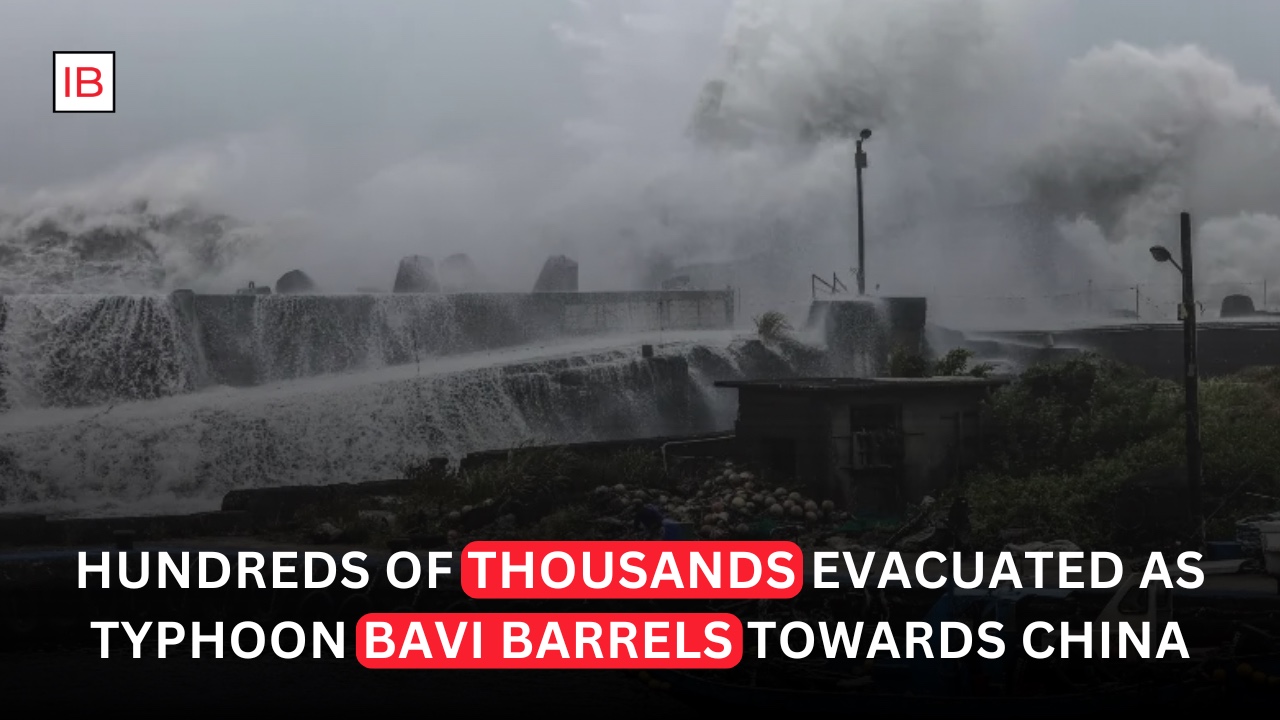
Authorities Order Mass Evacuations as Powerful Storm Threatens Heavy Rain, Strong Winds, and Flooding
Chinese authorities have evacuated more than 1.8 million people from vulnerable coastal areas as Typhoon Bavi approaches eastern China, prompting widespread emergency measures across Zhejiang, Fujian, and neighboring regions. Although the storm has weakened from its earlier super typhoon status, meteorologists warn it remains capable of bringing destructive winds, torrential rainfall, and dangerous flooding.
The large storm system has already disrupted parts of Taiwan, Japan, and the Philippines, where heavy rains triggered deadly landslides earlier this week. Chinese officials have suspended transportation services, closed schools, and urged residents to remain indoors as Bavi moves closer to landfall.
China Mobilizes Large-Scale Emergency Response
Authorities have implemented extensive precautionary measures to reduce the storm’s impact.
These include:
- Mass evacuations from coastal communities
- Suspension of ferry services
- Closure of schools and public facilities
- Cancellation of hundreds of flights
- Deployment of emergency rescue teams
Officials expect Typhoon Bavi to make landfall near Wenzhou in Zhejiang province before gradually weakening inland, though heavy rainfall is expected to continue after landfall.
Heavy Rain Raises Flooding Concerns
While wind speeds have eased somewhat, forecasters say the greatest threat now comes from intense rainfall.
Meteorologists warn that the storm could bring:
- Flash flooding
- River overflows
- Urban flooding
- Landslides in mountainous areas
- Transportation disruptions
Local governments have lowered reservoir water levels and strengthened flood-control measures in preparation for the expected downpours.
Taiwan and Japan Also Experience Disruptions
Before approaching mainland China, Typhoon Bavi passed near Taiwan and Japan’s southern islands, bringing strong winds and heavy rain.
The storm resulted in:
- More than 1,200 flight cancellations
- Thousands of precautionary evacuations
- School and office closures
- Ferry service suspensions
- Coastal flooding and rough seas
Although Taiwan avoided a direct landfall, authorities reported dozens of minor injuries and widespread travel disruptions.
Philippines Continues Recovery Efforts
The Philippines has suffered some of the storm’s deadliest impacts.
Typhoon Bavi intensified seasonal monsoon rains, triggering landslides and severe flooding that claimed multiple lives while forcing thousands of residents into evacuation centers.
Emergency responders continue search and rescue operations in affected provinces as communities begin recovery efforts.
What Is a Typhoon?
A typhoon is a powerful tropical cyclone that forms over the western North Pacific Ocean.
Typhoons can produce:
- Extremely strong winds
- Torrential rainfall
- Storm surges
- Flash floods
- Landslides
Their impacts often extend hundreds of kilometers from the center, meaning regions far from landfall can still experience dangerous weather conditions.
Climate and Weather Risks Remain Elevated
Meteorologists note that East Asia has experienced an active tropical storm season, with Typhoon Bavi arriving shortly after other severe weather events affected the region.
Successive storms have increased the risk of flooding in already saturated areas, making emergency preparedness especially important for communities along China’s eastern coastline.
Looking Ahead
As Typhoon Bavi approaches China’s coast, authorities remain focused on protecting lives through large-scale evacuations and emergency preparations. While the storm is expected to weaken after landfall, forecasters warn that heavy rainfall and flooding could continue to pose significant risks across eastern China.
Emergency officials will continue monitoring the storm’s path, with residents urged to follow official weather advisories and evacuation instructions until the threat has passed.