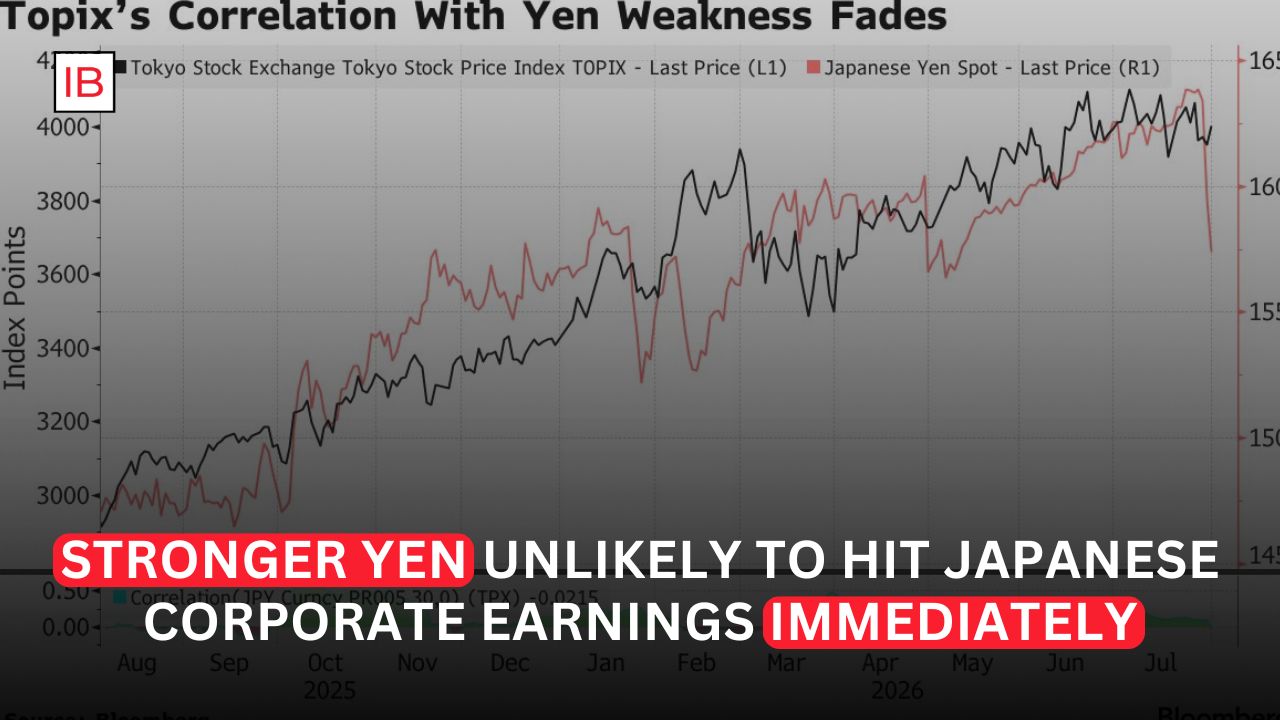
Currency Recovery Begins to Reverse Export Advantage, but Most Firms Remain Protected by Existing Buffers
Japanese companies are expected to withstand the recent appreciation of the yen without immediate damage to corporate earnings, thanks to strong profit margins, conservative exchange-rate assumptions, and extensive currency hedging programs. While the stronger yen is beginning to reduce one of the major advantages enjoyed by exporters over the past several years, analysts believe most large corporations have sufficient financial buffers to absorb the impact in the near term.
The yen has strengthened significantly after coordinated action by Japanese and U.S. authorities, combined with expectations that the Bank of Japan could continue gradually tightening monetary policy. The currency’s recovery has raised questions about how quickly exporters’ earnings may come under pressure, particularly for manufacturers that generate a large share of their revenue overseas.
Years of Weak Yen Built Large Profit Buffers
For several years, Japanese exporters benefited from a historically weak yen.
The weaker currency helped companies by:
- Increasing the value of overseas earnings when converted back into yen.
- Improving export competitiveness.
- Supporting record corporate profits.
- Strengthening balance sheets.
As a result, many major manufacturers accumulated substantial financial reserves that now provide protection against moderate currency appreciation.
Conservative Currency Assumptions Reduce Immediate Risk
Many Japanese companies prepare annual budgets using exchange-rate assumptions that are more conservative than prevailing market rates.
This means:
- Actual exchange rates often remain more favorable than company forecasts.
- Earnings guidance does not immediately require revision.
- Profit forecasts remain relatively resilient.
Analysts note that only a sustained and significant appreciation of the yen would begin materially affecting corporate results.
Hedging Strategies Provide Additional Protection
Large Japanese exporters also use foreign-exchange hedging to reduce short-term currency risk.
Common approaches include:
- Forward currency contracts.
- Options strategies.
- Natural hedging through overseas production.
- Diversified global operations.
These measures help smooth earnings during periods of exchange-rate volatility and reduce the immediate financial impact of currency movements.
Exporters Still Monitoring the Yen
Despite the current buffers, companies remain alert to further appreciation.
Industries most exposed include:
- Automobile manufacturers.
- Electronics producers.
- Industrial equipment makers.
- Precision machinery companies.
If the yen continues strengthening over an extended period, exporters may eventually experience reduced overseas profitability and greater pricing pressure in global markets.
Domestic Economy Offers Support
The end of prolonged deflation and improving domestic demand have also helped diversify earnings.
Japanese companies are benefiting from:
- Higher domestic investment.
- Increased capital expenditure.
- Stronger corporate borrowing.
- Improving consumer activity.
These trends reduce reliance on currency-driven export gains alone and provide additional stability for corporate earnings.
Investors Watching Future Currency Moves
Markets continue focusing on several factors that could influence the yen’s direction:
- Bank of Japan interest-rate decisions.
- Federal Reserve monetary policy.
- Government currency intervention.
- Global economic conditions.
Future exchange-rate movements will likely remain an important variable during upcoming earnings seasons.
Looking Ahead
Japan’s recent currency rebound represents a meaningful shift after years of yen weakness, but most major corporations appear well prepared for the change. Strong profitability, conservative financial planning, and extensive hedging strategies have created a cushion that should allow many exporters to absorb a stronger currency without immediate damage to earnings.
Over the longer term, however, sustained appreciation could gradually erode the export advantage that has supported Japanese manufacturers for years. Investors will closely monitor future Bank of Japan policy decisions and exchange-rate developments to determine when currency movements begin having a more noticeable effect on corporate profits. For now, the consensus among analysts is that Japanese companies still have sufficient room to adjust before a stronger yen becomes a major earnings headwind.