German factory orders surged well past expectations in June, extending a string of stronger-than-forecast industrial data that has bolstered hopes Europe’s largest economy is finally pulling out of a prolonged manufacturing slump.
A Sharp Acceleration
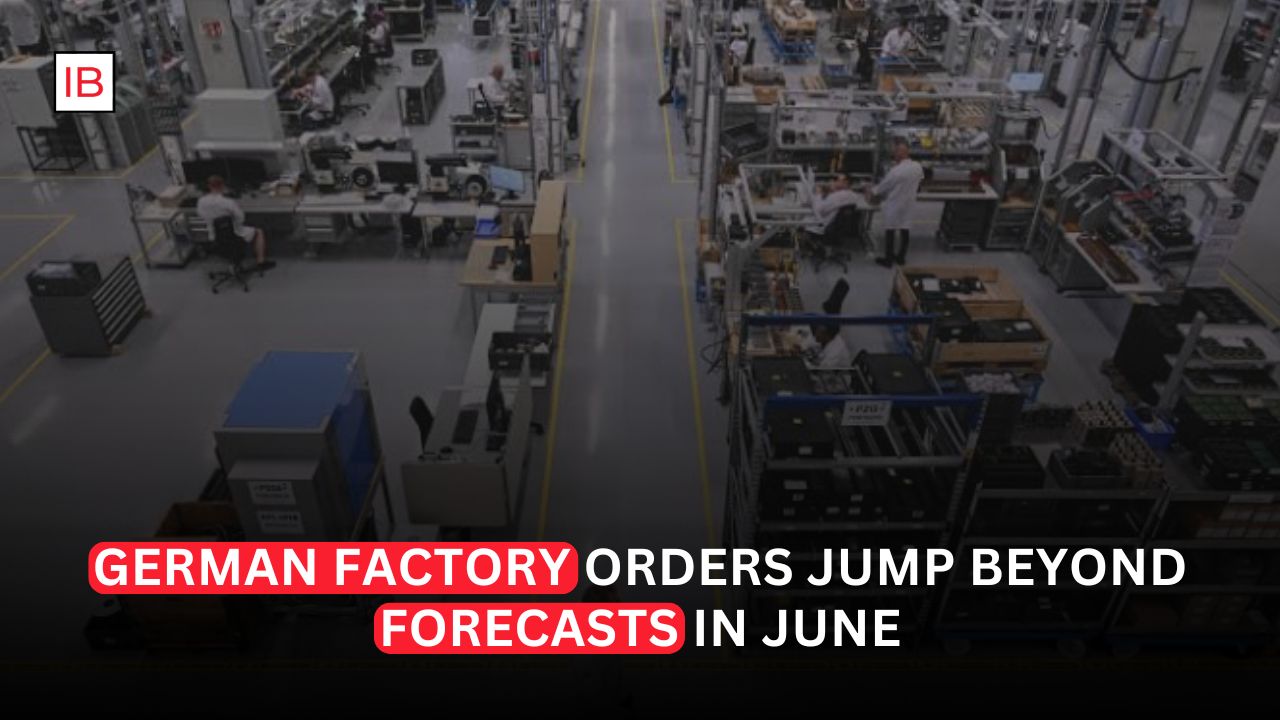
Factory orders in Germany rose 3.1% month-over-month in June 2026, according to data released Thursday, comfortably beating economist forecasts and improving on an already solid 1.9% gain recorded in May. The back-to-back increases mark a clear acceleration in the pace of order growth compared with earlier in the year, when German industry had struggled with weak demand both domestically and from key export markets.
Part of a Broader Run of Positive Data
The June figures build on a series of encouraging signals that have emerged from German manufacturing in recent months. The S&P Global final Purchasing Managers’ Index for German manufacturing rose to 50.3 in June from 50.1 in May, with new orders returning to growth, albeit only marginally, after a stretch in which output had relied heavily on companies working through backlogged orders rather than fresh demand. That momentum carried into July, when Germany’s Composite PMI jumped to 51.2 from 49.5 in June, a four-month high that returned the country to expansion territory following three consecutive months of contraction tied to the fallout from the US-Iran conflict. The manufacturing output sub-index within that July reading hit 54.7, its strongest level in 53 months, representing the sharpest rise in nearly four and a half years.
S&P Global chief business economist Chris Williamson described the July PMI reading as “a welcome revival of economic activity,” estimating it pointed to quarterly GDP growth of roughly 0.3%, a meaningful acceleration from the near-stagnation that characterized much of the second quarter.
Export Demand Provides a Boost
Improving sentiment toward German exports has played a meaningful role in the recovery. The ifo Institute’s barometer for export expectations climbed to negative 3.7 points in June, up from negative 5.7 in May, reflecting a gradual improvement in how German exporters view demand from abroad. Exports to the United States specifically have shown notable strength, with German goods shipments to the U.S. reaching 14.1 billion euros in one recent month, up 23.1% from the previous month. Broader business sentiment has also firmed, with the ifo Business Climate Index rising to 85.6 points in June from 85.0 in May, as companies reported viewing the operating environment as somewhat less uncertain than earlier in the year.
Context From a Volatile Year
This year’s factory order data has been unusually volatile even by German manufacturing’s typically choppy standards. Orders plunged 11.1% in January, far worse than the 4.3% decline economists had expected, driven by a sharp drop in fabricated metal products after unusually large orders in the prior month had created an inflated comparison base. That volatility underscores how sensitive the headline figures can be to large, lumpy contracts in categories like aircraft, ships, trains, and military vehicles, even as the more recent trend has pointed consistently toward improvement.
What It Means for the Broader Economy
The improving factory order data aligns with other recent signs of stabilization in Germany’s broader economy, including second-quarter GDP growth of 0.2%, which followed an upwardly revised 0.4% expansion in the first quarter. Bundesbank President Joachim Nagel has pointed to increased government spending and a resurgence in exports as key drivers behind the improving outlook, tied partly to Germany’s recent fiscal policy shift that relaxed the country’s constitutional “debt brake” and established a large off-budget fund for infrastructure and defense spending.
A Cautious Note on Rates
The stronger data has fed into expectations that the European Central Bank could still raise interest rates later in 2026 if energy prices remain elevated. A Reuters survey of 74 economists conducted in mid-July found roughly 70% expected at least one additional rate increase this year, primarily in September, even as ECB President Christine Lagarde has so far declined to offer explicit forward guidance on the central bank’s next move.
What Comes Next
With factory orders now posting their strongest back-to-back gains in some time and broader manufacturing sentiment continuing to improve, attention will turn to whether this momentum can be sustained through the second half of 2026. Given how directly German industrial performance factors into the ECB’s policy calculus, the coming months of data will likely play a significant role in shaping whether the central bank ultimately moves to raise rates further or maintains its current wait-and-see approach.