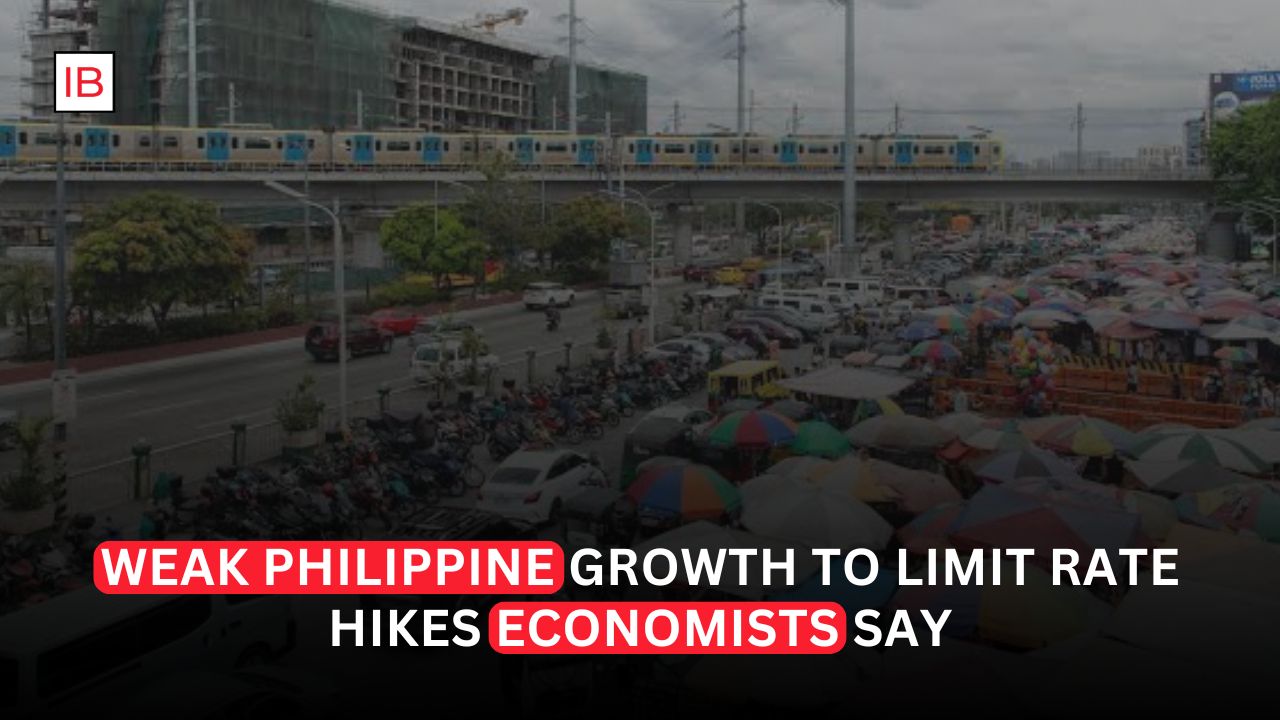
Slower-than-expected economic growth is strengthening expectations that the Philippine central bank could adopt a more cautious approach to monetary policy as it balances inflation risks against supporting the economy.
The Philippine economy has lost momentum, prompting economists to predict that the country’s central bank will be less aggressive with future interest rate increases. Weaker economic activity, slowing investment, and softer consumer spending are shifting attention toward supporting growth, even as inflation remains above the central bank’s long-term target. The latest economic data has reinforced expectations that policymakers may pause or limit additional rate hikes in the coming months.
The slowdown comes after several quarters of elevated borrowing costs aimed at controlling inflation. While higher interest rates have helped ease price pressures, they have also made loans more expensive for businesses and households, reducing investment and consumer demand. As a result, economists believe the Bangko Sentral ng Pilipinas (BSP) now faces a more delicate balancing act between maintaining price stability and preventing further weakness in economic growth.
Economy Expands at a Slower Pace
According to the latest official figures, the Philippine economy grew 2.3% year-over-year in the second quarter of 2026, falling short of market expectations and marking the slowest pace of expansion since 2021. Growth was also weaker than the previous quarter, highlighting the impact of slowing domestic demand and declining private investment.
Economic planners attributed the weaker performance to several factors, including lower construction activity, weaker capital investment, and reduced household spending. Higher living costs have continued to affect consumers, while businesses have remained cautious about expanding operations amid uncertain economic conditions.
Although government officials remain optimistic that infrastructure spending and stronger business confidence could support a recovery later in the year, the latest figures have increased pressure on policymakers to avoid further slowing the economy through aggressive monetary tightening.
Interest Rate Outlook Becomes More Cautious
The disappointing growth data has strengthened expectations that the BSP may slow or even pause additional interest rate increases at upcoming policy meetings.
Over the past year, the central bank has raised borrowing costs to contain inflation, which surged due to higher food and fuel prices. Those measures helped prevent inflation expectations from becoming entrenched, but they have also contributed to slower credit growth and weaker investment.
Economists now argue that the central bank has greater room to adopt a measured approach, particularly if inflation continues to stabilize. Rather than implementing large rate increases, policymakers may choose smaller adjustments or keep rates unchanged while monitoring incoming economic data.
Inflation Still Requires Attention
Despite slowing economic growth, inflation remains an important concern for Philippine policymakers. The country has faced persistent price pressures over the past year, driven partly by higher global energy costs and elevated food prices.
Although inflation has shown signs of moderating in recent months, it remains above the BSP’s preferred range. Central bank officials have repeatedly stated that maintaining price stability remains their primary objective, meaning future policy decisions will continue to depend on inflation trends as well as broader economic conditions.
Higher fuel costs linked to geopolitical tensions in the Middle East have also complicated the inflation outlook, making it difficult for policymakers to declare victory over rising prices.
Businesses and Consumers Feeling the Impact
Higher borrowing costs have affected both businesses and households across the Philippines. Companies have become more cautious about investing in new projects as financing costs increased, while consumers have reduced spending on discretionary purchases because of higher loan repayments and rising living expenses.
Construction activity, one of the country’s major economic drivers, weakened significantly during the latest quarter. Private investment also declined, reflecting uncertainty among businesses about future economic conditions.
Economists believe that maintaining excessively high interest rates for too long could further slow employment growth and delay broader economic recovery. As a result, many expect the BSP to place greater emphasis on supporting domestic demand while continuing to monitor inflation risks.
Markets Watching the Central Bank
Financial markets are now closely watching the BSP’s next monetary policy meeting for clues about the future direction of interest rates.
Investors generally expect the central bank to adopt a data-dependent approach, carefully evaluating inflation, employment, exchange rate movements, and global economic developments before making further policy decisions.
A more cautious stance could support investor confidence by reducing concerns that tighter monetary policy might unnecessarily weaken economic growth. At the same time, officials remain aware that easing policy too quickly could reignite inflationary pressures.
The Philippine peso and local bond markets are also likely to react to any signals regarding future interest rate decisions, making central bank communication particularly important in the coming months.
Government Remains Optimistic About Recovery
Despite weaker second-quarter growth, government officials continue to express confidence that economic activity will improve during the second half of the year.
Authorities expect infrastructure projects, public investment, and gradually improving business confidence to provide additional support for growth. The government has revised its economic outlook to reflect current challenges but continues to target stronger expansion over the medium term.
Economists agree that the Philippines retains strong long-term fundamentals, including a young workforce, resilient domestic consumption, and an expanding services sector. However, achieving stronger growth will depend on improving investment, controlling inflation, and maintaining policy stability.
Looking Ahead
The Philippines now finds itself at an important economic crossroads. Slower-than-expected GDP growth has shifted attention toward protecting the country’s recovery, while inflation remains high enough to prevent a rapid easing of monetary policy.
For the Bangko Sentral ng Pilipinas, the challenge will be finding the right balance between supporting economic activity and maintaining price stability. Most economists believe this means future interest rate decisions are likely to become more measured rather than aggressively restrictive.
Investors, businesses, and consumers will closely monitor upcoming inflation reports, employment data, and the central bank’s next policy meeting for signals about the direction of interest rates. If inflation continues to ease while growth gradually recovers, policymakers could gain greater flexibility to support the economy without compromising financial stability.
Although near-term challenges remain, many analysts believe the Philippine economy has the potential to regain stronger momentum once inflation pressures moderate and investment activity improves. The coming quarters will therefore play a crucial role in determining both the country’s economic recovery and the future path of monetary policy.