Treasury Secretary Applies Investor Mindset to Trade, Supply Chains, and Financial Policy
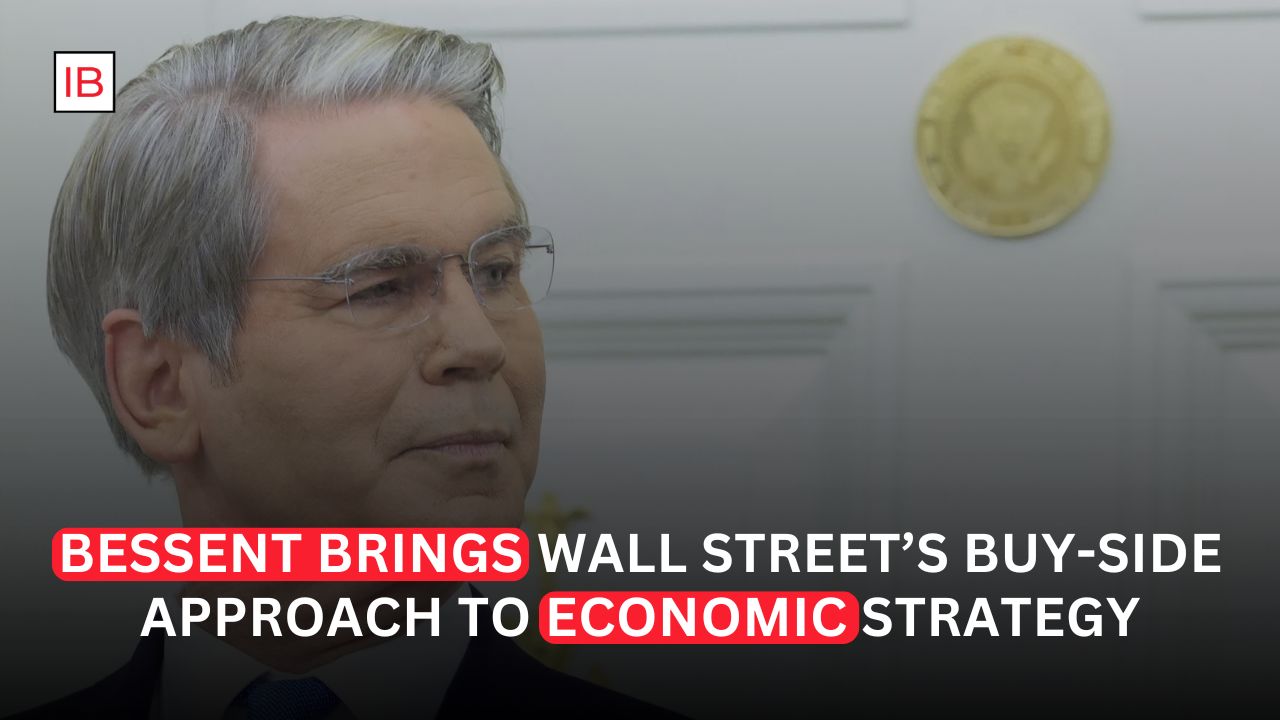
U.S. Treasury Secretary Scott Bessent is bringing a distinctly buy-side investment perspective to Washington, applying decades of hedge fund experience to the development of American economic policy. Rather than viewing economic statecraft solely through traditional diplomacy or government planning, Bessent has argued that policymakers should think more like long-term investors—carefully assessing risk, strengthening strategic assets, and positioning the United States for sustained economic resilience in an increasingly competitive global environment.
Before joining the U.S. government, Bessent built a career managing global macro investment strategies, including senior leadership roles at Soros Fund Management and later founding Key Square Group. His experience analyzing financial markets, geopolitical developments, and long-term economic trends now influences Treasury policy on trade, industrial strategy, supply chains, and capital markets. Supporters argue that this investment-oriented approach reflects the realities of today’s global economy, where financial markets, technology, and economic security are increasingly interconnected.
From Wall Street to Washington
Unlike many previous Treasury officials with backgrounds in public policy or banking regulation, Bessent spent decades managing investment portfolios.
His investment career focused on:
- Global macroeconomic analysis.
- Currency markets.
- Interest rates.
- Geopolitical risk.
- Long-term capital allocation.
That experience now shapes how he evaluates national economic priorities.
Economic Security Becomes Investment Strategy
Bessent has repeatedly argued that economic policy should resemble disciplined portfolio management.
Rather than focusing solely on short-term costs, policymakers should consider questions such as:
- Can supply chains withstand disruption?
- Are strategic industries sufficiently diversified?
- Which investments strengthen long-term national resilience?
He believes governments should identify vulnerabilities before crises emerge rather than responding afterward.
Supply Chains Receive Greater Attention
One major focus of Bessent’s approach involves strengthening critical supply chains.
Priority sectors include:
- Semiconductors.
- Energy.
- Critical minerals.
- Manufacturing.
- Advanced technology.
Rather than maximizing efficiency alone, policymakers increasingly emphasize resilience, redundancy, and domestic production capacity.
Reciprocity Guides Trade Policy
Bessent has argued that open markets should be accompanied by reciprocal market access.
According to his framework:
- Countries benefiting from U.S. markets should offer comparable access.
- Trade relationships should remain balanced over the long term.
- Economic partnerships should reduce rather than increase strategic vulnerabilities.
He maintains that stronger reciprocity creates more durable international economic relationships.
Long-Term Capital Allocation Mindset
Investment managers typically evaluate opportunities over extended time horizons.
Bessent has suggested similar thinking should apply to national policy.
This includes:
- Investing in strategic industries.
- Supporting domestic innovation.
- Strengthening industrial competitiveness.
- Building resilient financial infrastructure.
The emphasis shifts from immediate returns toward sustainable long-term economic strength.
Financial Markets Remain Central
Having spent much of his career in financial markets, Bessent continues emphasizing the importance of market confidence.
He has noted that:
- Stable financial markets lower borrowing costs.
- Credible policy supports investment.
- Investor confidence encourages economic growth.
This perspective reflects the influence of his buy-side investment background on government decision-making.
Technology and AI Become Strategic Priorities
Bessent’s framework also places growing emphasis on emerging technologies.
Areas receiving increased attention include:
- Artificial intelligence.
- Advanced semiconductor production.
- Digital infrastructure.
- Cybersecurity.
- Research and development.
Officials increasingly view technological leadership as closely connected to long-term economic competitiveness.
Domestic Investment and Industrial Capacity
Another key theme involves encouraging greater domestic investment.
The objective is to strengthen:
- Manufacturing.
- Energy production.
- Infrastructure.
- Strategic supply networks.
Supporters argue that stronger domestic capacity improves resilience during periods of global disruption while supporting long-term productivity growth.
Looking Ahead
Scott Bessent’s transition from hedge fund manager to Treasury Secretary has introduced an investment-focused perspective into U.S. economic policymaking. His approach emphasizes evaluating national economic strategy much like a long-term investment portfolio—identifying risks, strengthening critical assets, diversifying supply chains, and investing in sectors that enhance future competitiveness. Rather than focusing solely on short-term market outcomes, the strategy prioritizes resilience, technological leadership, and sustainable economic strength in an increasingly competitive global environment.
Looking ahead, Bessent’s buy-side mindset is expected to continue influencing U.S. policy across trade, industrial strategy, financial markets, and emerging technologies. As governments increasingly treat economic policy as an element of national security, investment-style decision-making may play a larger role in shaping how countries compete for long-term growth, innovation, and strategic advantage in the global economy.