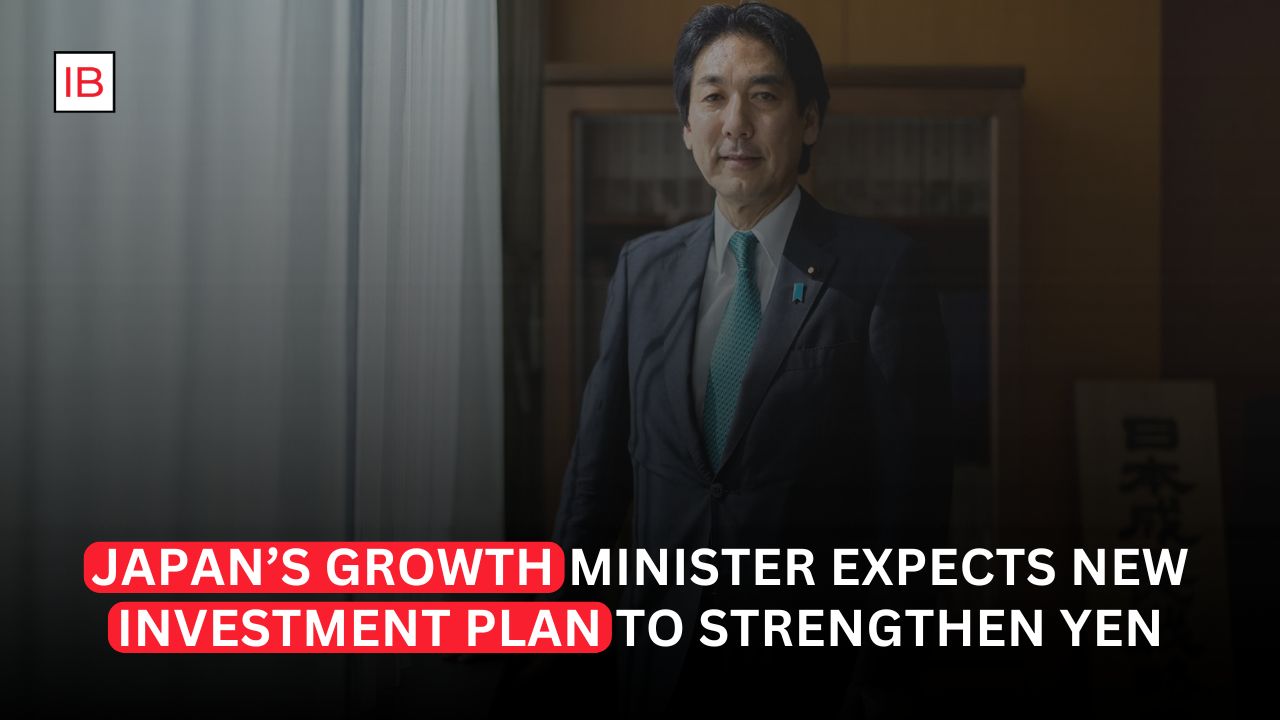
Japan’s government is betting that a large-scale investment strategy can strengthen economic growth, attract capital and ultimately support the yen, although rising government debt and bond yields remain major challenges for policymakers.
Japan is placing greater emphasis on investment as part of its strategy to strengthen the economy and improve the country’s long-term growth prospects. The government believes that directing capital toward strategic industries can increase productivity, encourage private-sector investment and create conditions that would eventually support the Japanese yen.
The approach comes at a difficult time for Japan’s currency. The yen has faced persistent pressure from differences between Japanese and overseas interest rates, concerns about the country’s fiscal position and uncertainty over the future path of monetary policy. Japanese officials have therefore been searching for ways to improve the economy without relying exclusively on higher interest rates. Recent government efforts have included encouraging greater domestic investment by large institutional investors, a move that previously helped lift the yen from near four-decade lows.
Investment Becomes Central to Japan’s Growth Strategy
Japan’s latest economic strategy involves an unusually large investment push.
The government has outlined plans for more than ¥370 trillion, or roughly $2.3 trillion, in public and private investment over a 14-year period ending in fiscal 2040. The strategy focuses on industries considered strategically important to Japan’s future, including artificial intelligence, semiconductors, space development and other advanced technologies.
The objective is not simply to increase government spending. Japanese policymakers want public investment and policy support to encourage companies to commit more of their own capital to domestic production, research and development.
Officials argue that stronger investment can help Japan overcome some of the structural problems that have limited economic growth for decades.
Government Wants Higher Productivity
Japan faces a combination of challenges that make stronger productivity particularly important.
The country has an aging population, a shrinking workforce and relatively slow potential economic growth. Businesses therefore need to produce more with fewer workers if Japan wants to maintain living standards and expand its economy.
Investment in automation, artificial intelligence, semiconductors and advanced manufacturing could help companies increase output without requiring equivalent increases in the workforce.
The government has also identified strategic industries where greater domestic capacity could reduce Japan’s dependence on overseas suppliers.
This is especially important in areas such as semiconductors and advanced technology, where supply-chain disruptions and geopolitical tensions have encouraged governments around the world to strengthen domestic production.
Why the Yen Could Benefit
The argument that stronger investment could support the yen is based on several economic channels.
If investment improves productivity and increases Japan’s long-term growth potential, international investors may become more willing to allocate capital to Japanese assets.
Greater domestic investment could also reduce the amount of Japanese capital flowing overseas. Japan’s large institutional investors have traditionally invested significant amounts abroad, partly because foreign assets offered higher returns during periods of extremely low Japanese interest rates.
Japanese officials have recently encouraged pension funds and other large investors to increase allocations to domestic assets. Finance Minister Satsuki Katayama previously called for greater domestic investment, a move that contributed to a stronger yen and a rally in Japanese government bonds.
However, the investment strategy will not automatically strengthen the currency. The yen’s direction still depends heavily on interest-rate expectations, inflation, capital flows and confidence in Japan’s fiscal position.
Interest Rates Remain a Major Factor
The government’s growth strategy is unfolding alongside a difficult debate over monetary policy.
The Bank of Japan has been moving toward policy normalization, but the process has become complicated by rising government bond yields and concerns over Japan’s enormous public debt.
The 10-year Japanese government bond yield recently reached around 2.8%, increasing pressure on policymakers and raising questions about how far interest rates can rise without creating additional problems for government finances.
Higher Japanese interest rates could support the yen by narrowing the gap between Japanese and foreign borrowing costs. But they also increase the government’s debt-servicing costs.
This creates a difficult balancing act. Japan wants stronger growth and a healthier currency, but it must avoid a sharp increase in borrowing costs that could place additional pressure on public finances.
Fiscal Policy Creates New Risks
The scale of Japan’s investment plans has also generated criticism.
Supporters argue that government-backed investment is necessary to stimulate private-sector spending and build industries capable of producing higher economic growth.
Critics question whether such a large investment program can generate enough additional economic activity to justify the fiscal risks.
Reuters Breakingviews recently described Japan’s growth strategy as potentially overly ambitious, noting that Prime Minister Sanae Takaichi has targeted a significant expansion of GDP by 2040 through major investment across 17 sectors.
The concern is that government spending alone cannot solve structural economic problems. Japan needs companies to invest productively, improve wages, increase efficiency and develop technologies that can generate sustainable returns.
Private Investment Is the Key
For the plan to succeed, Japanese policymakers will need private companies to participate.
Government spending can provide incentives and infrastructure, but businesses ultimately determine whether capital is deployed efficiently.
If companies respond by increasing spending on factories, technology, research and employee training, the economic impact could extend well beyond the government’s initial investment.
That could raise Japan’s potential growth rate and make the country more attractive to international investors.
But if companies remain cautious and simply accumulate cash rather than investing, the impact of government initiatives could be much smaller.
AI and Semiconductors Take Priority
Technology is expected to play a particularly important role in Japan’s investment strategy.
Artificial intelligence and semiconductor manufacturing have become priorities for governments across Asia, Europe and North America because they are considered critical to future economic competitiveness and national security.
Japan already has strengths in advanced manufacturing, materials and semiconductor equipment, but it has lost some ground in chip manufacturing compared with previous decades.
The government wants to rebuild parts of that industrial base while developing new technologies that could generate higher-value exports.
A successful technology strategy could help Japan increase productivity while creating new sources of economic growth.
Investors Watching the Bond Market
Financial markets will remain an important test of the government’s approach.
Japan’s bond market has already reacted strongly to expectations surrounding fiscal spending and monetary policy. Rising yields can attract investment into Japanese assets and potentially support the yen, but they also increase the government’s financing costs.
The Bank of Japan is therefore facing a difficult environment in which fiscal policy and monetary policy increasingly interact.
Recent pressure on the central bank has raised concerns about its independence, particularly as the government seeks to maintain economic growth while controlling borrowing costs.
A sustainable strengthening of the yen would likely require more than government statements. Investors will want evidence that Japan can achieve stronger productivity and growth while keeping its public finances under control.
Yen Strength Depends on More Than Investment
The biggest weakness in the government’s argument is that investment alone cannot guarantee a stronger currency.
The yen is influenced by global interest rates, US monetary policy, energy prices, investor positioning and international capital flows. Japan’s large trade exposure also means that changes in energy and commodity prices can have significant effects on the currency.
A large investment program could strengthen the yen if it improves Japan’s economic prospects. But it could also put downward pressure on the currency if markets become concerned about excessive government borrowing.
That makes policy credibility particularly important.
Looking Ahead
Japan’s growth minister is betting that large-scale investment can strengthen the country’s economic foundations and eventually contribute to a stronger yen. The government’s ¥370 trillion investment strategy represents a major attempt to improve productivity, develop strategic industries and encourage greater private-sector spending.
The opportunity is significant, particularly in areas such as AI, semiconductors, automation and advanced manufacturing. If investment generates higher productivity and attracts capital into Japan, the benefits could extend beyond individual industries and support the wider economy.
But the risks are equally significant. Japan must manage rising bond yields, high public debt and pressure on the Bank of Japan while ensuring that government investment produces genuine economic returns.
For the yen, the outcome will depend on whether investors believe Japan is entering a period of stronger and more sustainable growth. If the investment strategy succeeds in improving productivity and encouraging private capital, it could provide a fundamental reason for the currency to strengthen. If the program instead increases fiscal concerns without delivering stronger growth, the yen could remain vulnerable.
The coming years will therefore provide an important test of whether Japan can turn its ambitious investment plans into lasting economic growth—and whether that growth can finally provide the foundation for a stronger yen.