Hon Hai Precision Industry, better known as Foxconn, delivered a stronger-than-expected second-quarter profit as relentless spending on artificial-intelligence infrastructure continued to drive demand for servers and advanced computing equipment.
The Taiwanese electronics giant reported net profit of NT$59.97 billion ($1.86 billion) for the quarter ended in June, up 35% from a year earlier and above analysts’ expectations of NT$58.8 billion. The result provides another signal that the massive investment cycle surrounding artificial intelligence remains intact.
For investors trying to determine whether the AI boom is becoming excessive, Foxconn’s results are particularly relevant. The company sits deep inside the hardware supply chain, assembling AI servers and other equipment used by some of the world’s largest technology companies.
AI Is Becoming the Core Growth Engine
Foxconn has traditionally been associated with assembling iPhones and other consumer electronics, particularly for Apple.
That business remains important, but AI infrastructure is becoming increasingly central to the company’s growth.
Foxconn manufactures and assembles servers containing Nvidia’s AI accelerators, putting it directly in the path of the enormous capital expenditures being made by cloud providers, technology companies and AI developers.
The company’s second-quarter revenue rose 41% to NT$2.526 trillion, with AI-related server and cloud-networking products playing a major role. AI infrastructure accounted for more than half of total revenue for the first time, according to reporting on the results.
That shift is significant.
Foxconn is no longer simply benefiting from consumers buying more smartphones and computers. It is increasingly benefiting from companies spending billions of dollars building the computing infrastructure required to run AI models.
Nvidia Remains a Critical Customer
Nvidia is one of the most important companies in this ecosystem.
The semiconductor giant designs the accelerators that power many of today’s AI systems, while Foxconn is involved in assembling the server infrastructure in which those chips operate.
This gives Foxconn an unusual position in the AI supply chain.
It does not need to develop the next breakthrough AI model itself.
Instead, it benefits when companies such as Nvidia, Microsoft, Amazon, Meta and Alphabet increase their spending on computing capacity.
That spending has been enormous.
Major technology companies are collectively allocating hundreds of billions of dollars toward AI infrastructure, creating demand across semiconductor manufacturing, servers, networking equipment, cooling systems and data centers.
Foxconn’s latest results suggest that spending has not yet meaningfully slowed.
AI Spending Shows Little Sign of Fading
The biggest question surrounding AI stocks this year has been whether technology companies are spending too aggressively.
Investors have increasingly questioned whether the enormous capital expenditures on data centers can eventually generate enough revenue to justify their cost.
Foxconn’s results do not prove that the AI investment boom will continue indefinitely.
But they do provide evidence that the physical infrastructure buildout remains strong.
The company has indicated that AI server shipments should continue to grow, while demand from AI developers, cloud providers, governments and enterprises remains robust.
That distinction matters.
There can be legitimate concerns about AI valuations while demand for AI hardware remains strong.
The two things are not mutually exclusive.
Revenue Growth Has Been Exceptional
Foxconn’s recent sales figures reinforce the earnings picture.
In July, the company’s monthly revenue reached a record NT$946.5 billion, up 54.2% from a year earlier. The company attributed the increase largely to demand for AI-related products, particularly within its cloud and networking business.
The July performance suggests that the momentum seen during the second quarter continued into the third quarter.
Foxconn also expects AI rack shipments to maintain their momentum during the current quarter.
That is an important signal for the wider technology sector because Foxconn’s position allows it to see demand from multiple customers and across different parts of the hardware ecosystem.
The Company Is Expanding Beyond Taiwan
Foxconn is also expanding its manufacturing footprint as demand for AI infrastructure increases.
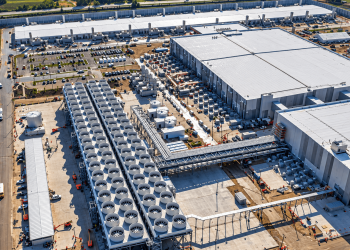
The company has been developing AI-server production capacity in locations including Mexico and Texas, helping it serve customers that want more geographically diversified supply chains.
That expansion reflects a broader shift in the technology industry.
Companies increasingly want their hardware supply chains to be less concentrated in one region.
Geopolitical tensions between the United States and China, trade restrictions and concerns over shipping disruptions have all encouraged manufacturers to diversify production.
Foxconn is therefore responding to two trends at the same time: rising AI demand and the restructuring of global electronics manufacturing.
Consumer Electronics Are No Longer the Whole Story
Foxconn’s traditional consumer-electronics business has faced a more mixed environment.
Smartphone and computer demand can fluctuate with economic conditions and product cycles.
AI infrastructure, by comparison, is currently benefiting from a large investment cycle.
That does not mean AI servers will permanently replace consumer electronics as Foxconn’s main business.
But the shift in revenue mix gives the company another major source of growth.
It also makes Foxconn more closely tied to enterprise technology spending than it was in the past.
Memory Chips Are a Potential Constraint
There are still risks within the supply chain.
One concern is the availability of memory chips, which are required across smartphones, PCs and AI servers.
The rapid expansion of AI infrastructure has increased demand for advanced memory products, creating pressure across the semiconductor industry.
Foxconn executives have indicated that the shortage should not significantly affect demand for premium devices and computing products produced for major customers.
But supply constraints remain something investors will watch closely.
If component shortages become severe, strong customer demand could eventually translate into slower shipments.
The AI Boom Is Not Without Risks
Foxconn’s results should not be interpreted as proof that every AI investment will generate attractive returns.
That is the weakest assumption investors could make.
Hardware demand can remain strong even while valuations become excessive.
Technology companies may continue spending heavily because they fear falling behind competitors, even if the economic return on that spending is uncertain.
That creates the possibility of an investment cycle in which companies collectively spend too much on infrastructure.
Foxconn benefits from the spending regardless of whether every data center eventually generates an attractive return for its owner.
That makes its earnings a useful indicator of AI demand, but not necessarily proof of the long-term profitability of AI itself.
Competition Is Also Increasing
Foxconn is not alone in pursuing AI-server manufacturing.
Other contract manufacturers and technology suppliers are expanding their capabilities as cloud companies increase orders.
As more manufacturers compete for AI infrastructure contracts, margins could eventually come under pressure.
For now, demand appears strong enough to support substantial growth.
But the longer the investment cycle continues, the more important manufacturing efficiency, supply-chain control and technological capability will become.
Investors Are Watching the Next Phase
Foxconn’s shares have risen this year, although they have significantly lagged Taiwan’s broader market.
Reuters reported that Foxconn shares were up around 17% year to date, compared with a gain of about 57% for Taiwan’s benchmark index at the time of the earnings announcement.
That performance suggests investors remain cautious despite the company’s strong fundamentals.
The market may be asking a different question from the one answered by the earnings report.
It is not simply whether AI demand is strong.
It is whether today’s level of AI spending can continue long enough to justify the valuations being placed on companies throughout the supply chain.
What Comes Next
For now, Foxconn expects both quarterly and annual revenue to grow, supported by continued AI-server demand and seasonal strength in information and communications technology products.
The company is also positioning itself for what its chairman expects to be several more years of AI infrastructure expansion.
That outlook is encouraging for suppliers such as Foxconn and Nvidia.
But the next stage of the AI boom will require more than enormous spending.
Companies will eventually have to demonstrate that the infrastructure being built today produces enough computing demand and revenue to justify the investment.
Foxconn’s latest numbers show that the hardware side of the AI boom remains powerful.
Whether that spending remains economically sustainable is the much bigger question.
For now, though, the supply chain is still running at full speed — and Foxconn’s latest profit beat suggests the AI infrastructure buildout has not yet reached its peak.