SpaceX, OpenAI and Anthropic are among the most closely watched companies in the technology and artificial-intelligence economy, yet their approach to environmental disclosure is increasingly notable for what it leaves unsaid.
As investors move into what some observers describe as a post-ESG era, climate reporting is receiving less attention than it did several years ago. At the same time, the environmental footprint of AI is becoming harder to ignore. Massive data centers require enormous quantities of electricity, while rocket launches consume fuel and generate emissions.
The contradiction is becoming increasingly visible: the companies driving some of the world’s fastest-growing technologies are also operating in industries with significant energy requirements, but environmental disclosure is no longer receiving the same investor pressure it once did.
The ESG Era Has Faded

Environmental, social and governance investing became a major force in global markets during the late 2010s and early 2020s.
Companies faced growing pressure to disclose emissions, climate risks and sustainability targets.
Asset managers launched ESG funds, corporations published increasingly detailed sustainability reports and executives regularly discussed net-zero ambitions.
That momentum has weakened.
Political opposition to ESG investing, disappointing financial performance from some ESG strategies and changing investor priorities have pushed environmental issues further down the corporate agenda.
For high-growth technology companies, the emphasis has increasingly shifted toward revenue, artificial-intelligence capabilities, market share and capital expenditure.
That change is particularly significant for companies such as OpenAI and Anthropic.
AI Has an Energy Problem

The environmental impact of artificial intelligence is not theoretical.
Training and operating large AI models requires substantial computing power.
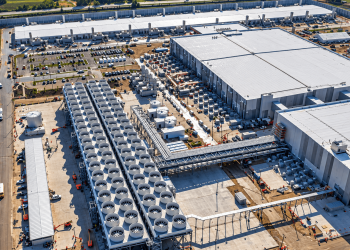
Data centers need electricity not only to run servers but also to cool them.
As models become larger and companies offer AI services to millions of users, the amount of computing infrastructure required can rise dramatically.
Research has long documented the energy and carbon costs associated with machine learning. One study of the BLOOM language model estimated emissions of about 50.5 metric tons of CO₂ equivalent when accounting for both operational electricity and equipment-related impacts.
That example is much smaller than the infrastructure being built today.
The key issue is scale.
A single AI model may have a manageable footprint, but millions or billions of inference requests can turn electricity demand into a major industrial issue.
OpenAI and Anthropic Are Becoming Infrastructure Companies

It is easy to think of OpenAI and Anthropic as software companies.
That description is increasingly incomplete.
Their businesses depend on access to enormous amounts of computing capacity.
The companies need advanced GPUs, data centers, networking equipment and electricity to train and operate their models.
That makes their environmental footprint closely connected to the infrastructure providers they use.
Anthropic, for example, has entered major computing arrangements with infrastructure providers. Its agreement with SpaceX to access AI computing capacity illustrates how quickly the AI industry’s demand for infrastructure is expanding.
SpaceX’s IPO filings have revealed the extraordinary scale of some of these arrangements, with Anthropic committed to paying SpaceX substantial sums for computing capacity.
This is where the environmental question becomes more complicated.
The emissions may not appear directly on an AI company’s balance sheet, but the underlying electricity consumption still exists.
SpaceX Has a Different Environmental Footprint
SpaceX’s emissions profile is different.
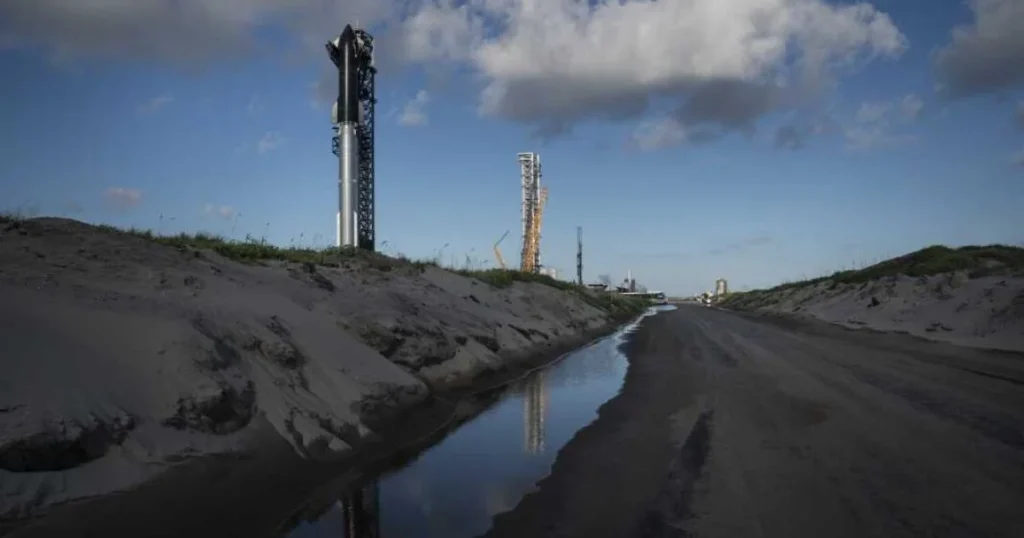
The company’s primary business is space transportation, meaning its environmental impact comes heavily from rocket launches, manufacturing, transportation and the energy required to operate its infrastructure.
Rocket launches are inherently energy-intensive.
They require large quantities of propellant and generate emissions in the atmosphere.
But SpaceX is increasingly becoming something else as well.
Through its expanding computing operations, the company is positioning itself as an important infrastructure provider for AI.
That creates a convergence between two of the world’s most capital-intensive industries: space and artificial intelligence.
The AI Boom Is Driving Power Demand
The environmental debate around AI is increasingly becoming an electricity debate.
Data-center construction is accelerating as technology companies compete for computing capacity.
That means utilities and governments are facing questions about where the electricity will come from.
If additional demand is met primarily through fossil-fuel generation, AI growth could produce significantly higher emissions.
If companies secure renewable power, nuclear generation or other low-carbon sources, the emissions impact could be reduced.
But renewable-energy claims also require scrutiny.
A company purchasing renewable-energy certificates does not necessarily mean the electricity physically powering its data center came from renewable generation.
The distinction between contractual clean energy and actual electricity consumption can be important when evaluating environmental impact.
Why Companies May Be Saying Less
The reduced emphasis on emissions reporting is not necessarily because environmental impacts have disappeared.
The incentive structure has changed.
When investors strongly rewarded companies for ESG disclosures, detailed climate reporting became a competitive advantage.
Now, companies may see fewer benefits from publishing extensive environmental information.
For private companies, the pressure can be even weaker.
OpenAI and Anthropic have not faced the same public-company reporting obligations as listed corporations.
That gives them greater flexibility over how much environmental information they disclose.
SpaceX, after becoming publicly traded, faces a different environment, but the broader market may still place greater emphasis on financial performance than sustainability metrics.
The Post-ESG Environment Changes Investor Behavior
The term “post-ESG” should not be interpreted as meaning investors no longer care about environmental risks.
That would be too simplistic.
Large institutional investors still have to consider regulatory exposure, energy costs, physical climate risks and potential liabilities.
The difference is that investors increasingly evaluate those issues through financial materiality rather than broad sustainability commitments.
For an AI company, electricity availability can therefore matter more than an abstract emissions target.
If electricity prices rise, operating costs increase.
If a data center cannot obtain sufficient power, expansion slows.
If governments introduce carbon restrictions or new energy regulations, capital expenditure may change.
Environmental issues remain relevant — but increasingly because they affect the economics of the business.
Energy Could Become a Competitive Advantage
This is one of the most important implications.
AI companies with access to reliable, affordable and low-carbon electricity could eventually have an advantage over competitors.
Electricity is becoming a strategic input for AI.
Companies need enormous quantities of it, and they need it continuously.
That means access to power can become just as important as access to chips.
The winners may be companies capable of securing long-term energy contracts, building their own generation capacity or partnering with utilities.
This also explains why technology companies are increasingly involved in discussions around nuclear power, renewable energy and large-scale power infrastructure.
The Environmental Debate Is Becoming More Complicated
There is also a risk of oversimplifying the issue.
AI does not automatically equal environmental damage.
AI can potentially improve energy efficiency in power grids, optimize industrial processes, improve transportation systems and accelerate scientific research.
The relevant question is therefore not simply whether AI consumes electricity.
It is whether the economic and social benefits generated by that computing justify the environmental cost.
That calculation is difficult because the benefits are distributed across different sectors while the energy consumption is concentrated in data centers.
Disclosure Still Matters
Even if investors no longer demand ESG reports with the same enthusiasm, transparent emissions reporting remains useful.
Without consistent information, it becomes difficult to compare companies.
Investors cannot easily determine whether one AI company is more energy-efficient than another.
They also cannot properly assess whether a company’s growth strategy depends on increasingly carbon-intensive electricity.
The absence of disclosure therefore creates an information problem.
That could become more important as AI infrastructure becomes a larger part of the global economy.
There Is a Financial Risk in Staying Quiet
Silence may work while environmental issues remain politically unpopular.
But that can change quickly.
Energy regulations can change.
Carbon prices can rise.
Investors can change their priorities.
Consumers can become more environmentally conscious.
And physical climate risks can affect infrastructure.
Companies that disclose little may eventually find themselves scrambling to provide information when investors suddenly demand it.
That is particularly relevant for businesses with enormous physical infrastructure requirements.
SpaceX, OpenAI and Anthropic Are an Interesting Test Case
These three companies illustrate different versions of the same problem.
SpaceX combines energy-intensive aerospace operations with an increasingly important AI-computing business.
OpenAI is primarily an AI company whose growth depends heavily on computing infrastructure.
Anthropic faces similar infrastructure requirements and has already demonstrated the scale of computing commitments necessary to compete at the frontier.
None can treat energy as a minor operating issue.
Their future growth depends on it.
The Real Question Is Not ESG
The debate is increasingly moving beyond the ESG label.
Whether a company calls itself sustainable is becoming less important than whether it can answer practical questions.
How much electricity does the business consume?
Where does that electricity come from?
How quickly is consumption increasing?
What happens to emissions when AI usage doubles?
How much water is required for cooling?
What happens when local power grids cannot support new data centers?
Those questions are ultimately about costs, infrastructure and risk.
They matter even if ESG investing disappears entirely.
What Investors Should Watch
Investors evaluating AI and infrastructure companies should therefore look beyond headline sustainability claims.
The most useful indicators include:
- electricity consumption;
- data-center power capacity;
- renewable and nuclear-energy contracts;
- carbon emissions;
- water usage;
- energy efficiency;
- infrastructure spending;
- geographic concentration of data centers;
- exposure to electricity-price increases.
These metrics can reveal more about the long-term economics of AI than a generic net-zero pledge.
The Bigger Picture
The post-ESG environment does not mean environmental risks have disappeared.
It means the way investors evaluate them is changing.
For companies such as SpaceX, OpenAI and Anthropic, energy is becoming too important to ignore.
AI expansion requires data centers.
Data centers require electricity.
Electricity infrastructure requires enormous amounts of capital.
And the source of that electricity determines both operating costs and environmental impact.
The irony is that the decline of ESG pressure could make environmental disclosure less visible just as the underlying environmental footprint of technology is becoming larger.
That creates a potential information gap.
Investors may care less about whether a company has a glossy sustainability report, but they still need to know whether its business model depends on scarce electricity, expensive infrastructure or increasingly carbon-intensive power.
For SpaceX, OpenAI and Anthropic, the environmental question is therefore unlikely to disappear.
It is simply being reframed.
The future debate may not be about ESG scores or corporate climate pledges. It may be about something much harder to avoid: who has the power, literally and financially, to run the AI economy.