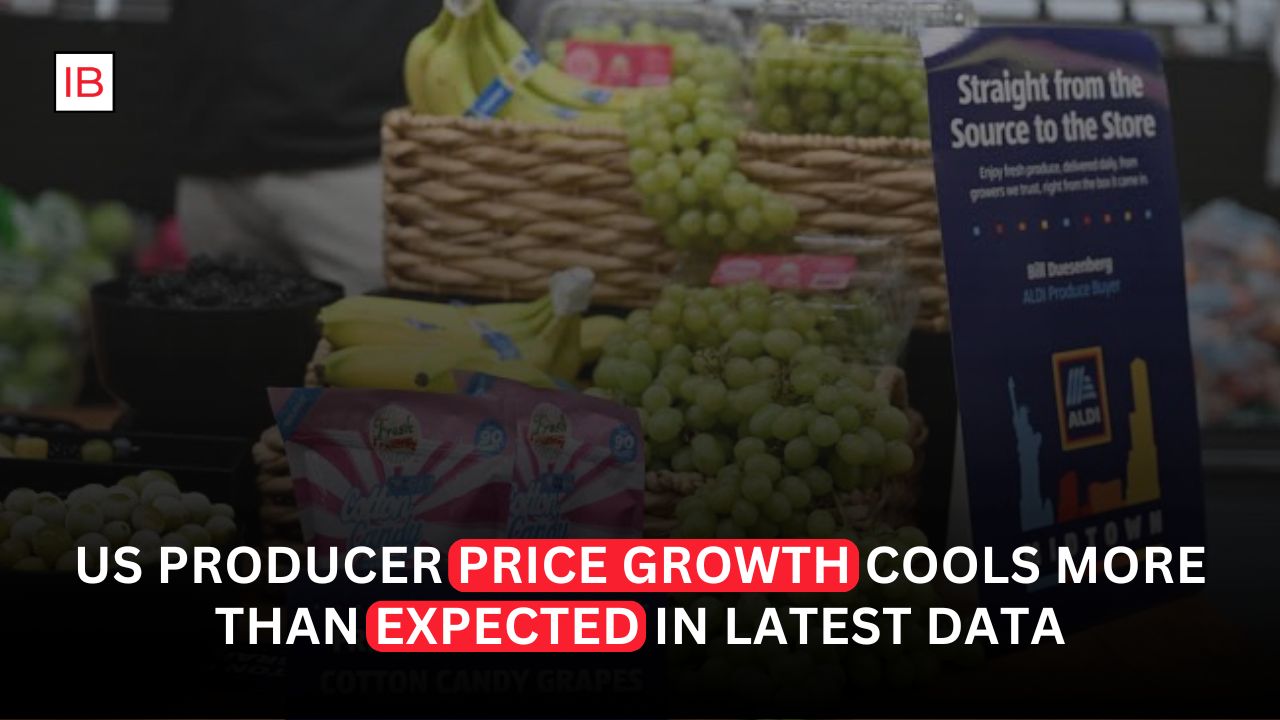
US producer-price growth cooled more than economists expected, offering a welcome signal that inflationary pressure may be easing further at the wholesale level.
The report matters because producer prices can provide an early indication of where consumer inflation is headed. The latest data suggest businesses are facing less pressure to raise prices, potentially giving the Federal Reserve more room to consider interest-rate cuts.
Producer Inflation Is Losing Momentum
The Producer Price Index measures prices received by domestic producers for goods and services.
When producer-price growth accelerates, companies can face higher input costs and may eventually pass those increases on to consumers.
When it slows, that pressure generally becomes less intense.
The latest reading therefore provides some relief after concerns that tariffs and other cost pressures could keep US inflation elevated.
The Bureau of Labor Statistics is the official source for the PPI data and publishes monthly producer-price releases.
Why the Fed Cares
The Federal Reserve does not target producer prices directly.
Its main inflation gauge is based on consumer prices, particularly the personal consumption expenditures measure.
But producer prices can still matter because persistent increases in wholesale costs can eventually feed into consumer prices.
A continued slowdown would therefore strengthen the argument that inflation is moving closer to the Fed’s longer-term objective.
That could become particularly important as policymakers weigh whether monetary policy remains too restrictive.
Tariffs Remain a Wild Card
The biggest reason not to overinterpret the report is that producer prices do not capture the entire inflation picture.
US companies continue to face uncertainty around tariffs, supply chains and commodity costs.
Tariffs can raise the cost of imported inputs, but the eventual impact depends on who absorbs those costs.
Possible outcomes include:
- Importers accepting lower margins
- Suppliers reducing prices
- Businesses passing costs to customers
- Companies changing suppliers
- Consumers ultimately paying more
So today’s softer producer-price data do not eliminate the possibility of renewed inflation later.
Services Matter Too
Producer inflation is not just about commodities and manufactured goods.
Services make up a large portion of the US economy, and service-sector price pressures can be particularly important for underlying inflation.
That means investors should look beyond the headline PPI number.
A broad-based slowdown across goods and services would be much more encouraging than a decline concentrated in a few volatile categories.
The Labor Market Is the Other Half of the Story
The inflation outlook also depends heavily on employment.
A cooling labor market can reduce wage pressure and weaken companies’ ability to raise prices.
Recent US labor-market data have shown signs of moderation, although employment remains far from collapsing. The Bureau of Labor Statistics reported 7.359 million job openings in June 2026, with the openings rate at 4.4%.
That combination — slower inflation alongside a gradually cooling labor market — would be relatively favorable for the Fed.
It could allow policymakers to ease monetary policy without appearing to abandon inflation control.
Markets May Focus on Rate Cuts
For financial markets, the immediate question is what the data mean for interest rates.
Lower inflation generally increases expectations for rate cuts.
That can support:
- Treasury bonds
- Growth stocks
- Technology shares
- Interest-rate-sensitive sectors
- Housing-related assets
But markets can move quickly on expectations.
If subsequent consumer-price or wage data show renewed inflation, today’s reaction could reverse.
A Softer PPI Does Not Mean Inflation Is Defeated
This is the main caveat.
One monthly report is not a trend.
Producer prices can be volatile, particularly when energy, trade margins and commodity prices move sharply.
The stronger conclusion would require several months of evidence showing that underlying producer inflation is consistently moderating.
The BLS historical data show that PPI can move considerably from month to month, which is why the underlying trend matters more than any single reading.
What Investors Should Watch Next
Consumer Inflation
The next major test is whether the softer producer-price trend reaches consumers.
Core Inflation
Underlying measures excluding volatile components will be especially important.
Wages
If wage growth remains elevated, services inflation could stay sticky.
Tariff Pass-Through
Businesses’ ability to absorb or pass on tariff costs will become increasingly important.
Fed Communication
Any change in policymakers’ language around inflation and rate cuts could have a larger market impact than the PPI release itself.
The Bigger Picture
The latest producer-price report provides some evidence that US inflationary pressure is cooling, but it does not settle the inflation debate.
The more important question is whether the slowdown continues while the labor market gradually loses momentum.
If it does, the Fed could face a more favorable policy environment: inflation moving lower without a severe recession.
If producer prices rebound because tariffs, energy or supply disruptions push costs higher again, policymakers could find themselves stuck between supporting growth and preventing inflation from returning.
For now, the report is a positive signal for the disinflation story — but investors should treat it as one piece of evidence, not proof that inflation risks have disappeared.