Autonomous Systems Are Moving From Individual Drones to Coordinated Fleets, Potentially Changing How Militaries Conduct Surveillance, Defense and Combat
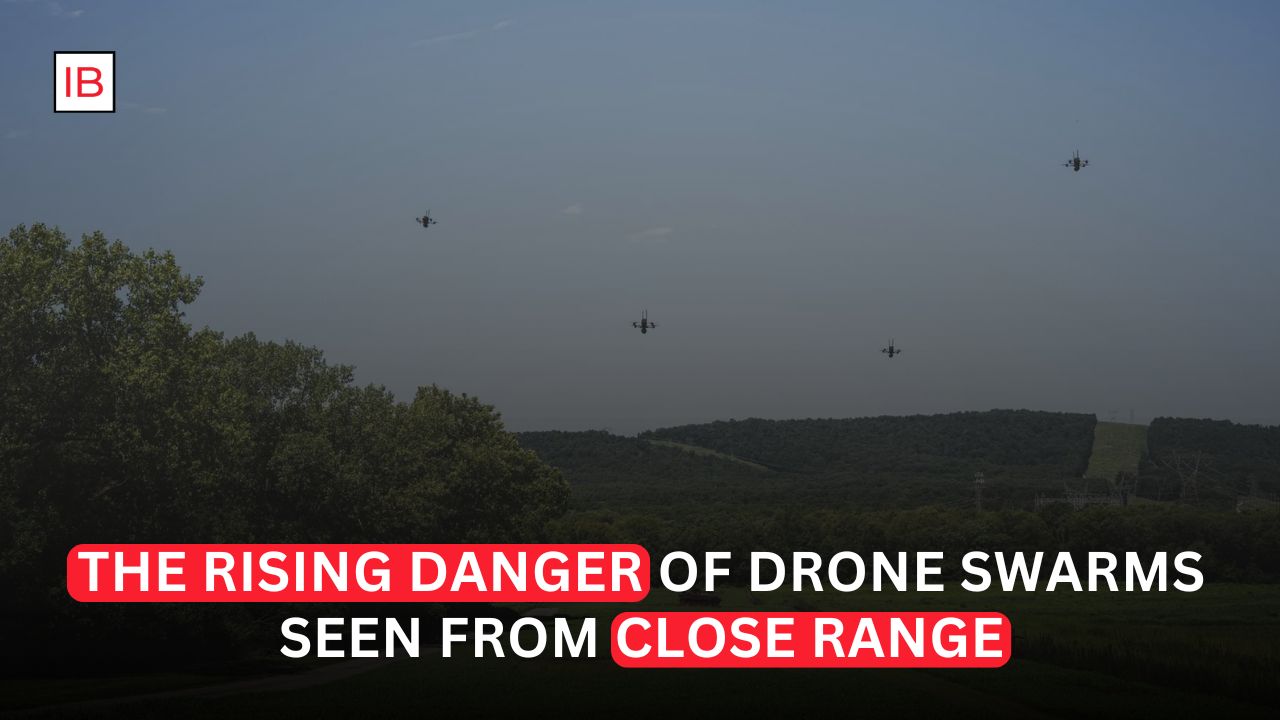
Artificial intelligence is pushing military drones into a new phase, with companies such as Auterion developing systems that allow groups of unmanned aircraft to operate as coordinated teams rather than as isolated machines.
The development marks an important shift in modern warfare. Instead of requiring a separate human operator to control every drone, AI-enabled software can coordinate multiple aircraft and allow them to share information and work toward a common mission.
Auterion has demonstrated its swarm technology in live-fire testing, including a US test in which a single operator coordinated multiple drones against several targets. The company says its technology is designed to allow different types of drones to operate together as a unified force.
The technology is attracting growing attention as militaries study lessons from Ukraine, where relatively inexpensive drones have become central to battlefield operations.
From Individual Drones to Swarms
Traditional military drones generally depend heavily on human operators.
A swarm changes that model.
Instead of treating each aircraft as an independent platform, swarm technology allows multiple drones to coordinate their behavior. The objective is to create a force that can respond collectively to changing conditions.
Auterion’s software platform is designed to connect fleets of autonomous systems and provide a common technological foundation across different vehicles. The company describes its operating system as vendor-independent and capable of supporting an entire fleet from a single architecture.
That approach could make military drone fleets more flexible while reducing dependence on a large number of specialized operators.
AI Becomes the Key Component
The biggest change is not necessarily the aircraft themselves.
It is the software controlling them.
Artificial intelligence can help drones process information from their sensors, understand their surroundings and coordinate with other machines.
That is particularly valuable in environments where communications are unreliable or electronic warfare interferes with conventional control systems.
The technology being developed by Auterion and other companies is intended to make autonomous systems more resilient and capable of operating as a coordinated network.
The broader trend is already visible in Ukraine, where AI-assisted navigation and autonomous capabilities are being developed to help drones function in heavily contested environments.
Ukraine Has Become a Testing Ground
The war in Ukraine has accelerated the development of military drone technology.
Both sides have deployed large numbers of unmanned aircraft for reconnaissance, surveillance and attack missions.
The battlefield has also created an unusually demanding environment for autonomous systems because electronic warfare, GPS disruption and changing battlefield conditions can interfere with traditional drone operations.
That has encouraged developers to work on systems capable of making more decisions without relying continuously on a remote operator.
Ukraine’s experience is now influencing military planning across Europe and the United States.
One Operator Could Control More Systems
One of the most important potential advantages of swarm technology is scale.
If one person can supervise several autonomous drones instead of manually controlling each aircraft, militaries could potentially deploy larger formations without increasing the number of operators at the same rate.
Auterion demonstrated this concept during a US live-fire test in January, describing it as a first for its combat swarm technology. The company said a single operator was able to coordinate three drones simultaneously against multiple targets.
The significance goes beyond a single demonstration.
It suggests that software could become as important as the physical aircraft in determining the effectiveness of future drone fleets.
Different Drones Can Work Together
Another important development is interoperability.
Military drone fleets often contain aircraft produced by different companies and designed for different purposes.
Auterion has demonstrated technology intended to allow drones from different manufacturers to operate together as a unified swarm. Its December 2025 demonstration involved different types of unmanned aircraft coordinating during a single operation.
That could make military fleets easier to expand because governments would not necessarily need to purchase every aircraft from one manufacturer.
Instead, software could provide a common layer connecting different systems.
The Battlefield Could Become More Autonomous
The development points toward a battlefield where humans increasingly supervise networks of machines rather than directly control every vehicle.
Drones could potentially perform routine navigation, observation and coordination tasks while human personnel remain responsible for important decisions.
That distinction is becoming increasingly important in military planning.
NATO, for example, is developing concepts involving large numbers of AI-assisted drones while emphasizing that humans should retain control over lethal targeting decisions.
The debate over how much autonomy should be permitted in combat is therefore developing alongside the technology itself.
Defenses Will Have to Adapt
The rise of drone swarms creates a major challenge for traditional air defenses.
A single drone can be relatively easy to identify and track.
A large group of coordinated aircraft presents a much more complicated problem.
Defenders must detect, track and respond to numerous objects simultaneously, potentially while dealing with decoys, electronic interference and rapidly changing battlefield conditions.
That is encouraging a parallel race in defensive technology.
Militaries are exploring electronic warfare, interceptor drones, sensors and other systems designed to counter increasingly sophisticated unmanned aircraft.
The Technology Is Becoming an Arms Race
The development of AI-powered swarms is not limited to one company or one country.
The United States, European countries, China, Ukraine and other military powers are investing in autonomous drone capabilities.
Germany has also been advancing AI-enabled swarm technology following military trials, while European defense planners are increasingly examining how autonomous systems could reshape future operations.
This could create a new type of military competition in which software development becomes a critical component of defense capability.
Countries that can rapidly improve AI models, sensors, communications and autonomous systems may gain advantages even without possessing the largest conventional forces.
Cost Is Another Major Attraction
Drones are also attractive because many systems can be significantly cheaper than traditional military platforms.
A relatively inexpensive unmanned aircraft can potentially perform missions that would otherwise require much more expensive equipment.
That economic equation becomes even more important when drones operate in large numbers.
The ability to produce and deploy autonomous systems at scale could therefore change military procurement strategies.
Instead of focusing exclusively on a small number of highly sophisticated platforms, militaries may increasingly combine expensive systems with large fleets of lower-cost autonomous machines.
Challenges Remain
Despite the rapid progress, autonomous drone technology still faces significant limitations.
AI systems can make mistakes.
Sensors can fail.
Communications can be disrupted.
Weather and difficult terrain can affect performance.
Most importantly, battlefield environments are unpredictable, meaning technologies demonstrated under controlled conditions may perform differently during actual combat.
These challenges make human oversight and reliable safety mechanisms particularly important.
Looking Ahead
AI-powered drone swarms represent one of the most significant developments in modern military technology, transforming drones from individually operated aircraft into coordinated networks of autonomous systems.
Auterion’s demonstrations show how software can allow multiple drones to work together while reducing the number of operators required to manage them.
The technology is developing rapidly because of lessons from Ukraine, where drones have become a central part of modern warfare and electronic warfare has forced developers to seek increasingly autonomous capabilities.
For militaries, the attraction is clear: autonomous swarms could provide greater scale, flexibility and persistence while potentially reducing the cost of individual systems.
But the development also creates difficult questions.
How much control should humans retain? How should militaries defend against large autonomous formations? And what happens when both sides possess systems capable of making increasingly independent decisions?
Those questions will become more important as the technology moves from demonstrations and trials toward wider deployment.
The battlefield of the future may therefore contain fewer individually controlled drones and more interconnected fleets operating through AI-driven software.
The decisive advantage may not belong to whoever builds the best individual drone, but to whoever can create the most capable network of machines.