Lawmakers End Prolonged Political Standoff as Delayed Spending Plan Clears the Legislature Amid Defense and Economic Pressures
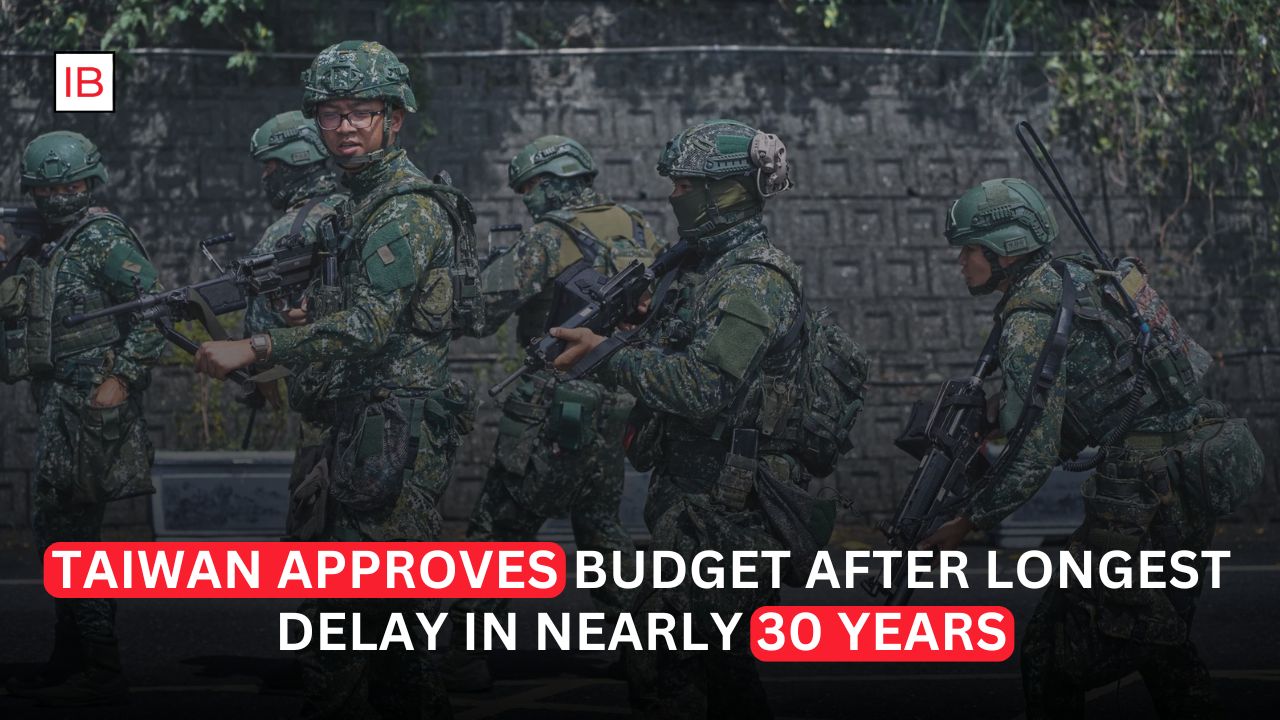
Taiwan’s parliament has finally passed the central government’s 2026 budget after an unusually long political standoff, ending the longest delay in nearly three decades and allowing government agencies to gain access to spending that had remained frozen for months.
The approval represents an important breakthrough for President Lai Ching-te’s administration, which has struggled to advance its spending plans through an opposition-controlled legislature.
The budget dispute has become a major political issue because Taiwan is simultaneously facing growing pressure from China, rising demands for defense investment and the need to maintain strong economic growth.
The prolonged delay had already affected government programs, including spending linked to national security and the development of Taiwan’s domestic drone industry.
Legislature Finally Clears the Spending Plan
Taiwan’s opposition-controlled legislature passed the 2026 central government budget on Friday after months of negotiations and political confrontation.
The delay was unusually long by Taiwan’s standards and reflected the broader political deadlock between Lai’s ruling Democratic Progressive Party and opposition lawmakers from the Kuomintang and Taiwan People’s Party.
The final budget contains significant cuts and changes compared with the government’s original proposal.
However, lawmakers also withdrew a proposal to freeze NT$63.4 billion ($2 billion) in spending related to Taiwan’s drone development and procurement programs.
The decision removes one of the most contentious obstacles surrounding the budget.
Defense Spending Was at the Center of the Dispute
Taiwan’s defense needs have become increasingly urgent as China’s military activity around the island has intensified.
President Lai has repeatedly argued that Taiwan needs to increase defense spending and strengthen its ability to withstand potential military pressure.
The government has proposed substantial additional military investment, including a multiyear special defense budget.
However, opposition lawmakers have questioned the government’s approach to financing and allocating defense spending.
Earlier delays prompted warnings from Taiwan’s defense officials and concern from Washington. The US State Department previously said that continued delays to Taiwan’s military spending would effectively benefit Beijing.
The annual budget dispute has therefore become part of a much larger argument over Taiwan’s national security strategy.
Drone Industry Funding Survives
One of the most closely watched elements of Friday’s vote was funding for Taiwan’s emerging drone industry.
The Cabinet’s comprehensive program includes NT$44.2 billion for developing the domestic drone industry, while another NT$19.2 billion covers additional drone-related spending.
The opposition initially sought to cut the combined NT$63.4 billion but later proposed freezing the funds.
Those proposals were ultimately withdrawn.
That means Taiwan can proceed with planned investment in domestic drone production and related capabilities.
The decision is strategically important because drones are becoming increasingly central to modern warfare.
Taiwan Wants to Build a Domestic Drone Supply Chain
Taiwan has been working to establish a domestic drone industry that can supply military and civilian markets.
The strategy reflects lessons from the war in Ukraine, where inexpensive unmanned systems have become essential for reconnaissance, surveillance and battlefield operations.
Taiwan is particularly interested in building production capacity that is independent of Chinese supply chains.
The island has significant electronics and semiconductor expertise, potentially giving its manufacturers an advantage in developing sophisticated unmanned systems.
The government has also discussed large-scale procurement plans intended to create enough demand for domestic manufacturers to expand.
Political Deadlock Has Economic Costs
The budget delay was not only a political problem.
When a government cannot obtain approval for its annual spending plan, agencies can face restrictions on launching new programs and making certain investments.
Taiwan’s system provides mechanisms for government operations to continue, but delayed approval can still complicate planning and implementation.
The prolonged dispute therefore created uncertainty for government agencies, contractors and businesses that depend on public spending.
The delay was particularly problematic given Taiwan’s strong economic performance and the government’s desire to accelerate investment in technology, infrastructure and defense.
Economy Remains a Major Source of Strength
Taiwan’s economy has been performing strongly, supported by enormous global demand for semiconductors and artificial-intelligence technology.
The island is home to Taiwan Semiconductor Manufacturing Co., the world’s leading advanced chipmaker, and has become a central part of the global AI supply chain.
Strong technology exports have helped drive economic growth and investment.
The government recently raised its 2026 growth outlook as the AI boom continued to boost demand for Taiwan’s technology products.
That economic strength provides the government with greater fiscal capacity to invest in defense and infrastructure.
AI Boom Adds Strategic Importance
Taiwan’s economic importance has increased alongside the global AI boom.
Advanced processors used in data centers and artificial-intelligence systems rely heavily on Taiwanese semiconductor manufacturing.
That makes Taiwan economically valuable to companies and governments around the world.
It also increases the strategic importance of protecting the island’s infrastructure and supply chains.
The budget therefore comes at a time when Taiwan is trying to balance economic expansion with increased national-security spending.
China Remains the Biggest Security Concern
Beijing claims Taiwan as part of China and has increased military pressure around the island in recent years.
Chinese military aircraft and naval forces regularly operate around Taiwan, while Beijing has conducted major military exercises designed to demonstrate its ability to pressure the island.
Taiwan’s government argues that stronger defense capabilities are necessary to deter aggression.
China has opposed Taiwan’s increased military spending and US arms sales to the island.
That geopolitical tension means budget debates in Taipei can have implications far beyond Taiwan’s domestic politics.
Opposition Control Creates Challenges for Lai
Lai became president in 2024 but does not control a majority in the legislature.
The opposition Kuomintang and Taiwan People’s Party have been able to work together on several major issues, limiting the government’s ability to pass its preferred policies.
The budget dispute has become one of the clearest examples of that political reality.
The ruling party has accused the opposition of obstructing government operations and weakening national security.
Opposition lawmakers have argued that they are exercising necessary oversight over government spending.
The conflict has produced repeated delays and legislative confrontations.
Defense Budget Could Rise Further
The passage of the annual budget does not mean Taiwan’s defense-spending debate is over.
The government has proposed significantly higher defense spending for 2027.
Taiwan is planning to increase defense spending by 16%, pushing the total above NT$1 trillion for the first time, according to reports. The proposed increase would take defense spending above 3% of GDP.
That means lawmakers are likely to face another major debate over military funding.
The government’s argument will be that Taiwan needs to rapidly strengthen its defenses.
The opposition is likely to continue demanding greater oversight of spending.
Washington Is Watching Closely
The United States has become increasingly vocal about Taiwan’s defense preparations.
Washington is Taiwan’s most important international security partner and its principal source of advanced military equipment.
US officials have repeatedly encouraged Taiwan to increase defense spending and strengthen its ability to defend itself.
The United States has also criticized delays in approving certain military funding.
The passage of the annual budget could therefore be welcomed in Washington as evidence that Taipei is making progress on its defense commitments.
Budget Approval Provides Some Political Relief
For Lai’s government, getting the budget passed provides a degree of political relief.
The administration can now move forward with programs that had been delayed by the legislative impasse.
It also gives government agencies greater certainty over their funding for the remainder of the year.
The agreement does not eliminate the broader political conflict between the government and opposition parties.
But it demonstrates that compromise remains possible despite the deep divisions inside the legislature.
Economic and Security Priorities Are Becoming Connected
Taiwan’s budget debate increasingly reflects the connection between economic strength and national security.
The island’s semiconductor industry provides enormous economic value, but it also makes Taiwan strategically important.
Protecting that industrial base requires investment in energy, infrastructure, transportation, communications and defense.
The government therefore views defense spending as part of a broader effort to strengthen national resilience.
The opposition, meanwhile, wants tighter control over how that money is spent.
Looking Ahead
Taiwan’s passage of its long-delayed 2026 budget marks an important political breakthrough after nearly three decades without such a prolonged delay.
The approval allows the government to move forward with spending programs that had been held up during months of confrontation between the ruling Democratic Progressive Party and the opposition-controlled legislature.
One of the most significant outcomes was the withdrawal of proposals to freeze NT$63.4 billion in drone-related spending.
That decision could help Taiwan accelerate efforts to develop a domestic drone industry at a time when unmanned systems are becoming increasingly important to modern warfare.
The broader defense debate, however, is far from finished.
Taiwan is planning a significant increase in military spending for 2027, with the proposed budget expected to exceed NT$1 trillion and surpass 3% of GDP.
That will likely create another major confrontation between Lai’s government and opposition lawmakers.
The budget’s passage nevertheless gives Taiwan’s government more financial certainty at a critical moment.
The economy is benefiting from the global AI and semiconductor boom, while geopolitical tensions with China continue to intensify.
For Lai, the challenge will be to convert that economic strength into greater national resilience without allowing political divisions to produce another prolonged budget impasse.
Taiwan’s latest budget battle demonstrates that fiscal policy, technology and national security are now deeply interconnected.
As the island expands its semiconductor leadership and builds new capabilities in drones and defense technology, the government’s ability to secure timely legislative approval for spending will become increasingly important.
For now, the passage of the 2026 budget removes one major obstacle and gives Taipei greater room to focus on the economic and security challenges ahead.