Constitutional Court Blocks Renewal of Wild Coast Exploration Right, Delivering Major Setback to Offshore Oil Plans
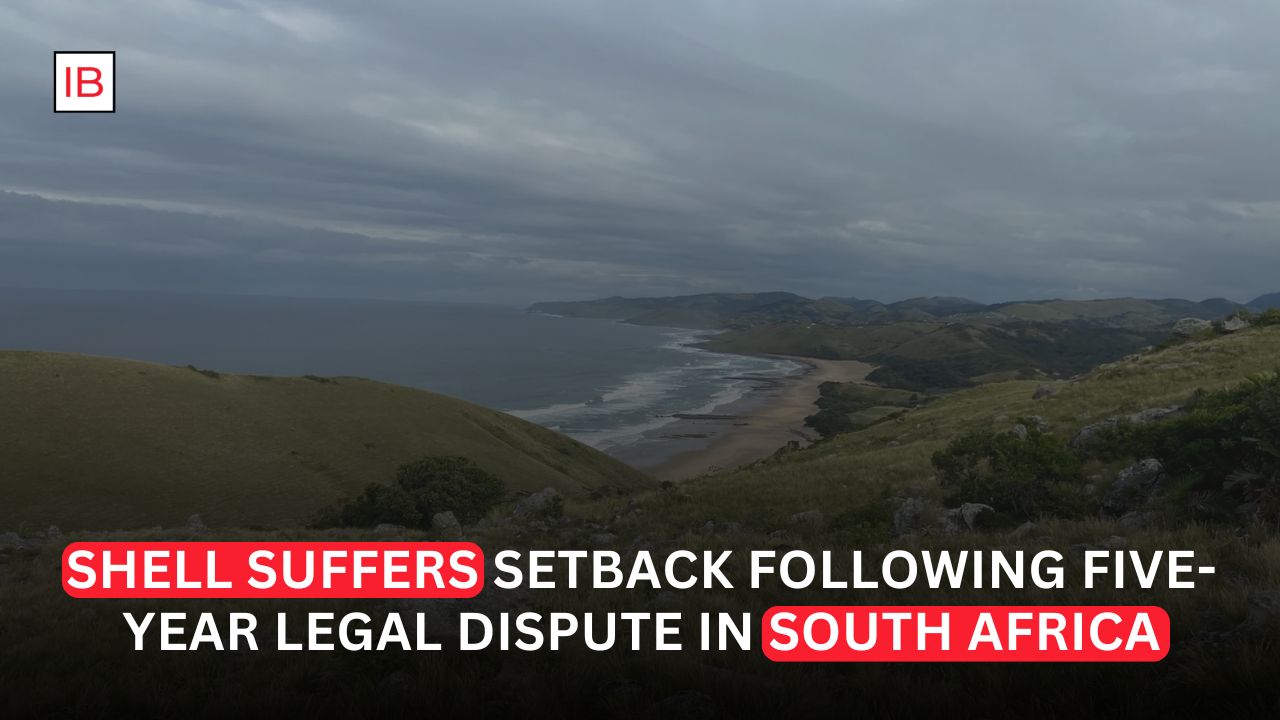
Shell has lost a five-year legal battle with environmental activists and coastal communities in South Africa, after the country’s Constitutional Court ruled that the oil major cannot renew an exploration right covering a section of the country’s rugged Wild Coast.
The decision represents a major setback for Shell and its local partner, Impact Africa, and could have wider consequences for South Africa’s developing offshore oil industry. The case has been closely watched because it sits at the intersection of energy development, environmental protection, community rights and the country’s efforts to attract investment into its offshore resources.
The legal dispute began in 2021 after activists and local communities challenged Shell’s plans to conduct seismic surveys in waters along the Wild Coast, an area known for marine life and fishing communities.
Constitutional Court Delivers Final Blow
South Africa’s highest court ruled Friday that the exploration right should be set aside, effectively preventing Shell from renewing the right that would have allowed further exploration activity in the area.
The ruling overturns the practical effect of a 2024 Supreme Court of Appeal decision that had given Shell some room to pursue another renewal, subject to proper consultation.
For activists, the Constitutional Court decision represents a significant victory after years of legal challenges.
For Shell and other energy companies, however, the ruling highlights the regulatory and legal obstacles involved in developing South Africa’s offshore oil resources.
The Dispute Began With a Seismic Survey
The original controversy centered on a planned seismic survey off the Wild Coast.
Seismic surveys use powerful sound waves to map geological structures beneath the seabed and determine whether oil and gas deposits may be present.
Shell and Impact Africa planned to conduct the survey in an area where whales and other marine species are frequently found.
Environmental organizations and coastal communities argued that the potential effects on marine ecosystems, fishing livelihoods and local communities had not been properly considered.
The dispute quickly moved from a disagreement over a survey into a much broader legal battle over how South Africa manages natural-resource development.
Communities Challenged the Exploration Right
The communities involved in the case argued that they had not been meaningfully consulted before the exploration right was granted and renewed.
They also raised concerns about the potential impact of seismic activity on fishing, cultural practices and the marine environment.
Legal documents filed in the case stated that affected communities only became aware of the exploration right in 2021, when Shell and Impact sought to exercise it through seismic surveys.
The issue of consultation became one of the central questions in the legal proceedings.
High Court Initially Ruled Against Shell
The dispute first produced a major victory for the activists in South Africa’s High Court.
In December 2021, the court issued an interim order preventing Shell and its partners from conducting the seismic survey while the broader legal challenge proceeded.
In September 2022, the High Court went further, finding that the exploration right and its renewals should be reviewed and set aside.
The court concluded that relevant considerations had not been adequately taken into account when the right was granted.
Shell appealed the decision.
Supreme Court of Appeal Offered Some Relief
The legal battle then moved to the Supreme Court of Appeal.
The appeals court agreed that the decision-making process surrounding the exploration right had been legally flawed. However, it took a different approach to the consequences of that finding.
The court considered the substantial time that had passed since the original exploration right was issued and the significant investment made by Shell and Impact Africa.
The SCA noted that the companies had spent roughly 1.1 billion rand in the region and that only one further renewal opportunity remained.
That ruling gave Shell a temporary reprieve and allowed the possibility of another renewal application.
Environmental groups subsequently challenged that part of the ruling before the Constitutional Court.
Environmental Groups Celebrate Victory
Activists have described the case as an important victory for environmental protection and community rights.
Organizations involved in the legal challenge argued that the case was never simply about whether Shell could search for oil.
They said it was also about whether communities living along the coast should have a meaningful role in decisions affecting their livelihoods, culture and environment.
The Legal Resources Centre has described the case as a major example of communities using the courts to defend their relationship with the ocean and protect their livelihoods.
The Constitutional Court decision could encourage other communities facing offshore exploration proposals to challenge projects they believe were approved without adequate consultation.
Shell Faces a More Difficult Offshore Environment
The ruling comes at a challenging time for South Africa’s offshore oil industry.
The country has significant offshore resource potential, particularly in the waters along its eastern and western coasts.
Major energy companies have shown interest in the region following discoveries elsewhere in southern Africa.
But regulatory uncertainty and legal challenges have slowed exploration.
South Africa’s offshore oil prospects are increasingly being compared with neighboring Namibia, where major discoveries have attracted international energy companies and created expectations of future production.
Namibia Provides a Sharp Contrast
Namibia has emerged as one of Africa’s most promising new oil regions following significant discoveries in the Orange Basin.
Shell and TotalEnergies are among the companies involved in exploration activity in the broader region.
The Orange Basin extends across the maritime areas of both Namibia and South Africa, making the contrasting regulatory environments particularly significant.
While Namibia is moving toward development of its discoveries, South Africa continues to face legal challenges over exploration permits and environmental approvals.
The contrast has raised concerns among industry representatives that South Africa could lose investment to its northern neighbor.
Legal Uncertainty Could Affect Investment
Energy companies typically require enormous amounts of capital to explore for and develop offshore oil and gas.
The investment process can take years before a project generates any revenue.
Repeated legal challenges can therefore increase uncertainty and make companies more cautious about committing capital.
Industry representatives have argued that South Africa needs a more predictable regulatory framework if it wants to attract large-scale offshore investment.
Some have even suggested specialized courts could help speed up disputes without weakening environmental protections.
Environmental Concerns Remain Central
The other side of the debate is that offshore oil development can create significant environmental and social risks.
The Wild Coast is home to marine ecosystems and communities that rely on fishing and other ocean resources.
Environmental groups have argued that seismic surveys can disturb marine life and that authorities must properly evaluate potential cumulative impacts before granting approvals.
The legal dispute therefore reflects a broader global debate over whether countries should expand fossil-fuel exploration while also attempting to address climate change.
Other Offshore Projects Face Challenges
Shell’s case is not isolated.
Other proposed seismic surveys and offshore oil projects in South Africa have also faced opposition from environmental organizations and fishing communities.
A separate 2026 legal challenge concerns a proposed seismic survey off South Africa’s West Coast, with fishers and environmental groups arguing that environmental impacts and potential effects on livelihoods were not adequately considered.
The continued legal challenges suggest that disputes over offshore exploration are likely to remain a feature of South Africa’s energy sector.
The Oil Industry Still Sees Potential
Despite the legal obstacles, South Africa remains attractive to oil and gas companies because of its offshore resource potential.
Discoveries in neighboring Namibia have increased interest in the broader region.
Shell and TotalEnergies are among the companies that have sought to explore offshore prospects.
If commercial discoveries can be developed successfully, they could potentially provide South Africa with additional energy resources, investment and government revenue.
But those opportunities will need to be balanced against environmental concerns and the rights of coastal communities.
A Setback for Shell
For Shell, the Constitutional Court decision represents the latest and most definitive setback in a dispute that has lasted for years.
The company now loses the ability to renew the exploration right covering the Wild Coast area.
The ruling also illustrates the increasingly complicated environment major energy companies face when pursuing new oil and gas projects.
Even when geological prospects appear promising, legal challenges can prevent exploration from moving forward.
Looking Ahead
Shell’s loss in South Africa’s Constitutional Court closes a five-year legal chapter over its proposed Wild Coast exploration campaign and delivers a major victory to environmental activists and coastal communities.
The dispute began in 2021, when communities and environmental groups challenged Shell and Impact Africa’s plans for seismic surveys in an area considered environmentally sensitive and important to local livelihoods.
The High Court initially halted the exploration activity and later set aside the exploration right. The Supreme Court of Appeal subsequently agreed that the original process was unlawful but gave Shell an opportunity to pursue another renewal under certain conditions.
The Constitutional Court has now ended that possibility by ruling that the exploration right should be set aside.
The consequences extend beyond Shell.
The ruling could strengthen the position of environmental groups and coastal communities challenging other offshore oil projects in South Africa.
At the same time, it could raise concerns among energy companies about the predictability and cost of investing in the country’s offshore sector.
South Africa is caught between two competing priorities.
It wants to attract investment and develop potentially valuable offshore resources, but it must also protect marine ecosystems and ensure that affected communities are properly consulted.
The Shell case demonstrates that future offshore oil development in South Africa will depend not only on what lies beneath the seabed, but also on whether companies and government authorities can satisfy increasingly demanding legal and environmental requirements.
For now, activists have won the latest and most important battle.
For South Africa’s oil industry, the bigger question is whether the country can develop its offshore potential while maintaining a regulatory system that investors and local communities can both trust.