Disruptions to Vital Shipping Routes Threaten Grain Trade, Agricultural Revenues and Global Food Supply
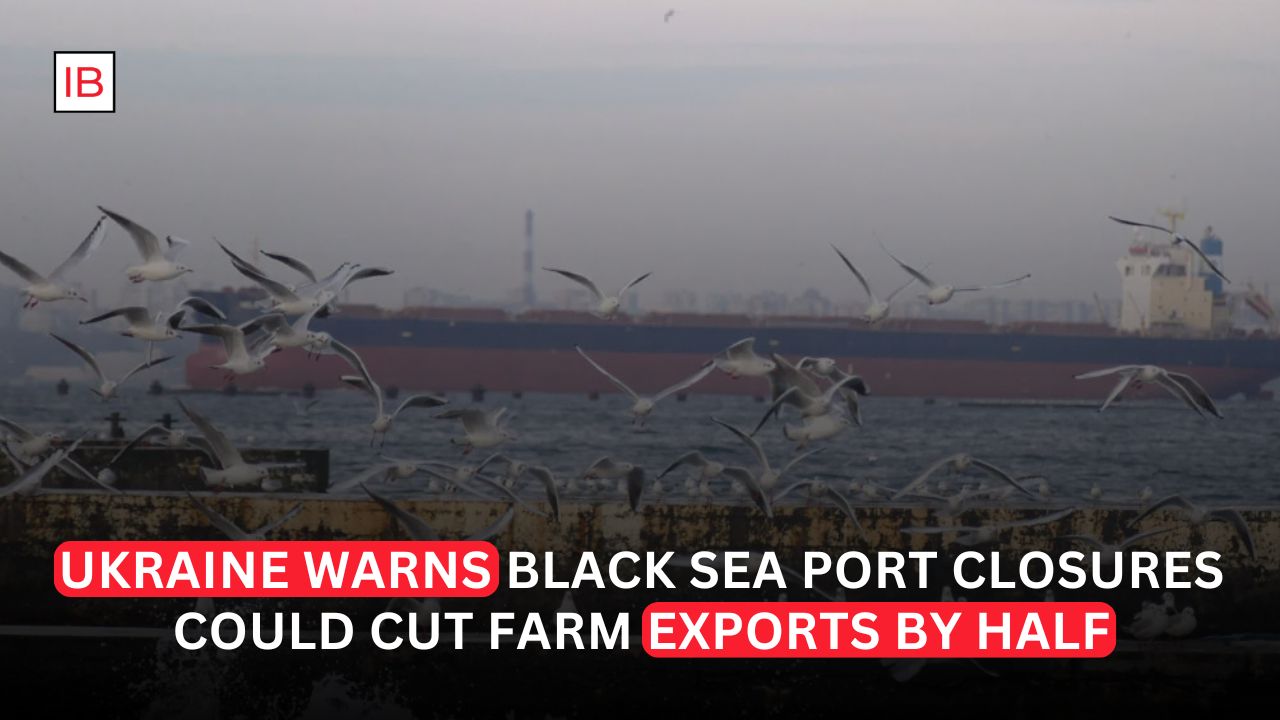
Ukraine has warned that prolonged closures and disruptions at its Black Sea ports could cut agricultural exports by as much as half, creating another major challenge for the country’s farmers and potentially tightening supplies in global food markets.
The warning highlights the importance of Ukraine’s maritime export routes to its agricultural economy. The country is one of the world’s major producers and exporters of grains and oilseeds, and its Black Sea ports remain crucial for moving large volumes of crops to international buyers.
Any extended interruption could leave farmers with limited storage capacity, weaken export revenues and put additional pressure on global food prices.
Black Sea Ports Are Critical to Ukraine’s Farm Trade
Ukraine relies heavily on Black Sea shipping to export wheat, corn, barley, sunflower products and other agricultural commodities.
Large cargo vessels allow Ukrainian producers to move enormous quantities of crops to markets in Europe, the Middle East, North Africa and Asia.
The country’s rail and road networks provide alternative routes, but they generally cannot match the volume and efficiency of maritime transportation.
That means any prolonged closure of major Black Sea ports can quickly create a bottleneck for farmers and exporters.
Exports Could Fall by Half
Ukrainian authorities have warned that agricultural exports could decline by roughly 50% if the disruptions continue.
Such a reduction would represent a significant blow to the agricultural sector, which remains one of the country’s most important sources of export earnings.
Farmers depend on access to international markets to generate revenue after each harvest.
If crops cannot be shipped, grain can accumulate in storage facilities, forcing producers to delay sales or accept lower prices.
The resulting financial pressure could also affect decisions about planting future crops.
Russia’s War Continues to Threaten Shipping
The threat to Ukraine’s agricultural exports comes more than four years after Russia launched its full-scale invasion.
Black Sea shipping has repeatedly been affected by military activity, attacks on port infrastructure and threats to commercial vessels.
Ukraine has worked to establish and maintain its own maritime corridor for commercial shipping despite the security risks.
The route has allowed exports to continue even after the collapse of the United Nations-backed Black Sea grain deal in 2023.
However, renewed attacks or closures can quickly undermine confidence among shipowners, insurers and international buyers.
Port Infrastructure Remains Vulnerable
Ukraine’s ports have been frequent targets during the war.
Russia has repeatedly attacked port facilities, warehouses, grain terminals and other infrastructure along the Black Sea and Danube.
Damage to these facilities can disrupt exports even when shipping lanes remain technically open.
Agricultural exporters require functioning loading terminals, storage facilities, rail connections and electricity systems.
A strike against one part of the supply chain can therefore have consequences throughout the export network.
Farmers Face Growing Financial Pressure
The agricultural sector has already endured years of disruption.
Farmers have dealt with higher fuel costs, labor shortages, damaged farmland and uncertainty over access to export markets.
The cost of producing and transporting crops has increased significantly since the start of the full-scale war.
Lower export volumes would make those challenges more difficult.
Farmers could also face declining farm-gate prices if grain supplies accumulate faster than they can be transported abroad.
That could reduce profitability and threaten investment in machinery, fertilizer and seeds.
Alternative Routes Are More Expensive
Ukraine has developed alternative export routes through neighboring European countries.
These routes include rail and road connections through Poland, Romania and other European Union members.
The Danube River has also become an important alternative for agricultural exports.
However, overland transportation is typically more expensive than shipping large quantities by sea.
Moving grain by truck or rail over long distances also requires additional infrastructure and border capacity.
As a result, alternative routes can reduce the impact of port disruptions but cannot completely replace Black Sea shipping.
Global Food Markets Remain Sensitive
Ukraine’s importance to global food markets means disruptions can extend beyond its borders.
Before the war, Ukraine was among the world’s leading exporters of wheat, corn and sunflower oil.
Its crops are particularly important to countries in North Africa, the Middle East and parts of Asia.
Any significant decline in Ukrainian exports can force buyers to seek supplies elsewhere.
That can increase competition for grain from countries such as the United States, Brazil, Argentina, Australia and Russia.
Global prices can become more volatile as traders assess whether alternative producers have enough capacity to compensate.
Wheat and Corn Are Particularly Important
Wheat remains one of Ukraine’s most important agricultural exports.
The country has traditionally supplied large quantities to Egypt, Turkey, Indonesia and other major food-importing countries.
Corn is also a major export commodity, with European and Asian buyers relying on Ukrainian supplies.
Sunflower oil and meal are similarly important.
Ukraine is one of the world’s largest sunflower producers, making its crushing and export industry an important part of global vegetable-oil markets.
Any disruption therefore affects several commodity markets simultaneously.
Storage Could Become a Major Problem
One of the most immediate risks from port closures is a shortage of storage capacity.
Farmers need to move harvested crops into silos and warehouses to make room for the next harvest.
When exports slow, storage facilities can fill quickly.
That can force farmers to sell crops at unfavorable prices or store grain in temporary facilities that offer less protection from weather and pests.
Ukraine has expanded temporary storage capacity during the war, but prolonged export disruptions could still create significant logistical pressure.
Government Seeks to Protect Export Routes
Ukrainian authorities have made maintaining agricultural exports a major economic priority.
The government has worked with international partners to keep maritime trade operating despite the war.
Commercial shipping has continued through a Ukrainian-controlled maritime corridor, although vessels face elevated insurance and security costs.
Maintaining the corridor is particularly important because agricultural exports provide much-needed foreign currency to Ukraine’s economy.
The country depends heavily on exports to help finance imports and support government finances during wartime.
Shipping Costs Could Rise
Even if ports remain open for some vessels, increased security risks can push up shipping costs.
Shipowners may demand higher insurance premiums to operate in or near conflict zones.
Some companies may also avoid certain routes altogether.
Higher freight and insurance costs ultimately reduce the amount farmers receive for their crops.
That can make Ukrainian grain less competitive compared with supplies from other exporters.
European Trade Routes Become More Important
The threat to Black Sea exports could increase Ukraine’s dependence on European logistics networks.
EU countries have supported Ukraine’s agricultural trade through so-called solidarity lanes that allow goods to move through neighboring states.
These routes have become an important part of Ukraine’s wartime export strategy.
However, they have also created political tensions with some European farmers, who have complained that increased Ukrainian agricultural imports can pressure local prices.
The issue has therefore become both an economic and political challenge for the European Union.
Impact on Ukraine’s Economy
Agriculture is one of the foundations of Ukraine’s economy.
The sector supports millions of people directly and indirectly and generates a significant share of the country’s export revenue.
A major reduction in agricultural exports would therefore weaken foreign-exchange earnings at a time when the government is already facing enormous wartime financial demands.
Lower export revenue could increase pressure on Ukraine’s currency and public finances.
It could also reduce the ability of farmers and agricultural companies to invest in future production.
Global Buyers Have Alternatives
The global market has become more diversified since the start of the war.
Brazil and Argentina have expanded agricultural exports, while the United States remains a major supplier of corn and wheat.
Australia and other producers can also increase shipments when prices rise.
That means a disruption in Ukraine does not necessarily guarantee a global food shortage.
However, replacing Ukrainian exports can take time and may come at a higher cost.
The biggest impact is likely to be increased price volatility and higher transportation expenses.
Black Sea Security Remains Crucial
The situation reinforces the strategic importance of the Black Sea.
The region is not only vital for Ukraine’s agricultural exports but also serves as an important route for energy, commodities and other goods.
Military developments around the Black Sea can therefore affect international markets far beyond Ukraine.
Any deterioration in maritime security could increase shipping costs and create new risks for global commodity traders.
Looking Ahead
Ukraine’s warning that Black Sea port closures could halve agricultural exports underscores how heavily the country’s economy still depends on maritime access.
Despite years of war, Ukrainian farmers have continued producing enormous quantities of grain and oilseeds.
But producing crops is only one part of the equation.
Farmers also need reliable transportation, storage and access to international buyers.
If major Black Sea ports remain disrupted, those links could become increasingly difficult to maintain.
A 50% reduction in agricultural exports would be a major economic shock for Ukraine, potentially reducing foreign-currency earnings, increasing storage pressure and weakening farm profitability.
The consequences could also spread to international markets.
Ukraine remains a major supplier of wheat, corn and sunflower products, particularly to countries in the Middle East, North Africa and Asia.
Alternative producers can help fill the gap, but replacing Ukrainian exports would likely require longer shipping distances and higher costs.
For Ukraine, the immediate priority will be keeping maritime trade operating while protecting ports and commercial vessels from further attacks.
Alternative routes through Europe and the Danube provide important backup capacity, but they cannot fully replace the scale and efficiency of Black Sea shipping.
The agricultural sector’s ability to continue exporting will therefore remain closely tied to the security situation in the region.
The longer the disruption lasts, the greater the pressure will become on Ukraine’s farmers, exporters and government finances.
For global food markets, the situation is another reminder that geopolitical conflicts can quickly become agricultural and commodity-market crises.
Ukraine’s Black Sea ports remain a critical link between one of the world’s most important agricultural producers and millions of consumers around the globe.