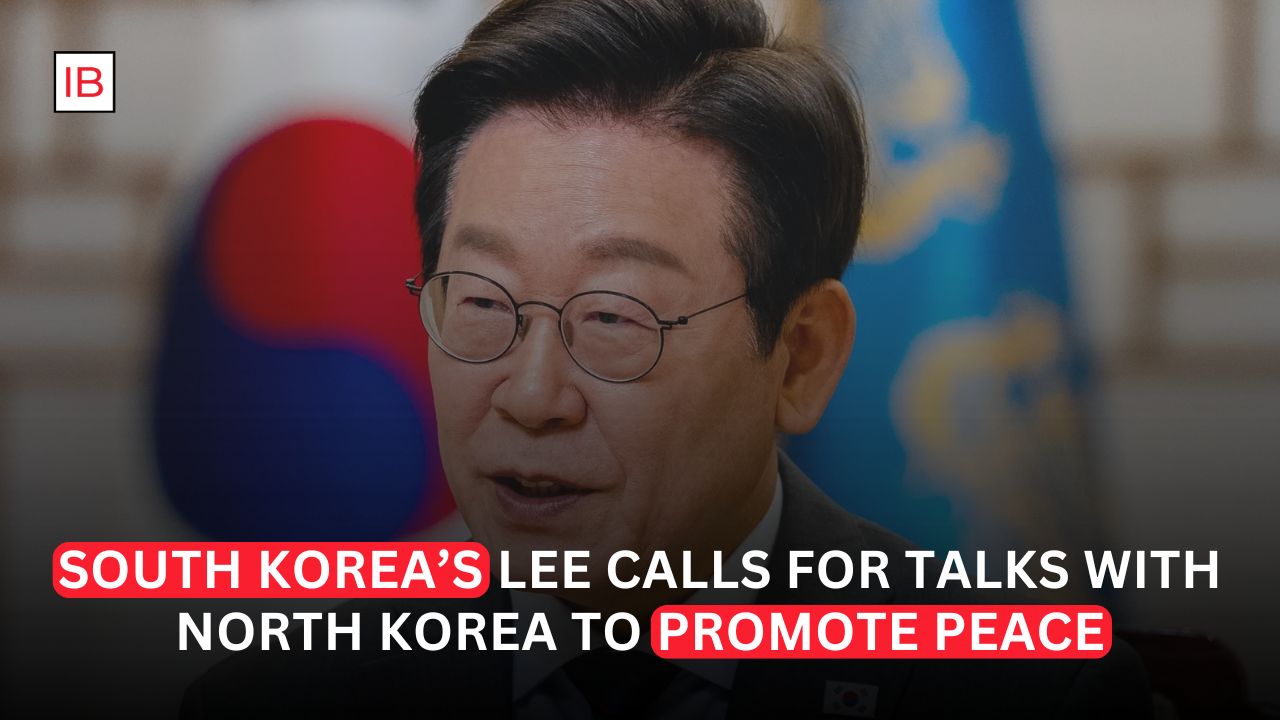
President Calls for Dialogue to Replace Korean War Armistice With a Peace Regime as Tensions Remain High
South Korean President Lee Jae Myung has called for renewed talks with North Korea, proposing that the two sides work toward formally ending the Korean War and replacing the decades-old armistice with a permanent peace regime.
Lee made the proposal on Saturday during a speech marking South Korea’s Liberation Day, arguing that the two Koreas should pursue peaceful coexistence and establish safeguards to prevent tensions from escalating into armed conflict.
The initiative represents another effort by Seoul to reopen dialogue with Pyongyang despite increasingly strained relations and North Korea’s expanding nuclear and military capabilities.
Lee Wants to Replace the Armistice
The Korean War ended in 1953 with an armistice rather than a formal peace treaty.
That means the two Koreas have technically remained at war for more than seven decades.
Lee said his government would seek to transform the “unstable armistice system” into a peace regime and urged the parties involved to begin discussions aimed at formally ending the conflict.
Such an agreement would represent a major diplomatic shift on the Korean Peninsula.
However, reaching one would require overcoming significant disagreements over security, military deployments, sanctions and North Korea’s nuclear weapons program.
Nuclear Weapons Remain Central to the Issue
Lee’s proposal is not limited to formally ending the Korean War.
He also said discussions could explore practical measures to halt the advancement of North Korea’s nuclear capabilities.
North Korea has spent years developing nuclear weapons and ballistic missiles, viewing them as essential to its national security.
Pyongyang has increasingly described itself as a nuclear-armed state and has shown little willingness to abandon its weapons program.
For Seoul, therefore, any long-term peace arrangement would have to address the nuclear issue.
North Korea Has Hardened Its Position
The timing of Lee’s proposal is particularly significant because relations between the two Koreas remain deeply strained.
North Korean leader Kim Jong Un has moved away from previous policies centered on eventual reunification with South Korea.
Pyongyang has instead characterized South Korea as a hostile state and strengthened its military posture.
North Korea has also rejected previous outreach efforts from Seoul, making the prospects for immediate negotiations uncertain.
That creates a major obstacle for Lee’s diplomatic initiative.
Military Tensions Remain High
The call for dialogue comes just days before a major annual US-South Korean military exercise.
The Ulchi Freedom Shield drills are scheduled to run from August 17 through August 27 and are designed to strengthen the allies’ ability to respond to threats from North Korea.
North Korea has strongly criticized the exercises, describing them as provocative and warning that it will strengthen its nuclear deterrence in response.
The drills will also focus on newer threats including drones, GPS disruption and cyberattacks.
That means Lee’s diplomatic message is being delivered at a moment when military preparations on the peninsula remain intense.
North Korea Recently Tested a Missile
North Korea has continued its weapons development alongside its criticism of the upcoming military exercises.
On Aug. 11, Pyongyang launched a ballistic missile from the Wonsan area toward the Sea of Japan, according to South Korean and Japanese officials. The missile traveled roughly 700 kilometers, and analysts said it could have been a hypersonic or submarine-launched weapon.
The launch was the second suspected missile test from Wonsan within a week.
Such tests make diplomatic engagement more difficult because Seoul and Washington must simultaneously prepare for potential military escalation while seeking opportunities for dialogue.
Lee Wants to Prevent Escalation
Lee has emphasized that Seoul wants to reduce tensions through proactive and sustained measures.
His government is seeking mechanisms that could prevent a military incident from escalating into a wider confrontation.
That approach reflects the reality of the heavily militarized Korean Peninsula.
Even a relatively small incident along the border could potentially trigger a dangerous escalation.
Establishing communication channels and crisis-management mechanisms could therefore be an important first step even if a comprehensive peace agreement remains far away.
Seoul Is Seeking Peaceful Coexistence
Lee’s approach is also based on the idea that South Korea should pursue coexistence rather than immediate political integration.
He has previously pledged to respect North Korea’s political system and seek peaceful coexistence with Pyongyang.
That represents a pragmatic approach to inter-Korean relations.
Instead of immediately pursuing reunification, Seoul can focus on reducing military tensions, restoring communication and creating conditions for longer-term negotiations.
Russia’s Relationship With North Korea Adds Complexity
North Korea’s increasingly close relationship with Russia is another factor complicating the diplomatic environment.
Pyongyang has deepened military ties with Moscow, while North Korean forces have gained combat experience connected to Russia’s war in Ukraine.
Those relationships could give Kim Jong Un additional diplomatic and military support.
They also make it more difficult for South Korea and the United States to isolate North Korea through traditional diplomatic pressure.
Lee’s proposal therefore comes at a time when the geopolitical environment surrounding North Korea is becoming more complicated.
The United States Remains Essential
Any long-term peace agreement on the Korean Peninsula would also involve the United States.
Washington maintains a major military presence in South Korea and continues to participate in joint exercises with Seoul.
The US military alliance is a central part of South Korea’s national-security strategy.
At the same time, North Korea has repeatedly demanded changes to the US military presence and has criticized Washington’s military cooperation with Seoul and Japan.
That means a formal peace process would likely require extensive coordination between Seoul and Washington.
Seoul Faces a Difficult Balancing Act
Lee’s government must balance its desire for diplomacy with the need to maintain a credible defense posture.
South Korea cannot simply reduce military readiness while North Korea continues developing nuclear weapons and missiles.
At the same time, Seoul wants to avoid actions that could unnecessarily increase tensions.
The challenge is creating space for dialogue without appearing weak or undermining the country’s security commitments.
Lee’s proposal attempts to address both objectives by combining diplomatic outreach with continued security safeguards.
North Korea’s Response Will Be Crucial
The biggest question is whether Pyongyang will respond positively.
North Korea has previously rejected South Korean proposals for engagement and has criticized Seoul’s military policies.
It has also objected to US-South Korean military exercises and warned that it will strengthen its nuclear deterrence.
If Pyongyang refuses the latest proposal, Lee’s government could face pressure to demonstrate that diplomacy can still produce results.
If North Korea agrees to exploratory talks, even limited discussions could represent a significant change in the relationship.
A Peace Treaty Would Be a Historic Step
Replacing the armistice with a formal peace agreement would have enormous political and strategic implications.
It could reduce the risk of accidental conflict and establish a new framework for relations between the two Koreas.
However, a peace treaty would not automatically resolve the nuclear issue.
North Korea would likely demand security guarantees and changes to the US-South Korean military posture.
Seoul and Washington, meanwhile, would want meaningful limits on Pyongyang’s nuclear and missile programs.
Those differences could make negotiations extremely difficult.
Japan Also Matters to Lee’s Regional Strategy
Lee also used his Liberation Day speech to discuss South Korea’s relationship with Japan.
He called for dealing honestly with historical disputes while maintaining cooperation between the two countries.
Lee said South Korea and Japan should work toward another period of peace and prosperity.
That fits into a broader strategy of strengthening regional stability while Seoul manages challenges from North Korea, China and Russia.
Closer cooperation between South Korea and Japan could also strengthen the wider security partnership involving the United States.
Looking Ahead
Lee Jae Myung’s proposal for talks with North Korea represents a renewed effort to shift the Korean Peninsula away from confrontation and toward a formal peace framework.
The South Korean president wants the two Koreas and other concerned parties to discuss formally ending the Korean War and replacing the armistice with a lasting peace regime.
The proposal also includes discussions about ways to halt the advancement of North Korea’s nuclear capabilities.
But the diplomatic path ahead is extremely difficult.
North Korea has rejected previous engagement efforts, strengthened its military relationship with Russia and continued expanding its nuclear and missile capabilities.
At the same time, Seoul and Washington are preparing for annual military exercises that Pyongyang considers provocative.
Lee’s strategy will therefore require a careful balance between diplomacy and deterrence.
South Korea wants to reduce tensions and prevent accidental escalation, but it must also maintain enough military capability to respond to North Korean threats.
The missile tests conducted by Pyongyang in recent days demonstrate why that balance remains necessary.
The most immediate test will be whether North Korea is willing to respond to Seoul’s invitation.
Even preliminary talks could provide an opportunity to restore communication channels and reduce the risk of military miscalculation.
But a comprehensive peace agreement would require much more, including difficult negotiations over North Korea’s nuclear program, the US military presence and the future security structure of the Korean Peninsula.
For now, Lee is betting that dialogue can create the conditions for a more stable relationship even if a final peace treaty remains a distant objective.
If Pyongyang accepts the invitation, Seoul could have an opportunity to reopen one of the world’s most difficult diplomatic channels.
If it rejects the proposal, the South Korean government will face the challenge of maintaining its diplomatic strategy while confronting continued military and nuclear threats.
The future of inter-Korean relations may ultimately depend on whether Lee’s call for peaceful coexistence can overcome decades of mistrust and an increasingly complicated regional security environment.