Anthropic’s latest numbers show why investors are treating its potential IPO as one of the biggest tests yet of the AI boom.
The Claude maker generated more than $11.5 billion in preliminary revenue during the second quarter of 2026, compared with $787 million in the same quarter a year earlier. That is more than a 14-fold increase. Revenue also jumped from $4.73 billion in the first quarter. Anthropic reported positive adjusted operating income for the quarter as well.
The headline is impressive.
But the real question is whether this growth can continue long enough to justify the enormous valuation investors are now considering.
Anthropic Is Scaling Extremely Fast
The progression is striking:
- Q2 2025: $787 million revenue
- Q1 2026: $4.73 billion
- Q2 2026: More than $11.5 billion
That means revenue more than doubled in just one quarter.
It also confirms that Anthropic’s enterprise-focused strategy is generating substantial commercial demand.
Earlier data showed its annualized revenue run rate rising from about $9 billion at the end of 2025 to $47 billion by May 2026.
Claude Is Becoming a Business Product
Anthropic’s biggest advantage is its positioning with businesses and developers.
Companies are using Claude for:
- Software development
- Coding agents
- Customer service
- Research
- Data analysis
- Internal automation
- Enterprise applications
That matters because enterprise customers can generate much larger recurring bills than casual chatbot users.
The key shift is from:
“People use AI.”
to:
“Companies build their businesses around AI.”
Anthropic is trying to capture the second category.
Positive Operating Income Changes the Story
The most important part of the latest figures may not actually be revenue.
It’s the report that Anthropic achieved positive adjusted operating income in the second quarter.
That doesn’t mean Anthropic has suddenly become a mature, highly profitable company.
It does mean the company is beginning to demonstrate that enormous AI infrastructure costs can potentially be supported by rapidly growing revenue.
That’s critical before an IPO.
Investors can tolerate huge spending when revenue growth is extraordinary.
They become much less tolerant if revenue growth slows while infrastructure spending continues climbing.
The IPO Valuation Is the Harder Question
This is where the story gets more complicated.
Reuters reports that investors and bankers are looking at revenue forecasts of roughly $190 billion to $200 billion for 2028 when assessing Anthropic’s potential IPO valuation.
That’s an enormous assumption.
Anthropic’s current quarterly revenue is nowhere near that level.
The IPO case therefore depends heavily on future revenue rather than today’s earnings.
That’s unusual even for a high-growth technology company.
Investors Are Looking Years Ahead
Traditional IPO valuation tends to emphasize:
Current revenue + current margins + near-term growth.
Anthropic’s potential IPO is increasingly being evaluated through:
2028 revenue + expected margins + AI market growth.
That creates a much wider range of possible outcomes.
If AI demand keeps exploding, today’s valuation could eventually look reasonable.
If growth normalizes sharply, investors could discover that they paid for several years of future growth upfront.
The Competition Is Getting Serious
Anthropic isn’t operating in an empty market.
Its major competitors include:
- OpenAI
- Meta
- xAI
- Chinese AI developers
- Open-source model providers
OpenAI is particularly important.
Anthropic has gained ground by focusing heavily on enterprise customers and coding, while OpenAI remains one of the largest AI platforms globally. Recent reporting says OpenAI is also preparing for a major commercial push as competition between the two companies intensifies.
That means Anthropic cannot assume today’s market position will remain intact.
The Chinese Competition Could Pressure Prices
Another risk is cheaper AI.
Chinese developers are increasingly producing capable models at lower prices.
If AI models become increasingly commoditized, customers may become more willing to switch providers based on:
price + performance + availability.
That would be bad for Anthropic’s long-term margins.
Anthropic therefore needs to maintain enough technological differentiation that customers are willing to pay premium prices for Claude.
AI Infrastructure Is the Hidden Cost
There is a major contradiction in Anthropic’s growth story.
More customers produce more revenue.
But more customers also require more:
compute + GPUs + data centers + electricity + networking.
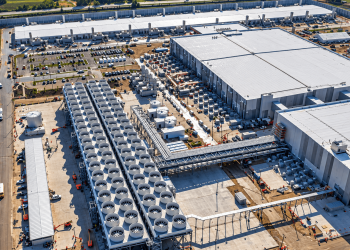
Anthropic’s infrastructure requirements are becoming enormous.
Recent reporting shows the company has been committing to substantial additional computing capacity, including a deal involving roughly 470 megawatts of power-generation capacity from ERock.
That illustrates the problem.
AI revenue growth can be spectacular while infrastructure spending grows almost as quickly.
The Margin Question Matters More Than Revenue
Suppose Anthropic reaches $100 billion of annual revenue.
That sounds enormous.
But if it requires $90 billion of annual spending to generate that revenue, the economics are far less attractive.
Investors therefore need to watch:
Gross margins
Compute costs per token
Inference efficiency
Customer acquisition costs
Data-center expenses
Operating margins
Revenue growth alone isn’t enough.
Anthropic’s Enterprise Strategy Has an Advantage
There is a reason investors are willing to look so far into the future.
Enterprise AI can become deeply embedded.
Once a company integrates Claude into its software-development workflow, customer-support operation or internal systems, switching providers can become expensive.
That can produce:
High usage + recurring revenue + customer retention.
If Anthropic achieves that kind of lock-in, its revenue could become more durable than ordinary consumer chatbot subscriptions.
But AI Switching Costs May Be Lower Than Investors Assume
This is the counterargument.
AI models are increasingly accessible through APIs.
Companies can build systems that use multiple models.
That means enterprise customers may deliberately avoid becoming dependent on one provider.
They could route different workloads to:
Claude + OpenAI + Google + open-source models.
If that happens, Anthropic may face continuous price competition even after winning major enterprise accounts.
The Amazon Analogy Is Useful — But Dangerous
Some investors increasingly compare AI infrastructure companies to Amazon in the early stages of cloud computing.
The argument is:
Massive infrastructure investment today → enormous recurring revenue tomorrow.
There is logic behind that.
But AI has an important difference.
Cloud customers generally pay for infrastructure that is relatively predictable.
AI usage can be much more sensitive to model prices and efficiency.
If the cost of generating an AI response falls dramatically, Anthropic may have to pass some of those savings to customers.
That could make revenue grow rapidly while limiting margins.
The $2 Trillion Question
Recent reports suggest some investors expect Anthropic’s eventual IPO valuation to exceed $2 trillion, potentially making it one of the largest IPOs ever.
But Anthropic has not publicly confirmed such a valuation target.
That distinction matters.
A $2 trillion valuation isn’t a company fact.
It’s a market expectation based on aggressive assumptions about future AI demand.
What Investors Should Watch
Revenue Growth
The next few quarters will reveal whether the Q2 acceleration is sustainable.
Operating Margins
Positive adjusted operating income is encouraging, but sustained profitability matters more.
Compute Costs
This may ultimately determine how much of Anthropic’s revenue becomes profit.
Enterprise Retention
Large customers staying and expanding usage would strengthen the investment case.
Model Pricing
Falling AI prices could increase adoption while simultaneously compressing margins.
Open-Source Competition
Powerful cheaper models could weaken Anthropic’s pricing power.
IPO Valuation
The higher the valuation, the more future growth investors are already paying for.
The Bigger Picture
Anthropic’s latest numbers demonstrate something important:
AI demand is no longer just a speculative promise. Companies are already spending enormous amounts of money on AI products.
More than $11.5 billion of quarterly revenue is serious commercial scale.
But the IPO story is ultimately about what happens after that explosive growth.
Anthropic now has to prove that it can turn:
AI demand → recurring revenue → operating leverage → durable profits.
The first two pieces are becoming increasingly convincing.
The last two remain the real investment test.
The danger for investors isn’t that Anthropic isn’t growing fast enough. It’s that the market may price the company as though extraordinary growth will continue for years before the economics have been fully proven.