Restrictions on Major Banks Are Narrowing the Market and Potentially Raising Borrowing Costs for Texas Governments
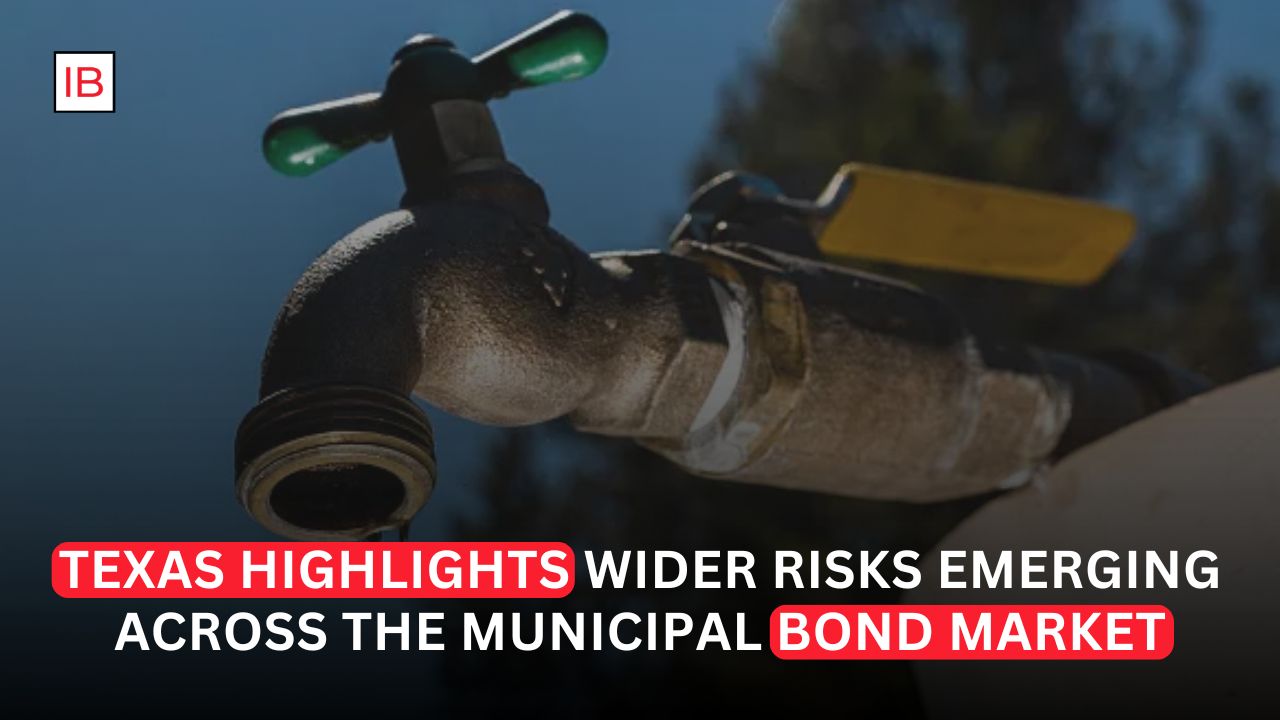
Texas’ campaign against environmental, social and governance policies is producing an unintended consequence: the state’s cities, school districts and other public entities may be paying more to borrow money.
The issue stems from legislation designed to prevent Texas governments from doing business with financial institutions considered to be hostile to fossil-fuel companies, firearms businesses or other politically important industries.
The laws were intended to protect Texas industries from what state officials describe as discriminatory financial policies.
But in the municipal-bond market, the rules have had another effect: some of the largest Wall Street banks have pulled back from underwriting Texas debt, reducing competition for issuers. Research has linked the departure of major underwriters to higher borrowing costs for affected municipalities.
How the Anti-ESG Rules Affect Bonds
Municipal governments regularly issue bonds to finance infrastructure such as schools, roads, hospitals, water systems and other public projects.
Investment banks play a critical role in that process.
An underwriter helps structure a bond offering, purchases the securities from the issuer and then distributes them to investors.
Texas’ anti-ESG legislation effectively restricts some financial institutions from participating in this business if their corporate policies are deemed to conflict with state requirements.
The consequences have been significant.
Five major financial institutions exited or reduced their participation in Texas’ municipal bond market after the laws took effect, according to research cited by the Washington State Treasurer. Those institutions accounted for roughly 35% of the state’s municipal bond market at the time.
That removed a substantial portion of the market’s underwriting capacity.
Less Competition Can Mean Higher Costs
Municipal bonds are highly competitive.
When multiple banks compete for an underwriting mandate, they have an incentive to offer attractive pricing.
When some of the largest banks are excluded, that competition weakens.
Academic research examining Texas’ anti-ESG laws found that affected issuers received fewer and less competitive bids and faced higher borrowing costs.
One study estimated that municipalities could face additional interest costs of roughly $300 million to $500 million on $32 billion of bonds following the restrictions.
Another government report cited estimates that Texas cities could pay an additional $303 million to $532 million in interest under the changed market conditions.
Those costs ultimately matter to taxpayers.
The State’s Argument Is Different
Texas officials argue that the legislation is necessary to protect taxpayers and important state industries.
Attorney General Ken Paxton has defended the restrictions as a way of preventing taxpayer money from going to companies whose ESG policies could disadvantage the state’s energy sector.
The attorney general’s office has actively enforced the rules.
In January 2024, Texas barred Barclays from underwriting state municipal securities after the bank declined to provide information concerning its net-zero commitments. State officials said Barclays’ policies could potentially cause it to fall within Texas’ definition of a fossil-fuel “boycotter.”
From the state’s perspective, the objective is straightforward: financial institutions doing business with Texas governments must comply with Texas law.
Barclays Wasn’t an Isolated Case
The Barclays episode demonstrates how the legislation can affect the mechanics of municipal finance.
The Texas Attorney General’s office has authority to review public securities issued by Texas agencies, municipalities and other political subdivisions.
Its public-finance division maintains a continuing system of reviews and bond-counsel guidance concerning compliance with state requirements.
That means banks considering Texas underwriting business must account for regulatory and political risks before participating.
Some may decide that the Texas market is simply not worth the additional compliance burden.
Municipalities Have Limited Control
The problem for local governments is that they did not necessarily create the conflict.
A city may simply need to issue bonds to repair a water system or build a school.
But if major banks cannot participate in the transaction, the city has fewer potential underwriters from which to choose.
That can make financing more expensive even when the underlying municipality remains financially healthy.
In effect, a statewide policy can increase borrowing costs for individual communities that have little connection to the original ESG dispute.
Texas Still Has a Large Municipal Debt Market
The stakes are considerable because Texas has an enormous amount of outstanding local government debt.
An analysis published by the Institute for Energy Economics and Financial Analysis estimated that Texas had about $369 billion in outstanding local government obligations as of August 2025, along with another $77 billion of debt.
Even relatively small increases in borrowing costs can therefore become meaningful when applied across billions of dollars of debt.
A higher interest rate on one bond issue may not seem dramatic.
Across thousands of transactions over many years, however, the cumulative cost can become substantial.
The Costs Don’t End With Interest
Higher borrowing costs are not the only potential consequence.
A less competitive underwriting market can also make bond issuance more complicated.
Smaller pools of banks can reduce flexibility for municipalities.
Public entities may need to spend more time finding eligible underwriters or restructuring transactions.
That can increase administrative costs and potentially delay infrastructure projects.
The Texas Bond Review Board notes that underwriting spreads represent the largest component of many municipal bond issuance costs, highlighting how important the underwriting market is to public financing.
The Market Has Adapted
Texas’ municipal bond market has not collapsed.
Other banks and specialized financial firms have stepped in to fill some of the gap.
Recent Texas bond offerings demonstrate that municipal issuers continue to access the market through alternative underwriters.
But replacing the largest Wall Street institutions does not necessarily restore the same level of competition.
A smaller group of underwriters can still function.
The question is whether it functions as efficiently and cheaply as a broader market.
The Political Fight Is Still Continuing
Texas’ anti-ESG laws have also become the subject of legal challenges.
In February 2026, a federal district court blocked enforcement of Senate Bill 13 and declared its anti-boycott provisions unconstitutional, according to an analysis by the American Bar Association. The decision has been appealed, and subsequent legal developments have affected enforcement.
The Texas Attorney General’s public-finance records show that the state continued issuing guidance concerning the law in 2026, including notices related to the Fifth Circuit’s stay of the injunction.
That creates additional uncertainty for financial institutions.
Banks must consider not only what Texas law currently requires but also how the legal landscape could evolve.
ESG Has Become a Financial Question
The debate is often presented as a political argument over climate policy.
But municipal bonds turn it into a financial question.
If Texas prevents certain banks from participating because of their ESG policies, the immediate impact is on the supply of underwriting services.
That can affect competition.
And competition affects prices.
The political debate therefore has a direct connection to the cost of financing public infrastructure.
Supporters Say the Trade-Off Is Worth It
Supporters of the legislation would argue that protecting Texas’ energy industry is more important than maximizing the number of banks competing for municipal bonds.
Texas is one of the largest oil and gas-producing states in the country.
State officials have repeatedly argued that financial institutions should not be allowed to use their market power to pressure companies or industries they disagree with politically.
From that perspective, accepting somewhat higher financing costs could be viewed as a necessary price for maintaining control over the state’s economic policy.
Critics See an Unnecessary Tax on Borrowing
Critics reach the opposite conclusion.
They argue that municipal governments—not financial institutions—ultimately bear the cost.
If a city has to pay a higher interest rate because fewer banks are willing or able to underwrite its bonds, taxpayers effectively finance the consequences.
The research on Texas provides support for that concern.
The University of Pennsylvania Wharton School and Federal Reserve Bank of Chicago study found that issuers more dependent on the banks targeted by the laws experienced greater increases in borrowing costs.
That suggests the effect is not merely theoretical.
A Broader National Experiment
Texas is part of a larger national fight over ESG.
Several Republican-led states have introduced laws restricting financial institutions and asset managers over their environmental or social policies.
The broader political objective is to prevent financial markets from becoming tools for advancing policies that voters or lawmakers have not approved.
But Texas provides an important real-world example of the potential economic consequences.
When governments restrict which banks can participate in public finance, they inevitably change the competitive structure of the market.
The Taxpayer Is Ultimately in the Middle
The central question is therefore not whether ESG policies are good or bad.
It is whether taxpayers should bear the financial consequences of the political battle.
A Texas municipality issuing bonds does not necessarily have control over a bank’s climate policies.
Yet the municipality can face higher financing costs because of those policies.
That creates a difficult policy trade-off.
Looking Ahead
Texas’ anti-ESG legislation was designed to protect the state’s economic interests, but its impact on municipal bonds shows how political restrictions can produce unintended financial costs.
By limiting which financial institutions can participate in the state’s public-finance market, Texas has reduced the number of major underwriters competing for municipal business.
Research suggests that the resulting reduction in competition has increased borrowing costs for some issuers.
The issue becomes more important because Texas municipalities regularly need to borrow for essential infrastructure.
Schools, roads, hospitals, water systems and utilities cannot simply wait for political disputes to be resolved.
When borrowing becomes more expensive, projects can cost more, debt-service payments can increase and taxpayers can ultimately carry part of the burden.
Texas officials would argue that the restrictions are justified because financial institutions should not be allowed to discriminate against the state’s energy industry.
The state’s attorney general has actively enforced that position, including excluding Barclays from participating in certain Texas municipal bond transactions.
But the financial-market response demonstrates the trade-off.
Removing major banks from a market reduces competition, regardless of the political motivation behind the decision.
The resulting costs may be relatively small on individual bond issues, but Texas has hundreds of billions of dollars of local government debt.
Over time, even modest increases in interest expenses can become substantial.
The legal uncertainty surrounding the legislation adds another complication.
Federal courts have challenged parts of Texas’ anti-ESG framework, while the state continues to defend and enforce its policies.
For banks, municipalities and investors, that uncertainty makes the Texas market more complicated.
The larger lesson is that financial regulation rarely stays confined to the institutions it targets.
A law intended to pressure Wall Street can eventually affect a city’s cost of borrowing.
And when that happens, the cost can ultimately reach taxpayers.
Texas may believe the political benefits of its anti-ESG strategy outweigh those costs. But the municipal bond market is providing a clear measure of the price being paid.