Nuclear Fuel Producer Targets Defense Demand as America Rebuilds Domestic Enrichment Capacity
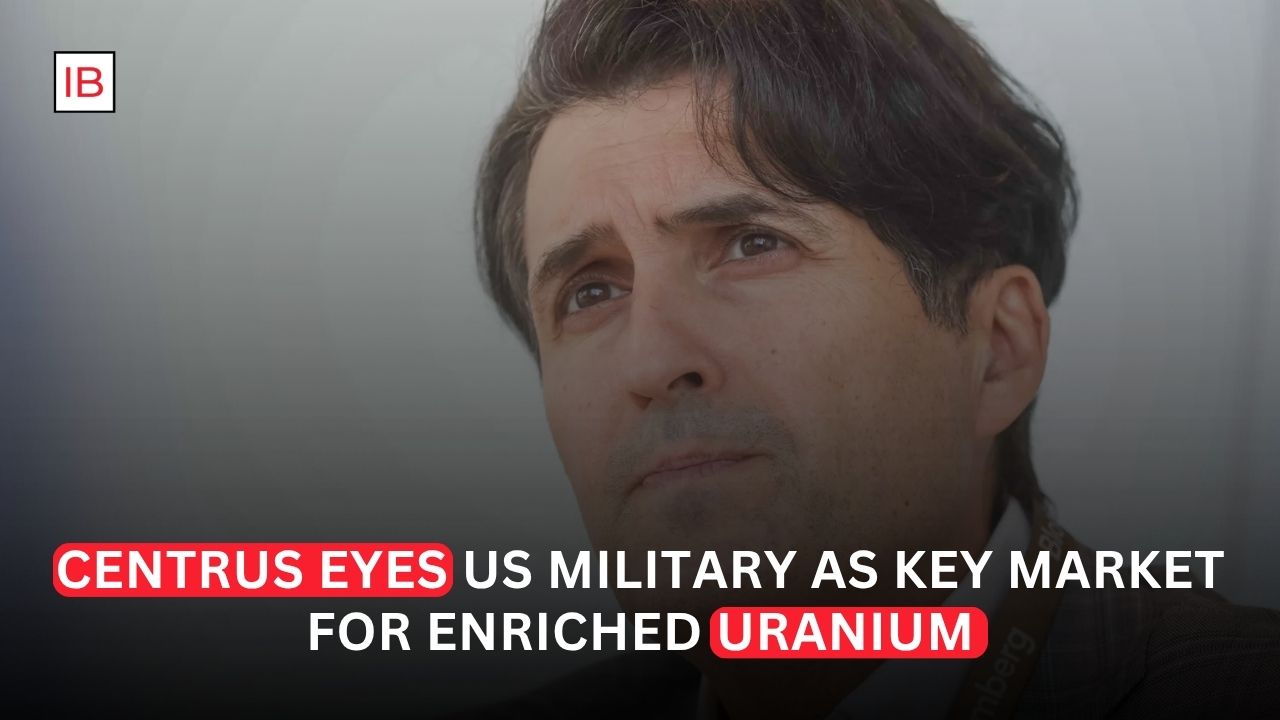
Centrus Energy is positioning the US military as an increasingly important customer for its uranium enrichment business as Washington moves to strengthen domestic nuclear fuel production and reduce reliance on foreign suppliers.
The company, which operates one of the few US-based uranium enrichment operations, sees growing opportunities from the military’s expanding interest in nuclear-powered systems and the need for a secure domestic supply of enriched uranium. The strategy comes as the US government pours billions of dollars into rebuilding an enrichment industry that has lost much of its capacity over several decades.
Centrus is simultaneously pursuing commercial opportunities from utilities and advanced reactor developers, giving the company exposure to multiple sources of future demand. Its growing backlog and government support have made it one of the most closely watched companies in America’s effort to rebuild its nuclear fuel supply chain.
Centrus Expands Beyond Traditional Nuclear Power
Centrus has traditionally supplied nuclear fuel and related services to the commercial nuclear power industry.
But the company’s ambitions have expanded considerably.
The development of high-assay low-enriched uranium, or HALEU, has become central to its strategy. HALEU is expected to play an important role in advanced nuclear reactors because it allows certain reactor designs to operate more efficiently than conventional low-enriched uranium fuel.
Centrus says it operates the first facility licensed by the Nuclear Regulatory Commission to produce HALEU, at its American Centrifuge Plant in Piketon, Ohio. The company is developing centrifuge capacity that can eventually be expanded as demand grows.
That technology could have applications beyond civilian electricity generation.
Military Demand Could Become a Major Opportunity
The US military is increasingly examining nuclear technology for applications that require reliable energy and long operating periods.
Nuclear-powered systems can potentially provide energy without the logistical challenges associated with continuously transporting conventional fuel. That makes nuclear technology attractive for certain military applications, particularly where energy security is strategically important.
For Centrus, military demand could create another long-term market for domestically enriched uranium.
The company has already received significant government support as Washington seeks to restore US enrichment capabilities. In January, the Department of Energy awarded Centrus a $900 million task order to expand its Ohio facility and support commercial-scale HALEU production.
The investment demonstrates how closely the company’s growth strategy is connected to national policy.
America Wants to Reduce Dependence on Foreign Nuclear Fuel
The push to expand domestic enrichment capacity is also about national security.
For years, the United States has depended heavily on international suppliers for parts of the nuclear fuel cycle. That dependence has become a greater concern as geopolitical tensions have intensified.
Uranium mining is only one stage of the nuclear fuel supply chain.
The material must ultimately be processed and enriched before it can be used as reactor fuel. If domestic enrichment capacity is insufficient, the US can face strategic vulnerabilities even when uranium itself is available.
Centrus is therefore benefiting from a broader effort to rebuild the American nuclear fuel industry.
Congress has appropriated billions of dollars to support domestic production of both conventional low-enriched uranium and HALEU.
Government Contracts Are Supporting Centrus’s Expansion
Federal funding has become a critical part of Centrus’s strategy.
In its second-quarter results, the company reported that it had signed a $900 million HALEU enrichment award contract with the Department of Energy and increased its contingent LEU and HALEU enrichment backlog to approximately $3 billion. Its overall backlog stood at about $4.5 billion as of June 30, extending through 2040.
The numbers illustrate the potential scale of the business.
Centrus is not simply preparing for a hypothetical increase in nuclear demand.
It is already securing contracts and commitments that can support future investment in enrichment capacity.
The company has also selected construction partners for its major expansion program, while continuing to manufacture centrifuges for future facilities.
The Ohio Expansion Is Central to the Strategy
The Piketon, Ohio facility is at the heart of Centrus’s plans.
The company intends to expand the site to produce both LEU and HALEU at commercial scale.
Fluor was selected as an engineering, procurement and construction partner for the expansion, which is expected to increase domestic enrichment capacity significantly.
Centrus has also said that it expects to complete its first new centrifuge in Oak Ridge, Tennessee, by the end of 2026.
Building this infrastructure is expensive and technically complicated.
However, government funding and long-term customer commitments can reduce some of the financial risks associated with constructing a new enrichment industry.
Advanced Reactors Create Another Source of Demand
The military is only one part of the opportunity.
Advanced nuclear reactor developers are also searching for reliable domestic supplies of HALEU.
Several next-generation reactor designs require fuel enriched to higher levels than conventional commercial reactors.
Centrus has already begun building relationships with companies developing these systems.
In June, Centrus signed a letter of intent with Oklo to supply enough domestic HALEU to support multiple years of fuel for as many as five Aurora powerhouses. Deliveries are expected to begin in 2029.
The company has also reached an agreement with X-energy for LEU and HALEU enrichment services, with prepayments expected to help support expansion of domestic commercial enrichment capacity.
These deals provide evidence that demand for advanced nuclear fuel is developing beyond government programs.
AI Is Adding Pressure to the Nuclear Supply Chain
The rapid expansion of artificial intelligence is also changing the nuclear energy market.
AI data centers require enormous amounts of electricity, increasing interest in reliable sources of low-carbon power.
Nuclear energy has emerged as one potential solution because reactors can operate continuously without depending on weather conditions.
Technology companies and data-center operators are increasingly exploring nuclear power agreements, while advanced reactor companies are working to commercialize smaller and potentially more flexible nuclear systems.
That could eventually increase demand for HALEU.
For Centrus, the combination of military requirements, commercial reactors and AI-related electricity demand could create a much larger market than the company previously served.
Centrus Is Expanding While Nuclear Demand Recovers
The company’s financial results show that the nuclear recovery is already affecting its business.
Centrus reported $176.1 million in revenue for the second quarter of 2026, compared with $154.5 million during the same period a year earlier.
Adjusted net income increased to $38.7 million from $34.5 million.
The company also reported that its LEU segment backlog was approximately $3.7 billion, while its Technical Solutions backlog stood at about $800 million.
Those figures provide investors with greater visibility into future business activity.
However, Centrus still faces significant challenges because much of its future growth depends on completing large infrastructure projects and securing sufficient funding and customer commitments.
Nuclear Fuel Has Become a Strategic Asset
The growing interest in Centrus reflects a broader change in how governments view nuclear fuel.
For decades, uranium enrichment was largely treated as part of the commercial nuclear industry.
Now it is increasingly viewed as a strategic capability.
The ability to enrich uranium domestically can influence national security, energy independence and the country’s ability to deploy advanced reactors.
That makes companies capable of producing enriched uranium strategically important.
Centrus is attempting to position itself at the center of that shift.
Its advantage is not simply its existing technology. It also has relationships with the US government, commercial nuclear companies and advanced reactor developers.
Competition Will Remain Intense
Centrus is not the only company seeking to expand American enrichment capacity.
The US government is attempting to encourage multiple suppliers because relying on a single producer would simply replace one supply-chain vulnerability with another.
Companies are therefore competing for government contracts, private customers and investment capital.
The challenge is particularly significant because enrichment facilities require large upfront investments and years of development.
Companies must also meet strict regulatory and technical requirements.
Centrus’s government support gives it an important advantage, but it will still need to execute its expansion plans successfully.
The Military Market Could Change Centrus’s Profile
A sustained military market could significantly change the company’s long-term financial profile.
Government defense contracts tend to provide greater visibility than short-term commodity sales.
If the military becomes a major customer for domestically enriched uranium, Centrus could gain a more stable source of demand while simultaneously expanding infrastructure that can serve commercial customers.
That could create a reinforcing cycle.
Government demand supports investment.
Investment increases production capacity.
Greater capacity allows Centrus to serve commercial utilities and advanced reactor developers.
Growing commercial demand then supports additional expansion.
Such a model would help transform Centrus from a specialized nuclear fuel company into a strategically important component of America’s energy and defense infrastructure.
Looking Ahead
Centrus Energy is entering a potentially transformative period as the United States rebuilds its domestic uranium enrichment industry.
The company already has substantial government backing, a growing backlog and multiple commercial agreements supporting future HALEU and LEU production. Its $900 million Department of Energy award is helping finance the expansion of its Ohio enrichment operations, while new agreements with advanced reactor developers are creating additional demand.
The potential military market adds another important dimension.
If the US armed forces expand their use of nuclear-powered systems or require additional domestically enriched uranium for strategic purposes, Centrus could become an important supplier in an increasingly security-sensitive market.
At the same time, commercial nuclear power and advanced reactors are creating their own demand for enriched fuel. Companies such as Oklo and X-energy have already established relationships with Centrus, suggesting that the market could extend well beyond traditional utilities.
The biggest challenge will be execution.
Centrus must build new enrichment capacity, manufacture centrifuges, meet regulatory requirements and deliver fuel on schedule.
If it succeeds, the company could benefit from several powerful trends at once: US energy-security policy, military demand, advanced nuclear technology and growing electricity requirements from AI.
The renewed focus on domestic uranium enrichment suggests that nuclear fuel is becoming more than an energy commodity—it is increasingly a strategic asset tied directly to America’s economic and national-security ambitions.