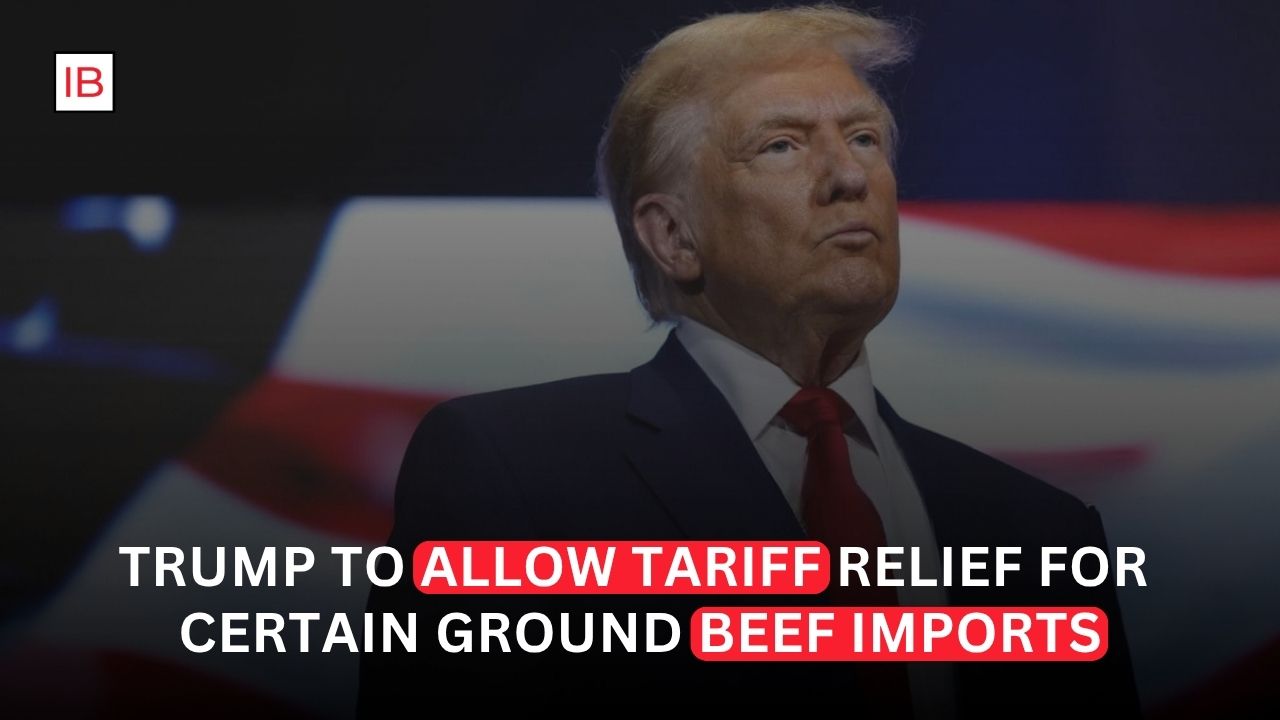
The Trump administration is preparing to provide tariff relief for certain ground beef imports, a move aimed at easing pressure on US meat supplies and potentially limiting some of the price increases facing American consumers.
The decision comes at a sensitive moment for the US beef industry. Cattle supplies have been constrained, production costs remain elevated and consumers have been dealing with historically expensive beef.
While tariff relief could increase the availability of imported ground beef, it does not solve the deeper problems behind high US meat prices.
The more important question is whether the policy can provide meaningful relief to consumers without creating additional pressure on American cattle producers.
Why Ground Beef Has Become a Political Issue
Beef is one of the most visible food prices for American households.
Consumers may tolerate price increases on individual products, but meat prices are difficult to ignore.
Ground beef is especially important because it is widely consumed and is generally cheaper than premium cuts.
When its price rises sharply, the impact is felt across grocery budgets.
The US cattle industry has faced years of supply constraints, making it difficult for processors and retailers to maintain inexpensive beef.
That has turned beef prices into more than an agricultural issue.
It has become a consumer affordability issue.
The US Cattle Herd Has Been Under Pressure
One of the fundamental reasons behind high beef prices is the size of the American cattle herd.
Drought, high feed costs, expensive financing and challenging operating conditions have encouraged some ranchers to reduce their herds.
Rebuilding cattle numbers takes time.
A producer cannot respond to a sudden increase in beef demand by immediately creating more animals ready for slaughter.
Cattle require years to reach market weight.
That creates an important supply constraint.
Even if ranchers begin expanding herds today, meaningful additional beef production may take considerable time to appear.
Tariffs Add Another Layer
Tariffs can make imported beef more expensive.
If foreign ground beef enters the US market subject to significant duties, importers may pass those costs through the supply chain.
That can raise prices for processors, retailers and ultimately consumers.
Allowing tariff relief could therefore increase the amount of imported beef available at competitive prices.
The economic logic is straightforward.
If domestic supply is tight and imports become cheaper, additional foreign supply can help fill the gap.
But the effects will depend on how much beef qualifies for the relief and how quickly suppliers respond.
Import Relief Is Not the Same as Lower Beef Prices
Consumers should not assume that tariff relief automatically means cheap hamburgers.
The retail price of beef depends on many factors.
These include:
- Cattle prices
- Feed costs
- Transportation
- Processing expenses
- Labor costs
- Retail margins
- Import prices
- Currency movements
- Consumer demand
Tariffs are only one component.
Removing them can help, but it cannot eliminate the underlying supply shortage.
American Ranchers Could See the Policy Differently
The policy creates an obvious political tension.
Consumers want cheaper beef.
US cattle producers generally benefit from higher cattle prices.
When domestic supply is limited, ranchers can receive stronger prices for their animals.
That can improve farm incomes.
But if imports become cheaper and more abundant, domestic cattle prices could eventually face downward pressure.
That could discourage ranchers from expanding herds.
This is the central policy dilemma.
A measure that helps consumers today could potentially weaken incentives to increase domestic production tomorrow.
The Administration Has to Balance Two Groups
The Trump administration therefore has competing objectives.
Consumers want:
- Lower grocery prices
- More affordable beef
- Greater product availability
- Reduced food inflation
Cattle producers want:
- Strong cattle prices
- Protection from unfair foreign competition
- Stable demand
- Incentives to rebuild herds
- Predictable trade rules
The government cannot fully maximize both objectives simultaneously.
Increasing imports can help consumers but may put pressure on domestic producers.
Restricting imports can protect producers but keep prices higher.
The policy challenge is finding a workable balance.
Ground Beef Is Different From Premium Beef
The structure of the beef market also matters.
Different cuts have different supply and demand dynamics.
Ground beef can be produced from trimmings and less expensive cuts generated during processing.
Imported beef can therefore play an important role in supplying this particular segment.
That makes tariff relief for ground beef potentially more targeted than simply opening the US market broadly to foreign beef.
If policymakers can increase supply where consumers are feeling the greatest price pressure, the measure could have a more direct effect.
Mexico and Canada Are Important Suppliers
North American trade plays a major role in the US beef market.
Canada and Mexico have long been important participants in the regional meat supply chain.
Cattle and beef products can move across borders as part of an integrated agricultural system.
This integration makes trade policy particularly important.
A tariff imposed on one product can affect businesses in all three countries.
US processors may rely on Canadian or Mexican supplies.
American cattle producers may sell animals into cross-border markets.
Retailers may depend on imported products to maintain consistent supply.
Trade Policy Has Become More Unpredictable
The latest decision also highlights a broader characteristic of Trump’s trade policy.
The administration has increasingly used tariffs as a tool for economic and political objectives.
But tariffs can produce unintended domestic effects.
If tariffs raise the cost of imported food, American consumers can ultimately pay the price.
That creates pressure on policymakers to provide exemptions or relief when domestic supply cannot meet demand.
The ground-beef decision illustrates that tension.
Tariffs can be politically attractive when protecting domestic industries.
They become more complicated when consumers begin paying significantly higher prices.
Food Inflation Is Politically Sensitive
Food prices carry unusual political importance.
Consumers see grocery prices frequently.
They do not need economic data to know whether their weekly shopping bill is increasing.
That makes food inflation a major political issue.
Beef is particularly visible because it is one of the most expensive major proteins.
A government seeking to demonstrate that it is fighting inflation has an incentive to target products where supply constraints are producing noticeable price increases.
Tariff relief can therefore function as both an economic policy and a political response.
The Policy Could Help Processors
US meat processors could also benefit from greater access to imported ground beef.
Processors need consistent supplies to operate efficiently.
When domestic cattle supplies are tight, processors face higher input costs.
Imported products can give them another source of supply.
That may improve operating flexibility.
But processors must still find buyers willing to purchase the finished products.
If consumers remain sensitive to prices, lower input costs may need to be passed through the supply chain for the policy to have its intended effect.
Retailers May Gain More Flexibility
Supermarkets also have an interest in maintaining affordable beef prices.
Retailers compete heavily on food prices.
If one supermarket can offer cheaper ground beef than another, consumers may shift their purchases.
Greater access to imported supplies could therefore give retailers more flexibility in pricing.
The extent of the benefit will depend on how quickly imported beef reaches supermarket shelves.
Supply-chain logistics will matter.
Consumers Are the Intended Beneficiaries
Ultimately, tariff relief is being justified by consumer affordability.
If imported ground beef becomes cheaper, retailers and processors have an opportunity to reduce prices.
But there is no guarantee that the entire tariff reduction will reach consumers.
The benefit could be distributed among:
- Importers
- Processors
- Distributors
- Retailers
- Consumers
Competitive pressure will determine how much of the savings is passed through.
If markets are highly competitive, consumers are more likely to see meaningful reductions.
Domestic Production Remains the Long-Term Solution
Tariff relief can provide short-term assistance.
It cannot replace domestic herd rebuilding.
The US cattle industry needs sufficient production capacity to meet long-term demand.
That requires ranchers to feel confident enough to invest in expanding herds.
Feed availability matters.
Water matters.
Land costs matter.
Financing conditions matter.
Weather matters.
And cattle prices matter.
Government policy can influence some of these factors, but it cannot control all of them.
Climate Conditions Are Still Important
Weather remains one of the most important variables in cattle production.
Drought can reduce pasture availability.
That forces ranchers to purchase more feed or reduce herd sizes.
If drought persists, rebuilding becomes more difficult.
Climate conditions therefore have a direct relationship with beef prices.
A tariff change cannot solve a shortage caused by unfavorable weather.
Beef Demand Could Also Change
Price increases can eventually affect consumer behavior.
If beef becomes too expensive, some households may substitute other proteins.
Chicken and pork can become relatively more attractive.
Consumers may also buy less beef or shift toward cheaper cuts.
This creates an important feedback mechanism.
High prices can eventually reduce demand.
But because beef is deeply embedded in American food culture, demand may remain relatively resilient despite higher prices.
The Risk of Distorting the Market
There is another concern with targeted tariff relief.
If governments repeatedly intervene whenever prices rise, companies may begin making decisions based on expected policy changes rather than market fundamentals.
Importers could delay purchases while waiting for tariff exemptions.
Domestic producers could hesitate to expand because they are uncertain about future competition.
This kind of policy uncertainty can reduce investment.
Agriculture requires long planning horizons.
Farmers and ranchers need confidence that today’s investment will still make economic sense several years from now.
A Temporary Measure Could Make More Sense
If the objective is to deal with a temporary supply shortage, limited tariff relief may be more defensible than permanently changing trade policy.
A temporary measure can provide additional supply while giving domestic producers time to rebuild.
But policymakers would need to communicate clearly.
If producers believe the relief will become permanent, the impact on domestic investment could be different.
The details therefore matter enormously.
What Investors and Consumers Should Watch
Several indicators will reveal whether the policy is having its intended effect.
Retail ground-beef prices
This is the most direct measure of consumer impact.
Imported beef volumes
Higher imports would indicate that foreign suppliers are responding.
Cattle prices
A significant decline could indicate increasing competitive pressure on domestic producers.
US herd numbers
If herds begin rebuilding, the long-term supply outlook could improve.
Wholesale beef prices
These will show whether savings are moving through processors and distributors.
Food inflation
The broader impact will depend on whether beef prices meaningfully affect overall grocery inflation.
The Bigger Trade-Off
The beef policy captures a broader challenge facing the Trump administration.
Protectionism can support domestic industries.
But consumers also pay the costs of trade barriers.
When supply is constrained, those costs become particularly visible.
A government can protect producers through tariffs, but if domestic production cannot expand quickly enough, consumers face higher prices.
That is why trade policy must account for the entire supply chain.
Conclusion
The Trump administration’s decision to allow tariff relief for certain ground beef imports reflects a basic economic reality: when domestic supply is tight, imports can provide additional competition and potentially reduce pressure on consumers.
But the policy is not a complete solution.
US cattle supplies remain constrained, and rebuilding the national herd will take time.
Tariff relief may help processors, retailers and consumers in the short term, but it could also create pressure on domestic ranchers if imports become large enough to weaken cattle prices.
The administration therefore faces a difficult balancing act.
It wants to keep food prices under control without undermining the domestic agricultural industry that it has repeatedly promised to protect.
The most effective approach would likely combine targeted short-term import relief with policies that encourage long-term domestic production.
That means supporting ranchers while avoiding trade barriers that unnecessarily restrict supply.
It also means recognizing that beef prices are influenced by far more than tariffs.
Weather, feed costs, herd sizes, labor, transportation and consumer demand all play major roles.
For consumers, the key question is whether the tariff relief actually reaches supermarket shelves in the form of lower prices.
For ranchers, the key question is whether the policy remains temporary or becomes a structural change in the US beef market.
And for the Trump administration, the larger political test is whether it can demonstrate that its trade policies are protecting American producers without making everyday groceries more expensive for American households.