Fabricated Poll Exposes Weaknesses in the Political Information System
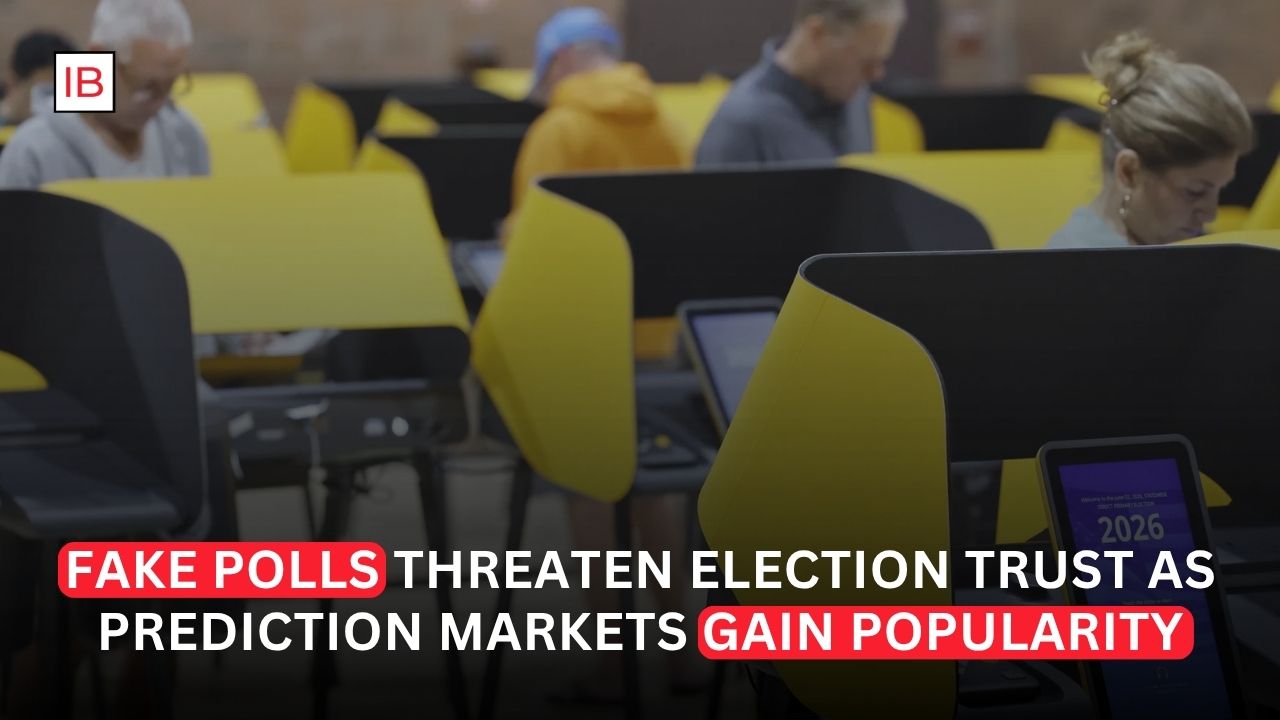
A fake poll in the Los Angeles mayoral race has raised fresh concerns about the reliability of political information and the growing ability of misleading data to influence voters, campaigns and media coverage.
The poll, released by an organization calling itself Median Strategies, claimed that Los Angeles Mayor Karen Bass held a nearly 12-point advantage over City Councilmember Nithya Raman ahead of their November runoff. It presented itself as a conventional public-opinion survey of 560 Los Angeles voters conducted between July 30 and Aug. 5, complete with a reported 4.1% margin of error.
The problem was that the survey never actually happened.
Median Strategies later admitted that the poll was fabricated and described its operation as a “short-term social experiment” intended to examine how supposedly credible polling information could spread without independent verification.
A Poll That Looked Real
The incident is particularly troubling because the fake survey was designed to look like a legitimate political poll.
It included a sample size, dates, a margin of error and detailed voter findings. Those elements can give an audience the impression that a poll has gone through a professional research process.
The survey claimed Bass was leading Raman by nearly 12 percentage points. It also suggested that voters who had supported former reality-TV personality Spencer Pratt in the June primary were overwhelmingly moving toward Bass for the November contest.
Those findings provided a convenient political narrative: Bass was supposedly gaining momentum and winning support from voters who had backed a candidate from outside the traditional political establishment.
The results were then circulated publicly, demonstrating how quickly information can gain credibility once it is packaged in the familiar language of polling.
Bass Campaign Shared the Results
The consequences became more significant when the poll was embraced by the campaign itself.
Bass promoted the survey on social media, describing it as evidence that her campaign was gaining momentum. The post was later deleted after the poll was exposed as fraudulent.
This illustrates one of the central problems with modern political information.
Campaigns have strong incentives to highlight data that portrays their candidates as winning. A favorable poll can be used to encourage supporters, attract donors, generate media attention and create a sense of momentum.
But when campaigns share information before verifying its source and methodology, they can unintentionally become distributors of misinformation.
The Los Angeles incident shows how little time may exist between the creation of false information and its appearance in political messaging.
The Media Amplification Problem
The fake poll also spread through news coverage and social media.
Several outlets reported or referenced the results before the survey was exposed as fraudulent. The incident demonstrated how an apparently professional polling organization can exploit weaknesses in the modern news cycle.
Political polls often receive immediate attention because they offer simple numbers that can be turned into headlines.
“Candidate A leads Candidate B by 12 points” is easier to communicate than a complicated discussion about voter uncertainty, sample quality or methodological limitations.
That simplicity creates an opportunity for fabricated information to spread.
Once a number appears in multiple places, readers may assume that repetition itself confirms its credibility.
But repetition does not transform false information into reliable evidence.
Independent Verification Matters
One important lesson from the scandal is the value of independent polling organizations and transparent methodologies.
Major polling aggregators had excluded Median Strategies’ numbers because the organization lacked sufficient transparency and methodological credibility.
Professional polling requires considerably more than publishing a survey result.
Researchers need to explain how respondents were selected, how questions were asked, how the sample was weighted and who conducted the research. Transparency allows journalists, academics and other pollsters to evaluate whether the findings deserve to be taken seriously.
Without those checks, almost anyone can create a website, publish a survey with impressive-looking numbers and present themselves as an independent research organization.
That is precisely why the Los Angeles episode is bigger than one fake poll.
Prediction Markets Add Another Vulnerability
The incident also raised questions about the relationship between political polling and rapidly expanding election prediction markets.
Political prediction platforms allow users to trade contracts linked to election outcomes. Because prices can change in response to new information, a fake poll could potentially be used to create the appearance of momentum around a candidate.
Reports indicated that trading activity involving Bass increased shortly after the fake poll was promoted, although the precise motivation behind those trades remains unclear. There has been speculation that fabricated polling could be used to influence prediction markets, but there is no established evidence that this was the purpose of Median Strategies.
Median Strategies itself denied that anyone involved in its project held or traded positions in election or prediction markets.
The uncertainty nevertheless highlights a new challenge.
Political misinformation no longer affects only voters and journalists. It can potentially interact with financial markets where people are wagering money on political outcomes.
The Problem Extends Beyond Los Angeles
The Los Angeles poll was not the only fabricated survey produced by Median Strategies.
The organization also released a bogus poll involving the Wisconsin Democratic gubernatorial primary. That survey claimed state Rep. Francesca Hong had a large lead over Milwaukee County Executive David Crowley.
Hong ultimately lost the primary to Crowley by less than a percentage point, demonstrating just how dramatically fabricated polling can differ from actual election outcomes.
Median Strategies subsequently withdrew its polling releases and said it would not publish additional surveys.
The existence of multiple fake polls suggests that the Los Angeles incident was not simply a one-off mistake.
Instead, it appears to have been an organized attempt to test how political information moves through the public information system.
The “Social Experiment” Defense
Median Strategies said its purpose was to study how purported polling information could enter and spread through the political ecosystem without independent verification.
That explanation creates an uncomfortable question.
Even if the project was genuinely designed as an experiment rather than an attempt to influence an election, it still demonstrated how easily false political information can travel.
The company effectively showed that fabricated numbers can be presented as credible, circulated by political actors and discussed by media organizations before someone performs enough verification to discover the truth.
The experiment therefore exposed a weakness that exists regardless of the creators’ intentions.
Democracy Depends on Reliable Information
Elections depend on voters having access to accurate information.
Political polling is not itself an election result, but it can influence how people understand a campaign. Polls can affect perceptions of who is winning, whether a candidate has momentum and whether a race is competitive.
That can influence voter behavior.
Some supporters may become more motivated when their candidate appears to be ahead. Others may decide their vote is unnecessary if they believe their preferred candidate has a comfortable lead.
Donors can also respond to polling numbers, while journalists may devote more attention to candidates who appear to be gaining support.
This makes fake polling potentially more consequential than an ordinary internet rumor.
Transparency Could Become More Important
The incident could increase pressure on political campaigns, journalists and polling organizations to verify surveys before publishing or promoting them.
Basic questions should include who conducted the poll, who funded it, how respondents were selected, whether the methodology is publicly available and whether independent experts can evaluate the results.
Political campaigns may have little incentive to reject favorable polling immediately, but doing so could protect them from exactly the kind of embarrassment experienced by the Bass campaign.
Media organizations face an even greater responsibility because their coverage can give questionable information additional credibility.
The Los Angeles case demonstrates that verification must happen before publication, not after a poll has already gone viral.
Social Media Makes the Problem Harder
Social media has dramatically accelerated the spread of political information.
A campaign can publish a poll directly to thousands of supporters without waiting for traditional media organizations to evaluate it. Influencers and political commentators can then repeat the findings to even larger audiences.
Corrections rarely travel as far as the original claim.
This creates an asymmetry that benefits misinformation.
A fabricated poll may take minutes to circulate, while discovering the deception can take days. By then, screenshots may have been copied, articles published and political narratives established.
The speed of digital communication therefore makes basic verification increasingly important.
A Warning for Future Elections
The Los Angeles episode also arrives at a time when political misinformation is becoming increasingly sophisticated.
Artificial intelligence can generate convincing websites, documents, images and social-media content at extremely low cost. Although the Median Strategies case has not been established as an AI-generated operation, the broader technology environment makes it easier than ever to manufacture apparently credible political material.
Future election misinformation may not simply involve false statements.
It could involve fabricated surveys, fake research organizations, manipulated statistics and synthetic evidence designed to resemble legitimate political research.
That makes institutional verification increasingly important.
Looking Ahead
The fake Los Angeles mayoral poll is a warning about how easily political information can be manipulated.
Median Strategies presented fabricated results as a legitimate survey, claiming Karen Bass held a nearly 12-point lead over Nithya Raman. The organization later admitted that the poll was part of what it described as a short-term social experiment.
The incident became particularly significant after Bass’s campaign shared the results, allowing the fabricated numbers to enter a much wider political conversation.
The damage goes beyond one campaign or one election.
The episode demonstrates how quickly questionable information can move from an obscure website to social media, political campaigns and news coverage. It also highlights the growing intersection between polling, misinformation and election prediction markets.
For democracy to function effectively, voters need more than access to large amounts of information. They need reliable information.
That means campaigns, journalists, pollsters and voters all have a role in questioning political numbers before accepting them as fact.
The biggest lesson from the Los Angeles scandal may therefore be simple: a poll is only as credible as the evidence behind it.
In an increasingly crowded and fast-moving political information environment, failing to verify that evidence can give fabricated numbers the power to shape public opinion before the truth has a chance to catch up.