Mexico Needs a New Approach to Urban Growth
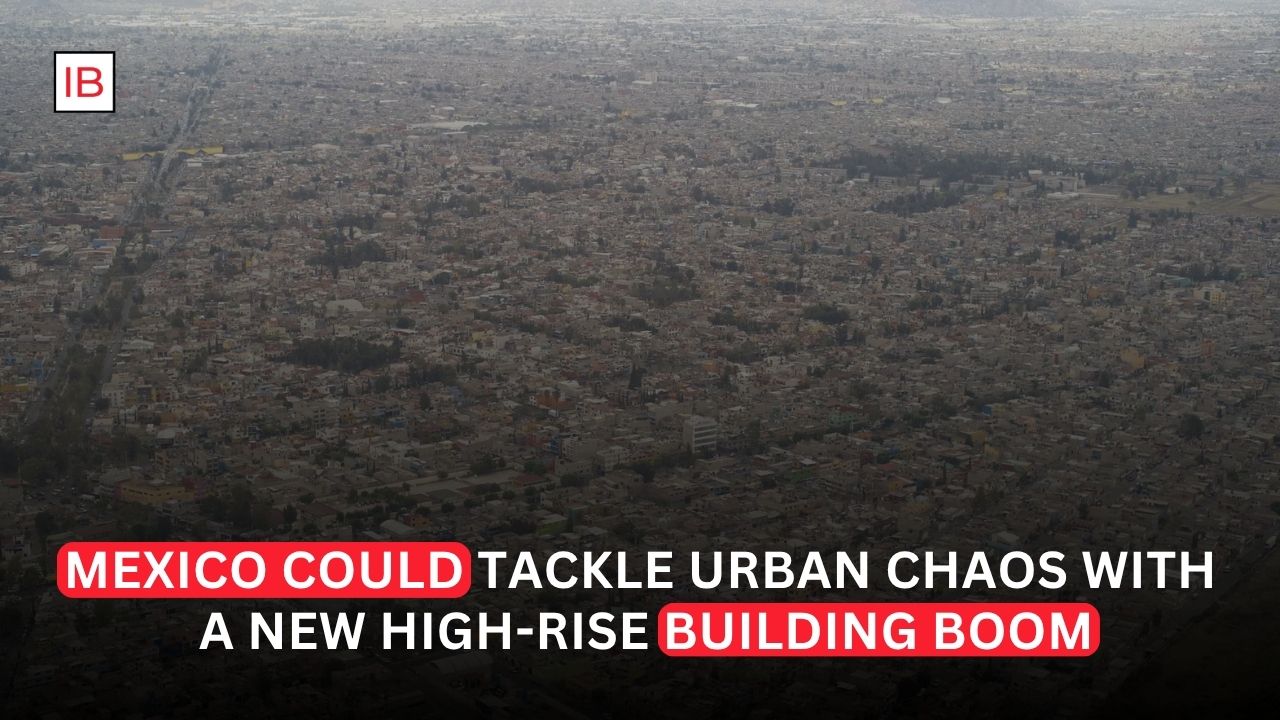
Mexico’s rapidly expanding cities face a difficult combination of housing shortages, traffic congestion, long commutes and sprawling development. One possible solution is surprisingly straightforward: build upward rather than continuing to push cities outward.
Mexico City and other major urban areas have expanded across increasingly large territories, creating communities that are often far from employment centers, public transportation and essential services. Research on Mexico’s urban development has found that low-density housing on the outskirts has been a major driver of unchecked urban sprawl.
A greater emphasis on high-rise and medium-density housing could allow more people to live closer to jobs, transportation and existing infrastructure.
The idea is not simply to build taller skyscrapers. It is to rethink how Mexican cities use limited urban land.
Urban Sprawl Has Created Expensive Problems
For decades, housing development in Mexico has frequently expanded outward through large collections of single-family homes.
These developments can provide relatively inexpensive housing, but their distance from established urban centers creates significant costs for residents and governments.
People may spend hours commuting to work, while governments must extend roads, water systems, electricity networks and public transportation to increasingly distant communities.
The result is a city that becomes physically larger without necessarily becoming more efficient.
Research on Mexico City’s growth shows how dramatically the urban footprint expanded during the city’s population boom. Between 1940 and 1980, the population increased about 7.3 times while the urban area expanded roughly 8.5 times.
That pattern illustrates the fundamental problem.
When cities grow primarily outward, each additional resident requires more land and more infrastructure.
Building Up Could Make Better Use of Existing Land
High-rise development offers a different model.
Instead of constructing hundreds of homes across large peripheral areas, developers can place many more households on smaller parcels of land.
Higher density can make existing infrastructure more productive because more residents live within the same urban area.
This does not mean every neighborhood needs 50-story towers.
Medium-rise apartment buildings, mixed-use developments and carefully planned high-density neighborhoods could provide much of the benefit without completely transforming the character of existing communities.
The objective should be to create compact neighborhoods where housing, employment, retail and public services are located relatively close together.
Mexico City Already Has a History of Vertical Housing
Mexico City is not unfamiliar with high-density residential development.
The Nonoalco-Tlatelolco complex, for example, remains one of the country’s most significant examples of large-scale vertical housing. The complex contains around 90 apartment buildings and historically housed tens of thousands of residents while incorporating schools, health facilities, cultural spaces and a Metro station.
The project demonstrates an important principle: density works best when housing is accompanied by infrastructure and public services.
Simply constructing tall apartment buildings without transportation, schools, parks and utilities can create a different form of urban dysfunction.
A successful high-rise revolution therefore requires integrated planning.
Transportation Could Benefit From Greater Density
One of the biggest advantages of compact development is its potential effect on transportation.
When people live far from employment centers, cars and buses have to travel longer distances.
That increases congestion, fuel consumption and pollution.
Higher-density housing near Metro stations, bus corridors and major employment districts could reduce the average distance between homes and destinations.
Mexico City already possesses an extensive public transportation network, meaning additional housing around existing transit infrastructure could make better use of systems that are already in place.
Transit-oriented development could allow residents to walk or use public transportation for more daily journeys rather than relying on private vehicles.
The benefits could extend beyond transportation.
More concentrated populations can support local shops, restaurants, schools and other services because businesses have access to a larger customer base within walking distance.
High-Rise Development Could Help Address Housing Pressure
Housing affordability is another reason to reconsider urban density.
Mexico’s residential property market is expanding, with the country’s residential real estate market estimated at about $49 billion in 2026 and projected to grow over the following years.
Yet increasing demand does not automatically translate into affordable housing.
When land becomes scarce in desirable areas, property prices can rise sharply.
Building more homes within established urban areas can increase supply without requiring cities to continually expand into undeveloped territory.
That does not guarantee lower prices. Developers and governments would still need appropriate zoning, infrastructure and affordability policies.
But restricting the amount of housing that can be built in high-demand areas can make shortages worse.
Density Must Not Become an Engine of Gentrification
There is an important warning, however.
Building upward can create more housing, but it can also accelerate gentrification if new developments are aimed primarily at wealthy buyers.
Mexico City has already experienced intense debate over rising rents and displacement, particularly in neighborhoods affected by foreign demand and redevelopment.
The challenge is therefore not simply to increase density.
It is to increase inclusive density.
That means allowing new housing while protecting existing residents and encouraging affordable units. Without those safeguards, a high-rise revolution could produce expensive apartments that do little to solve the housing problems faced by lower- and middle-income households.
Zoning Reform Could Be Essential
One of the biggest obstacles to urban densification is zoning.
If regulations severely restrict building heights or the number of homes that can be constructed on a particular parcel, developers may have little incentive to build more housing.
Reforming zoning could allow greater density around transportation corridors and commercial districts while preserving lower-density areas where appropriate.
The goal should not be to eliminate all restrictions.
Instead, cities could establish clear rules that encourage development where additional residents can be supported by existing infrastructure.
That could create a more predictable environment for developers while giving governments greater control over where growth occurs.
Infrastructure Must Grow Alongside Buildings
A high-rise strategy cannot succeed if cities build apartments faster than they expand infrastructure.
More residents mean greater demand for electricity, water, sewage treatment, schools, hospitals, roads and public transportation.
Mexico’s cities would therefore need to connect development approvals to infrastructure capacity.
A new residential tower should not simply be evaluated according to its architectural design.
Authorities should also consider whether the surrounding neighborhood has sufficient water supply, drainage, transportation and public services.
This approach could prevent the creation of isolated high-density developments that simply transfer existing urban problems into taller buildings.
Earthquake Risk Requires Careful Planning
Mexico City’s seismic history makes vertical development particularly sensitive.
The city sits in a region with significant earthquake risk, meaning high-rise construction requires sophisticated engineering, strict building standards and effective enforcement.
The existence of earthquake-resistant skyscrapers in Mexico City demonstrates that tall structures can be designed for difficult seismic conditions. Torre Mayor, for example, incorporates extensive earthquake-resistant engineering and was designed to withstand very strong seismic activity.
The lesson is that vertical development must be accompanied by rigorous safety standards.
Poorly constructed high-rises could create enormous risks.
Well-engineered buildings, however, can allow cities to achieve greater density without sacrificing safety.
Mexico Needs Better Urban Planning, Not Just More Buildings
The argument for a high-rise revolution is ultimately an argument for better urban planning.
Mexico’s cities need to decide where growth should occur rather than simply allowing development to spread outward.
Compact neighborhoods can reduce infrastructure costs, support public transportation and make services easier to provide.
But density must be combined with thoughtful design.
Neighborhoods need parks, sidewalks, schools, shops and community spaces. Tall buildings should contribute to urban life rather than functioning as isolated towers surrounded by parking lots.
The most successful developments would combine residential buildings with commercial space, public transportation and recreational areas.
Technology Could Improve Urban Management
Modern technology could also make higher-density development easier to manage.
Cities can use data to monitor traffic, electricity demand, water consumption and public transportation usage.
Developers can use digital planning tools to assess how new buildings would affect surrounding infrastructure.
Smart-city systems could help authorities identify overloaded roads or utilities before problems become severe.
These technologies cannot replace good planning, but they can help governments make better decisions as urban populations increase.
The Environmental Case for Building Up
There is also an environmental argument for compact development.
When housing spreads outward, natural and agricultural land can be consumed by roads and construction.
The Institute for Transportation and Development Policy has noted that sprawling housing developments on Mexico’s outskirts have contributed to inefficient urban expansion.
Concentrating more residents inside existing urban areas can reduce pressure to convert undeveloped land.
Shorter commutes can also reduce vehicle emissions.
High-density buildings themselves require substantial energy and construction materials, so vertical development is not automatically environmentally friendly. The benefits depend on building efficiency, public transportation and thoughtful land-use planning.
A High-Rise Revolution Would Take Time
Transforming Mexico’s cities cannot happen overnight.
Existing neighborhoods have established communities, infrastructure limitations and cultural identities that need protection.
Large-scale redevelopment can also generate resistance from residents who fear displacement.
The solution therefore requires gradual development rather than indiscriminate demolition.
Cities can begin by identifying areas around major transportation corridors where additional housing would have the greatest benefits. Medium-density projects can then be combined with affordable housing and infrastructure improvements.
Over time, successful developments can provide models for other neighborhoods.
Looking Ahead
Mexico’s urban problems cannot be solved simply by constructing more houses on the outskirts of its cities.
Decades of outward expansion have produced longer commutes, infrastructure challenges and inefficient land use. Research on Mexican urban development shows how sprawling housing patterns have contributed to disconnected communities and continued pressure on undeveloped land.
A carefully managed shift toward higher-density housing could offer a different future.
Building upward would allow more people to live closer to jobs, transportation and services while making better use of existing infrastructure. Mexico City already has examples of large-scale vertical housing, demonstrating that dense communities can incorporate residential buildings alongside schools, health facilities, transportation and public spaces.
But density alone is not enough.
A successful urban transformation would require zoning reform, affordable housing, reliable infrastructure, strong earthquake standards and protection against displacement.
The goal should not be to turn every Mexican city into a forest of skyscrapers.
It should be to create compact, connected and livable cities where people can live closer to opportunity without sacrificing affordability or quality of life.
If Mexico can combine vertical development with smart transportation and inclusive housing policies, the high-rise could become more than a symbol of modernity. It could become a practical tool for tackling some of the country’s most persistent urban problems.