Britain Considers Tougher Economic Measures Over West Bank Settlement Expansion
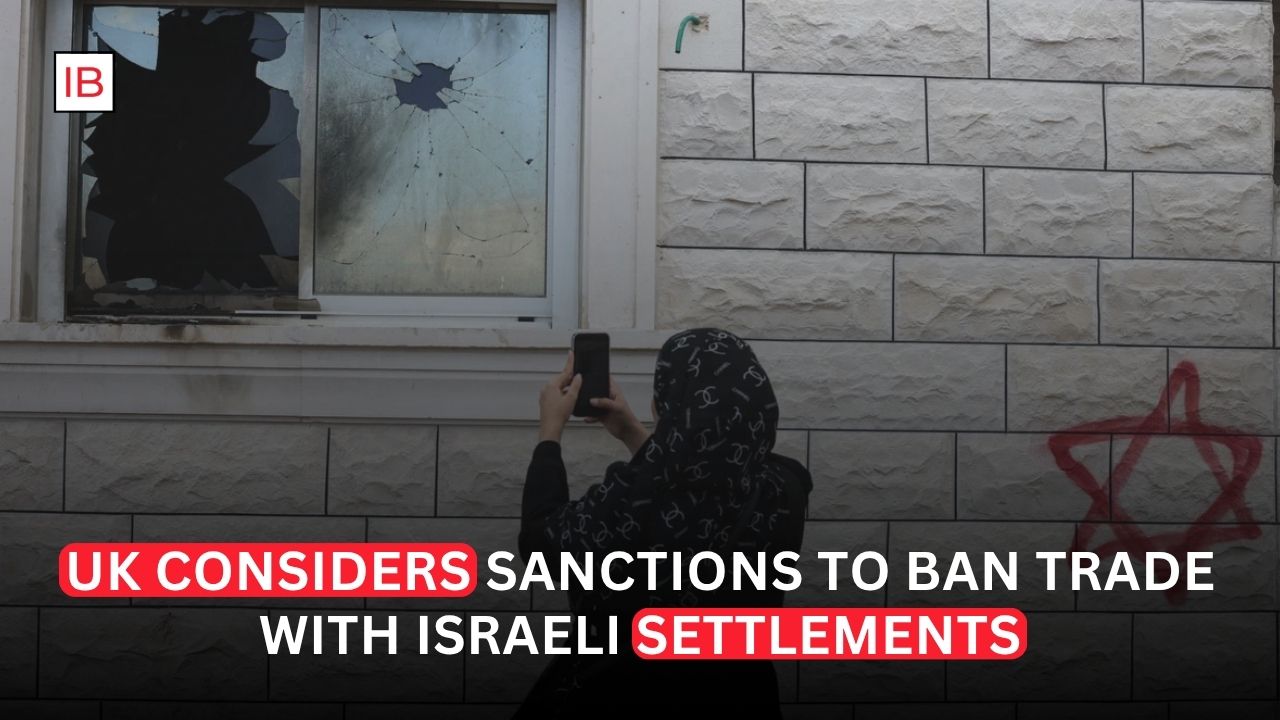
The United Kingdom is considering a new sanctions framework that could prohibit trade with Israeli settlements in the occupied West Bank, marking a potential escalation in London’s response to settlement expansion and rising violence in the region.
The proposal comes as pressure grows on the British government to move beyond warnings and introduce legally binding restrictions on companies and individuals involved in economic activity linked to Israeli settlements. The issue has become increasingly prominent after Israel advanced plans for construction in the strategically important E1 area of the West Bank.
Britain has already strengthened its guidance to businesses, warning against economic and financial activity in illegal Israeli settlements. However, trade with those settlements is not currently subject to a blanket ban.
Britain Signals a More Aggressive Approach
The potential sanctions regime would represent a significant change in Britain’s approach.
Until now, the government has largely relied on diplomatic pressure, business guidance and targeted sanctions against individuals and organizations associated with settlement activity.
That position has become harder to maintain as settlement expansion accelerates.
On Aug. 19, the UK government strongly condemned Israel’s decision to launch a tender for construction in the E1 settlement area and said it would introduce a comprehensive set of measures in the coming weeks. The government said the measures would target those involved in illegal settlement expansion and protect the possibility of a viable Palestinian state.
The announcement has raised expectations that trade restrictions could form part of the next package.
Calls for a Ban Have Been Growing
British lawmakers have been pressing the government to go further for months.
In July, Parliament held a debate specifically focused on whether Britain should impose a ban on trade with Israeli settlements in the occupied Palestinian territories.
The government has previously said that it does not believe there should be trade with illegal settlements, but it has stopped short of imposing a legal prohibition.
That distinction is important.
Government guidance can discourage businesses from entering certain markets, but a sanctions regime would create legally enforceable restrictions.
Such measures could potentially prevent British companies and financial institutions from conducting specified transactions with sanctioned settlement-related entities.
E1 Settlement Plans Increase Pressure on London
The immediate catalyst for the latest discussion is Israel’s plan for the E1 area east of Jerusalem.
The project has generated strong international opposition because of its potential impact on the territorial continuity of the West Bank.
European governments, including Britain, France, Germany, Italy and the Netherlands, have condemned the plans and warned that development in the area could undermine the prospects for a two-state solution.
The United Nations has also warned that the E1 project could pose a major threat to the possibility of creating a contiguous Palestinian state.
For Britain, the development has therefore become more than a question of individual construction projects.
It has become part of a wider debate over whether economic pressure is necessary to prevent settlement expansion from becoming irreversible.
Existing UK Policy Already Restricts Settlement Trade Benefits
Britain’s current trade arrangements already distinguish between Israel and settlements in occupied territory.
Goods produced in Israeli settlements are not eligible for preferential tariff treatment under the UK’s trade agreements with Israel or the Palestinian Authority.
Companies seeking preferential treatment must provide documentation showing where goods were produced, while HM Revenue and Customs can conduct checks if the origin of products is disputed.
The UK has also introduced labeling guidance for goods originating from territories occupied by Israel since 1967.
However, these measures do not amount to a complete prohibition on settlement trade.
That gap is at the center of the current political debate.
Trade With Israel Would Remain Different
One of the most important elements of Britain’s position is the distinction between Israel itself and Israeli settlements in territories occupied since 1967.
The government has repeatedly emphasized that it wants to maintain legitimate trade with businesses operating inside Israel while discouraging economic activity connected to settlements.
That distinction could remain central if a new sanctions regime is introduced.
Rather than imposing broad restrictions on Israeli companies, Britain could potentially target businesses, organizations and financial activities directly connected to settlements.
Such an approach would allow London to increase pressure on settlement expansion while limiting the wider economic consequences for UK-Israel trade.
The Economic Relationship Is Significant
The issue is politically sensitive partly because Britain maintains a substantial commercial relationship with Israel.
UK-Israel trade was worth around £6 billion in 2025, according to the House of Commons Library, while trade with the occupied Palestinian territories was estimated at roughly £38 million.
A broad trade embargo could therefore have consequences far beyond settlement-related businesses.
That is one reason policymakers have focused on targeted measures rather than restrictions covering Israeli goods generally.
The government must balance its foreign-policy objectives with the economic interests of British companies operating in or trading with Israel.
Financial Institutions Could Face New Risks
A sanctions regime would also have implications for banks, investment firms and other financial institutions.
Companies connected to settlement construction can require financing, insurance, investment and payment services.
If certain entities were placed under sanctions, British financial institutions could be prohibited from providing services to them.
This could increase compliance requirements for banks and businesses.
Companies would need to identify whether their customers, suppliers or investment targets have links to settlement activity.
Financial institutions could also face greater scrutiny over transactions involving businesses operating in the West Bank.
The potential impact therefore extends beyond physical goods.
Settlement Construction Is Already Facing International Pressure
The UK would not be acting in isolation.
Several European governments have increasingly adopted tougher measures against settlement expansion and settler violence.
France, Britain, Canada and Norway previously coordinated sanctions targeting Israeli networks involved in violence against Palestinians in the West Bank. France has also indicated that further sanctions against individuals involved in settler violence could be considered.
Other European countries are debating restrictions on trade with settlements as well.
This creates the possibility of a broader international effort to restrict economic activity connected to settlement expansion.
Britain Wants International Coordination
British officials have previously argued that international cooperation would produce a greater impact than unilateral action.
The House of Commons Library noted that the government has emphasized the importance of building an international coalition and consensus around measures targeting settlement activity.
That approach could become particularly important if Britain moves toward a sanctions regime.
If several European countries adopt similar restrictions, businesses would face a much more consistent regulatory environment.
If Britain acts alone, companies could potentially redirect transactions through jurisdictions with less restrictive rules.
International coordination could therefore make any trade restrictions more effective.
Businesses Face Growing Legal and Reputational Risks
Even before a formal trade ban, British companies are facing increasing pressure to reconsider involvement with Israeli settlements.
The government has strengthened its business-risk guidance and warned that economic activity in settlements can create legal and reputational risks.
Companies participating in settlement construction could face criticism from investors, consumers and human-rights organizations.
Financial institutions may also face pressure to examine whether their investments indirectly support settlement expansion.
This means the commercial risks could increase even without a comprehensive sanctions regime.
The Two-State Solution Is Central to the Debate
British officials have repeatedly linked their position on settlements to the future of a two-state solution.
The argument is that continued settlement expansion could make the creation of a geographically connected Palestinian state increasingly difficult.
The E1 area is particularly sensitive because development there could affect the connection between parts of the West Bank and East Jerusalem.
European governments have warned that this could further undermine the possibility of a negotiated settlement.
For British policymakers, the debate over sanctions is therefore closely connected to a broader diplomatic objective.
The government wants to demonstrate that settlement expansion carries tangible consequences while continuing to support the possibility of a negotiated political solution.
Israel Is Likely to Resist Further Measures
Any new British sanctions regime would almost certainly face strong opposition from the Israeli government.
Israel has repeatedly rejected international criticism of its settlement policies and has objected to sanctions imposed by foreign governments.
The dispute could therefore place additional strain on diplomatic relations between London and Jerusalem.
Britain would have to determine how far it is prepared to go while maintaining cooperation with Israel on areas such as security, intelligence and regional diplomacy.
The challenge becomes even greater as tensions across the Middle East remain high.
The EU Could Become an Important Factor
Another major question is whether Britain could coordinate with the European Union.
The EU remains one of Israel’s most important trading partners, making European trade policy potentially much more significant than Britain’s alone.
However, European governments have struggled to agree on broader economic measures against Israel.
EU-wide efforts to suspend trade benefits under the Israel-EU Association Agreement have faced political resistance, despite growing criticism of settlement expansion.
If Britain develops a separate sanctions framework, it could potentially increase pressure on European governments to consider similar action.
The Financial Impact Could Extend Beyond Settlements
A targeted sanctions regime could also affect companies that provide services to settlement businesses.
Construction companies, property developers, banks, insurers, logistics providers and technology firms could all face greater scrutiny depending on how the rules are written.
The exact design would therefore matter enormously.
A narrowly targeted regime might focus only on companies directly involved in settlement construction or property development.
A broader framework could restrict financing, investment and other economic relationships.
The latter would have a much larger impact but would also be more difficult to implement.
Looking Ahead
Britain’s consideration of a sanctions regime against trade with Israeli settlements represents a potentially significant shift in its policy toward the Israeli-Palestinian conflict.
The UK has already strengthened guidance advising British businesses against economic and financial activity in illegal settlements, while maintaining that legitimate trade with Israel should continue.
The latest escalation follows Israel’s advancement of the E1 settlement project, which Britain has strongly condemned as a threat to the prospects for a viable Palestinian state.
If London ultimately introduces legally binding trade restrictions, British businesses could face new obligations covering suppliers, customers, investments and financial transactions linked to settlements.
The move would also place Britain more firmly alongside European governments seeking economic consequences for settlement expansion.
However, the government faces a difficult balancing act.
It must determine how aggressively to target settlement-related activity without damaging legitimate UK-Israel commerce, while also ensuring that any sanctions can be effectively enforced.
The international response will be equally important.
If Britain coordinates with European partners, the economic impact could be considerably greater. If it acts alone, the measures could face questions over effectiveness and enforcement.
For now, the direction of travel is clear: Britain’s policy is moving away from simply warning businesses about the risks of settlement activity and toward considering legally enforceable economic restrictions.
The coming weeks could determine whether those proposals become actual sanctions—and whether Britain joins a wider international effort to use trade and finance as tools to pressure Israel over settlement expansion.