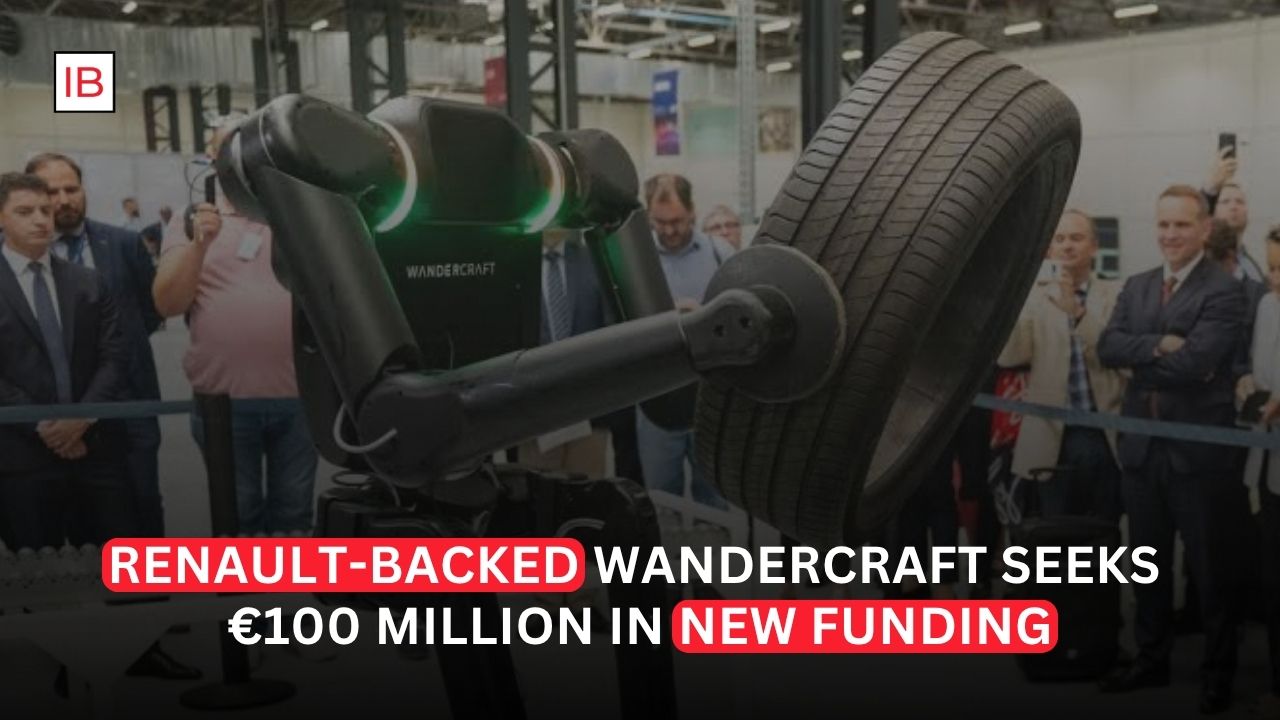
French robotics company Wandercraft is seeking to raise about $100 million in new funding as it moves to expand the commercial development of robotic exoskeletons and industrial robots. The fundraising effort comes as the company attempts to scale technology that combines artificial intelligence, robotics and advanced movement systems for both medical and industrial applications.
The Paris-based company has attracted growing attention for its self-balancing robotic exoskeletons, which are designed to help people with severe mobility limitations stand and walk. Wandercraft’s technology is built around autonomous movement and sophisticated control systems that allow its devices to maintain balance without relying on crutches or walkers. The company is now looking to secure additional capital as it moves beyond research and development toward wider commercial deployment.
Wandercraft previously raised $75 million in a Series D financing round in 2025. The round included backing from Renault Group, French state-backed investment programs and other institutional investors. Renault also took a minority stake in the company and entered into a strategic partnership aimed at bringing Wandercraft’s robotics technology into industrial environments.
The latest fundraising effort highlights the capital requirements facing robotics companies as they attempt to commercialize complex hardware. Unlike software startups, robotics businesses must finance engineering, manufacturing, regulatory approvals, clinical testing and physical deployment. Raising another $100 million would give Wandercraft additional resources to support those activities while expanding its presence in multiple markets.
A major part of Wandercraft’s strategy is its Eve personal exoskeleton. The device is intended to provide powered walking assistance in personal settings and represents an important step in the company’s effort to move its technology beyond rehabilitation centers. Wandercraft has also been working toward broader commercial availability, including partnerships designed to support distribution and clinical adoption.
The company’s existing Atalante platform has already established a presence in rehabilitation. Wandercraft has developed the system for use by people with mobility impairments, giving medical institutions a practical environment in which to deploy and evaluate its technology. The experience gained from these systems could provide an important foundation for the company’s consumer and industrial ambitions.
Renault’s involvement gives Wandercraft another potential growth avenue. The automaker has partnered with the robotics company to develop Calvin, a family of next-generation robots designed initially for industrial applications. Renault plans to use the technology in manufacturing operations to reduce physically demanding and repetitive tasks for workers. The partnership also gives Wandercraft access to Renault’s manufacturing expertise, potentially helping it lower production costs and scale its robots more efficiently.
Calvin illustrates how Wandercraft is trying to diversify beyond medical robotics. Industrial automation could ultimately represent a much larger commercial opportunity if the company can develop robots capable of handling heavy loads, repetitive movements and other difficult factory tasks. Renault has described the partnership as a way to improve productivity while allowing employees to focus on higher-value activities.
The fundraising also comes at a time when investors are increasingly interested in physical AI and robotics. Companies developing machines that can perceive their surroundings, balance themselves and perform useful physical tasks are attracting capital as businesses look for ways to automate labor-intensive operations. However, the sector remains expensive and technically challenging, making access to substantial funding crucial.
For Wandercraft, the next stage will be proving that its technology can move successfully from promising demonstrations and clinical applications into scalable commercial businesses. The company must manage manufacturing costs, regulatory requirements and customer adoption while continuing to improve reliability.
A successful $100 million raise would give Wandercraft significant financial capacity to pursue those goals. With Renault as a strategic industrial partner and its exoskeleton technology already established in rehabilitation, the company is positioning itself at the intersection of healthcare, mobility and industrial automation.