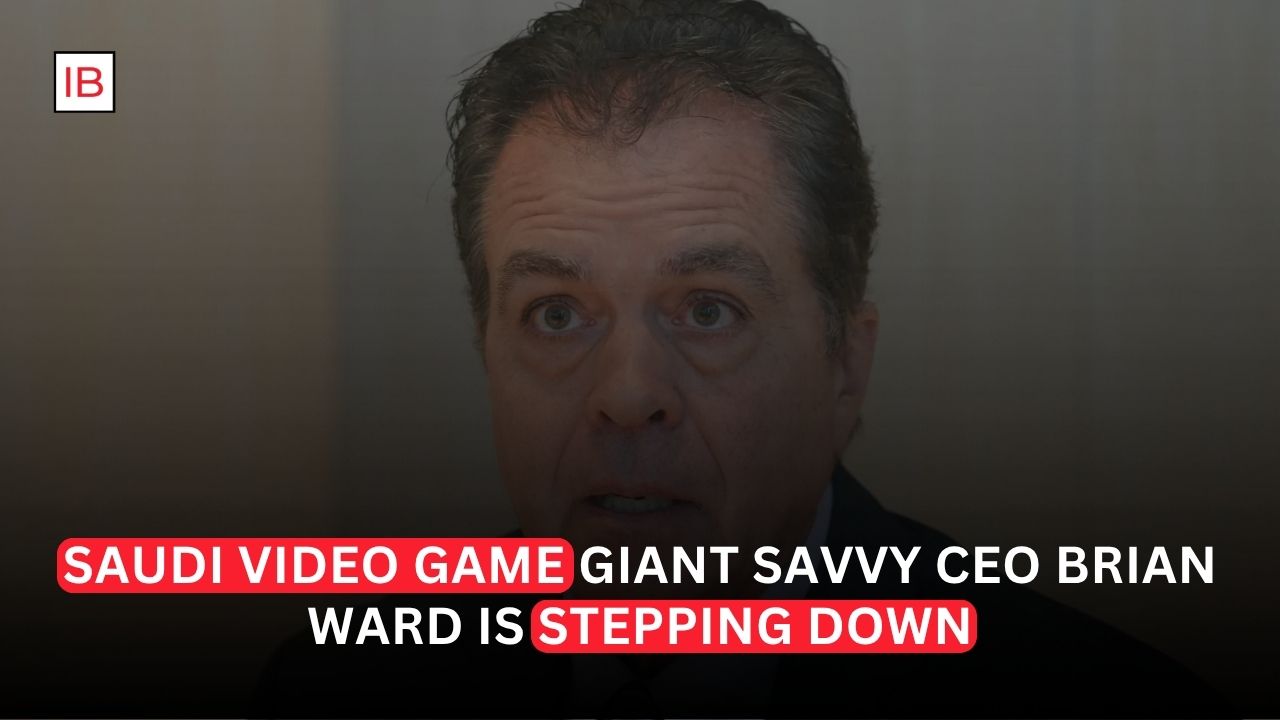
Brian Ward is stepping down as chief executive officer of Saudi Arabia’s Savvy Games Group, marking a significant leadership change at one of the most aggressive investors in the global video-game industry.
Ward has led Savvy since its creation and has been central to the company’s effort to turn Saudi Arabia into a major international gaming and esports hub. His departure comes at a particularly important moment, as the company manages a rapidly expanding portfolio and continues pursuing the kingdom’s broader Vision 2030 diversification strategy.
Savvy is backed by Saudi Arabia’s Public Investment Fund and was established to develop the domestic gaming sector while investing heavily in international companies, studios and esports businesses. Ward helped build the organization from a relatively new investment vehicle into a major global gaming operation.
Ward’s Role in Savvy’s Expansion
Ward joined Savvy as its founding CEO in 2021 after a career spanning technology, entertainment and gaming.
Under his leadership, the company pursued an unusually aggressive expansion strategy. Savvy invested in gaming companies, acquired major businesses and built a portfolio covering game development, publishing and esports.
The company has also expanded internationally, establishing operations across multiple countries. A recent profile described Savvy as having nearly 4,000 employees across more than 20 countries, illustrating how quickly the organization has grown under Ward.
His departure therefore represents more than a routine executive transition.
It comes as Savvy moves from building its initial portfolio toward managing a much larger collection of businesses and investments.
A $6 Billion Moonton Deal
One of Savvy’s most significant recent moves has been its agreement to acquire Moonton Technology from ByteDance for about $6 billion.
Moonton is the developer behind Mobile Legends: Bang Bang, one of the world’s biggest mobile multiplayer games, with particularly strong positions in Southeast Asia and other international markets.
The acquisition gives Savvy greater exposure to mobile gaming and strengthens its presence in global esports. Reports described the transaction as one of the largest video-game acquisitions in recent years.
The timing makes Ward’s departure especially notable because Savvy is now responsible for integrating another major international gaming company while continuing to expand its existing portfolio.
Savvy Already Owns Major Gaming Assets
Moonton is only the latest addition to Savvy’s growing empire.
The Saudi-backed group acquired Scopely for about $4.9 billion in 2023. Scopely subsequently became involved in the acquisition of Niantic’s games business, bringing properties including Pokémon Go into the wider Savvy portfolio.
Savvy has also invested in esports organizations and other gaming businesses.
This gives the company exposure to several parts of the gaming ecosystem rather than relying on a single publisher or game.
The Vision 2030 Connection
Savvy is not simply a conventional gaming investment company.
Its expansion is closely connected to Saudi Arabia’s Vision 2030 program, which aims to diversify the country’s economy away from oil and develop industries capable of generating jobs, investment and international influence.
Gaming and esports have become an important part of that strategy.
Saudi Arabia has invested heavily in gaming infrastructure, esports competitions and international partnerships.
The kingdom is also developing entertainment and gaming projects designed to attract global companies and audiences.
Regional Conditions Have Become More Difficult
The gaming strategy is unfolding against a more complicated regional backdrop.
The ongoing conflict involving Iran has already affected Saudi Arabia’s esports ambitions. The inaugural Esports Nations Cup planned for Riyadh was postponed from 2026 to 2027 because of regional uncertainty.
That does not invalidate Saudi Arabia’s gaming strategy, but it demonstrates that the industry is not insulated from geopolitical risk.
Large international gaming events depend on players, companies and audiences being willing to travel to the region.
Savvy’s Next Challenge Is Execution
The central question after Ward’s departure will be whether Savvy can shift successfully from rapid expansion to effective management.
Buying companies is relatively easy when capital is abundant.
Creating long-term value from those acquisitions is considerably harder.
Savvy now has to manage multiple businesses with different cultures, markets and commercial models.
The success of the strategy will increasingly depend on whether those companies can produce sustainable growth rather than simply increasing the size of Savvy’s portfolio.
A Different Phase for the Company
Ward’s departure could therefore signal the beginning of a new phase.
Savvy has already established a global footprint and accumulated major gaming assets.
The next stage may require more emphasis on operational efficiency, integration and returns on investment.
That is particularly relevant because Saudi Arabia’s sovereign wealth fund, PIF, has been placing greater emphasis on financial performance and investment efficiency across its wider portfolio.
Savvy will face similar pressure to demonstrate that its gaming investments can generate durable value.
Saudi Arabia Still Wants Gaming Growth
There is little indication that Ward’s departure means Saudi Arabia is abandoning its gaming ambitions.
The country continues to treat gaming as a strategic industry and has deployed substantial capital toward building an international ecosystem.
Savvy remains one of the most important vehicles for that effort.
The leadership change is therefore more likely to affect how the strategy is executed than whether the strategy continues.
Conclusion
Brian Ward’s departure marks an important turning point for Savvy Games Group.
Since becoming its founding CEO, Ward has helped transform the Saudi-backed company into a major international gaming and esports organization. Savvy has expanded through acquisitions and investments across the industry, including its $4.9 billion purchase of Scopely and its recent agreement to acquire Moonton from ByteDance for about $6 billion.
Those deals demonstrate the scale of Saudi Arabia’s gaming ambitions.
But they also raise the next question: what happens after the acquisitions?
Savvy now has to integrate major companies, manage a geographically diverse workforce and turn a collection of valuable gaming properties into sustainable financial and strategic returns.
That challenge will fall to the leadership team that follows Ward.
The transition also comes as Saudi Arabia’s broader gaming strategy faces a more complicated environment. Regional instability has already forced the postponement of the Esports Nations Cup in Riyadh, showing that geopolitical developments can directly affect the kingdom’s ambitions to become a global gaming hub.
Nevertheless, the underlying strategy remains intact.
Saudi Arabia sees gaming as both an economic diversification opportunity and a way to establish greater international influence in entertainment and technology.
Savvy is the central corporate vehicle for that ambition.
Ward’s tenure was defined by rapid expansion and major transactions.
The next phase will be judged less by how many companies Savvy can acquire and more by whether those investments can operate successfully, create valuable games and generate sustainable returns.
That makes the choice of Ward’s successor particularly important.
Savvy has already built the portfolio.
Its next leadership team will have to prove that the portfolio can deliver.