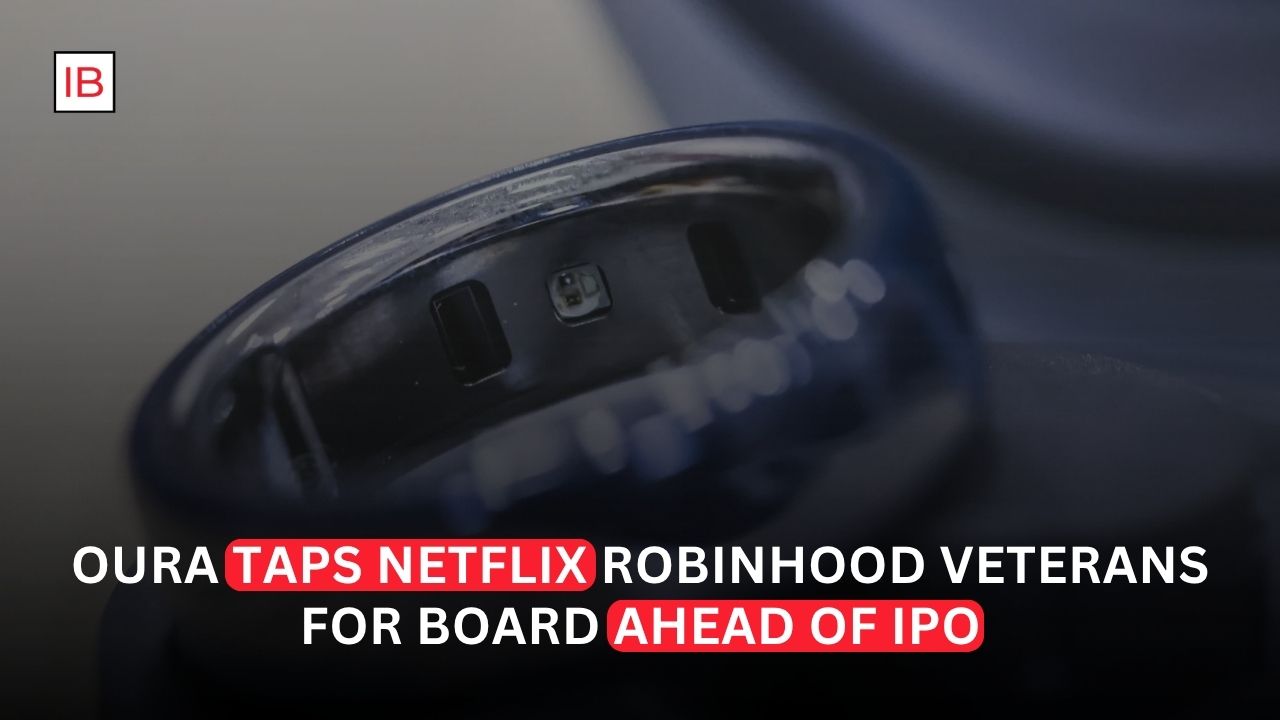
Oura is strengthening its leadership team ahead of a highly anticipated initial public offering by appointing four experienced executives and investors to its board. The Finnish smart-ring maker said Jason Warnick, Leslie Kilgore, Miki Kuusi and David Sze will join the board, bringing expertise from companies including Robinhood, Netflix and technology investment firms. The appointments come as Oura prepares for what could become one of the largest wearable-technology IPOs in recent years.
Among the new directors, Jason Warnick brings direct public-market experience. He served as Robinhood’s chief financial officer for seven years and helped guide the financial-technology company through its own IPO and subsequent expansion as a public business. His experience could be particularly valuable to Oura as it prepares for the regulatory, financial-reporting and investor-relations demands that accompany becoming a listed company.
Leslie Kilgore adds another major technology credential to the board. She previously served as chief marketing officer at Netflix and has experience helping consumer technology brands build global audiences. Her background could support Oura’s efforts to turn its smart ring from a popular wearable into a broader health platform with a much larger international customer base.
Miki Kuusi, meanwhile, brings experience from the European technology ecosystem. He is the co-founder and chief executive officer of Wolt, the food-delivery company that became a major global technology business before being acquired by DoorDash. David Sze, a veteran venture capitalist at Greylock, adds another perspective, having spent years investing in high-growth technology companies and helping businesses scale.
Oura Chief Executive Officer Tom Hale said the appointments would strengthen the company’s board with leaders experienced in building and scaling global businesses. The timing is significant because Oura has been preparing for a potential public listing while expanding beyond its original identity as a sleep-tracking wearable company.
The company’s IPO ambitions have attracted considerable attention. Bloomberg reported in August that Oura and some of its investors were seeking to raise as much as $3 billion in a US offering that could value the company at more than $16 billion. Existing shareholders are expected to sell a significant amount of stock if the offering proceeds. Oura had previously disclosed that it confidentially filed for an IPO in May.
Such a valuation would represent a major increase from Oura’s previous private-market valuation. The company was valued at about $10.9 billion following an $875 million funding round in September 2025. The jump reflects investor expectations that health-focused wearables could become much more important as consumers increasingly use technology to monitor sleep, activity and other health indicators.
Oura’s strategy increasingly extends beyond hardware. Its smart rings collect continuous health and wellness data, while the company’s software turns that information into insights for users. That model gives Oura the potential to generate recurring revenue through subscriptions rather than relying only on sales of physical devices.
The expansion is taking place as competition in the wearable-health market intensifies. Companies offering smart rings, fitness trackers and other health-monitoring devices are seeking to differentiate themselves through sensors, software, artificial intelligence and subscription services. Oura has established an early position in the smart-ring category, but maintaining that advantage will require continued investment in technology and brand development.
The company’s connection with Robinhood is also notable. Robinhood Ventures Fund I lists Oura among its private-company investments, giving retail investors indirect exposure to the smart-ring maker through a publicly traded closed-end fund. Robinhood has increasingly expanded its private-market offerings, reflecting broader demand for access to high-growth companies before or around their IPOs.
For Oura, adding executives with public-company and consumer-brand experience is a clear preparation for the next stage. A successful IPO would provide capital for international expansion, product development and health-platform ambitions while giving early investors an opportunity to realize gains.
The new board members will therefore face an important challenge: helping Oura maintain its rapid growth while preparing the company for the transparency and scrutiny of public markets. With a potential multibillion-dollar IPO approaching, their experience could prove crucial in determining whether Oura can transform its strong position in smart rings into a durable publicly traded health-technology business.