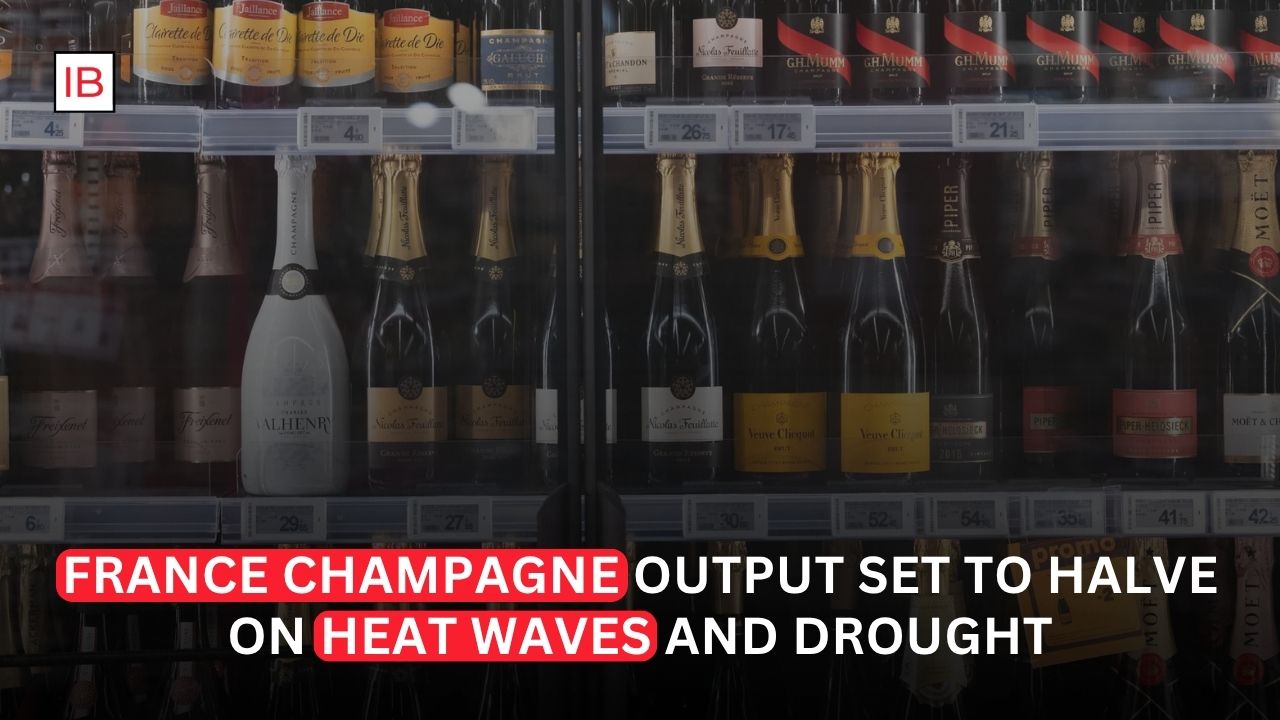
France’s Champagne region is facing an exceptionally poor harvest in 2026, with wine production expected to fall by roughly half from last year after severe heat waves, drought and earlier weather damage devastated vineyards. The decline is part of a broader collapse in French wine production that is expected to make this year one of the weakest harvests in roughly three decades.
France’s agriculture ministry estimates national wine production at about 33.9 million hectoliters in 2026, equivalent to roughly 4.5 billion bottles. That would represent a 6% decline from 2025 and a 17% drop compared with the 2021-25 average. Champagne is among the hardest-hit regions, with output forecast to fall 49% from last year, effectively cutting production in half.
The scale of the decline reflects an unusually punishing combination of weather events. France endured its hottest summer since national records began in 1900, with the average temperature during June, July and August reaching 24°C, about 3.6°C above the historical average. Rainfall was also nearly 40% below normal, leaving soils exceptionally dry and intensifying water stress across agricultural regions.
Champagne’s vineyards were particularly vulnerable because extreme temperatures accelerated the development of grapes while simultaneously reducing yields. The region began harvesting earlier than ever recorded, another sign of how dramatically the growing season has shifted. Growers faced a difficult balance between harvesting grapes before heat damage worsened and allowing them enough time to develop the acidity and flavor characteristics required for quality sparkling wine.
The damage was not caused by summer heat alone. Vineyards had already suffered from earlier weather shocks, including spring frost that destroyed a significant portion of expected production in some areas. Subsequent drought and extreme heat compounded those losses, leaving growers with substantially fewer grapes available for the 2026 vintage.
Other major French wine regions are also expected to record significant declines. Bourgogne-Beaujolais production is forecast to fall by about one-third, while output in the Loire Valley and Charentes is projected to decline by 12% and 6%, respectively. Languedoc-Roussillon and Bordeaux are expected to recover from particularly weak 2025 harvests, but their production is still expected to remain below historical averages.
The consequences extend beyond the quantity of wine produced. Prolonged heat and drought can alter grape chemistry, reducing acidity and accelerating sugar accumulation. Vineyards have also faced risks from sunburn and other heat-related damage, while wildfires in several French regions have raised concerns about smoke taint affecting grapes and ultimately the character of wines.
For Champagne producers, a smaller harvest does not necessarily translate immediately into empty shelves. Champagne houses and growers maintain inventories and typically blend wines across vintages, allowing them to manage temporary shortages. But a production shock of this magnitude could place additional pressure on supply, especially if extreme weather becomes more frequent and harvest losses persist across several years.
The industry was already confronting structural challenges before the 2026 weather crisis. French vineyards have been shrinking, partly because of weak consumption and oversupply in some parts of the market. Producers are therefore facing a difficult combination of declining output, changing consumer behavior and increasingly unpredictable weather. The agriculture ministry said France’s total planted wine area fell 2.5% this year.
The government has responded to the wider agricultural crisis with more than €1 billion in emergency assistance for farmers affected by drought and heat. The support is intended to help producers cover severe losses and maintain operations into the next agricultural season.
For Champagne, however, financial assistance can only address part of the problem. Growers are increasingly having to consider longer-term adaptation measures as traditional growing conditions change. Earlier harvests, water stress and more intense heat could eventually force changes in vineyard management, planting decisions and the varieties used to maintain the distinctive balance associated with Champagne.
The 2026 harvest therefore represents more than a bad year for French wine. It is becoming a test of how one of the world’s most important wine industries can adapt to a climate in which extreme heat and drought are increasingly capable of overwhelming established production patterns. With Champagne output expected to be nearly halved and France’s overall harvest approaching a 30-year low, the economic and environmental consequences are likely to extend well beyond this year’s bottles.