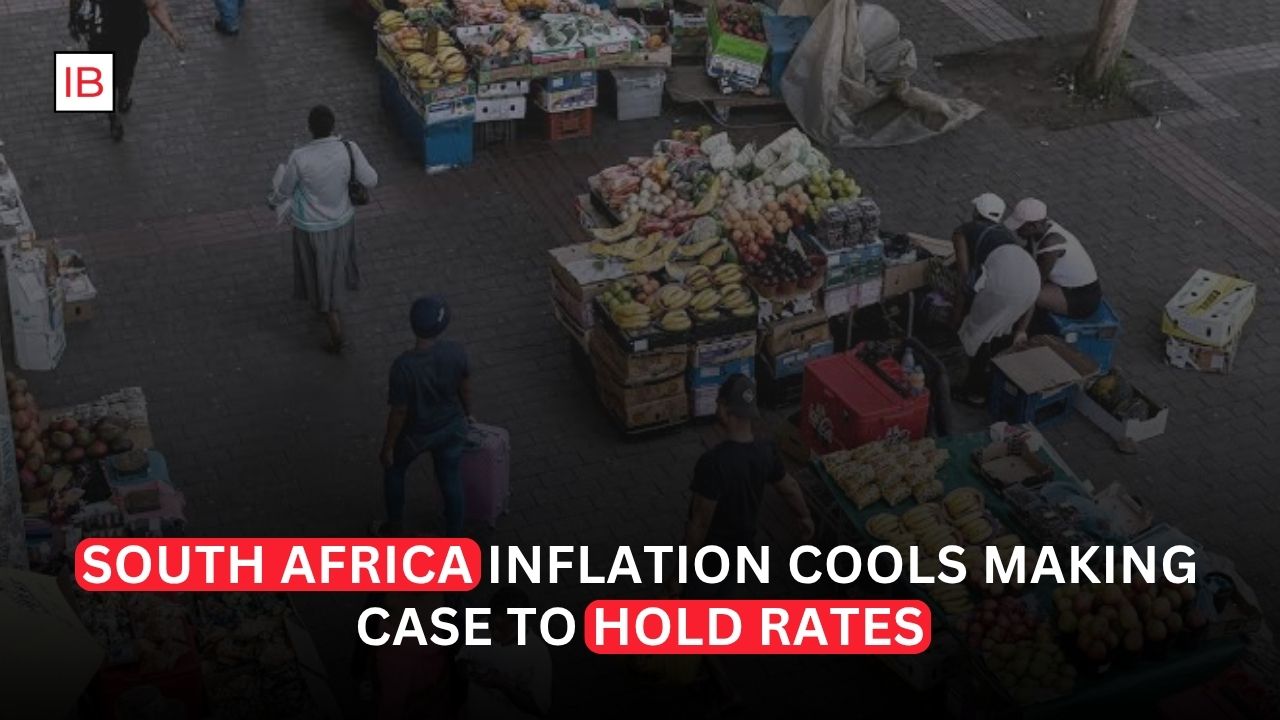
South Africa’s inflation rate slowed sharply in July, providing the South African Reserve Bank with more room to keep interest rates unchanged and avoid further tightening after a surprise acceleration in consumer prices earlier in the year.
Headline consumer inflation fell to 4.3% year over year in July from 5.0% in June, according to Statistics South Africa data released Wednesday. The reading was weaker than economists had expected, with the median forecast calling for inflation to ease to 4.5%. On a monthly basis, consumer prices rose just 0.2%, down from a 0.7% increase in June.
The improvement is significant because June’s inflation figure had raised concerns that price pressures were becoming more persistent. Inflation had climbed above the upper end of the South African Reserve Bank’s preferred range, prompting markets to reconsider the possibility of additional interest-rate increases.
The July data changes that calculation.
The biggest source of relief came from transportation costs. Fuel prices fell after a temporary truce between the US and Iran reduced some of the pressure on global energy markets. South Africa imports most of its fuel, leaving domestic inflation highly exposed to changes in international oil prices and the exchange rate.
The decline in fuel-related inflation is particularly important because energy costs can influence prices throughout the economy. Lower fuel prices reduce transportation expenses for businesses and households, potentially easing pressure on everything from food distribution to commuting costs.
However, the improvement should not be interpreted as proof that inflation has been permanently defeated.
The recent decline was helped substantially by lower fuel costs, which are volatile and heavily influenced by geopolitical developments. Oil prices remain elevated because of continuing tensions in the Middle East and uncertainty around shipping through the Strait of Hormuz.
That means South Africa’s inflation outlook remains vulnerable to another surge in global energy prices.
The Reserve Bank therefore has to look beyond the headline number. Underlying inflation trends, wage pressures, services prices and inflation expectations will be critical in determining whether policymakers can comfortably leave borrowing costs unchanged.
The central bank has already taken a cautious approach. At its July monetary-policy meeting, the Monetary Policy Committee voted 4-2 to keep rates unchanged, while two members favored a 25-basis-point increase. At the time, the decision came despite June inflation rising to 5.0%.
The decision reflected the fact that monetary policy works with a lag. Raising interest rates cannot reverse inflation that has already occurred. Policymakers instead have to determine whether current price pressures are likely to persist.
The July slowdown makes the earlier decision to hold rates look less risky.
South Africa’s benchmark policy rate currently stands at 7%, according to data compiled following the July MPC meeting. The next scheduled policy decision is in September.
Keeping rates unchanged would allow the central bank to assess whether the inflation decline continues without imposing additional pressure on an economy that still faces weak growth.
Higher interest rates can help contain inflation by reducing borrowing and spending, but they also make mortgages, business loans and consumer credit more expensive. For South Africa, where economic growth has remained relatively subdued, another rate increase could impose meaningful costs on households and companies.
The central bank therefore has to balance price stability against economic activity.
The inflation figures also provide some relief for consumers. The sharp decline from June’s 5.0% rate means prices are rising more slowly than they were a month earlier, although that does not mean prices themselves are falling.
This distinction matters. A slowdown in inflation means the pace of price increases has moderated. It does not reverse the increases households have already experienced.
For families dealing with high living costs, the cumulative impact of previous inflation remains significant. Food, housing, transportation and utilities continue to account for a large share of household spending.
The Reserve Bank will therefore remain cautious about declaring victory.
Another important factor is the country’s revised inflation-targeting framework. South African policymakers have been moving toward a lower 3% inflation target, with a tolerance band around it. The central bank’s own publications show that headline inflation and underlying measures have been moving through a period of adjustment toward the revised target.
At 4.3%, July inflation is still above that new target.
That means policymakers cannot simply assume that inflation is sufficiently low. They need evidence that price growth is continuing to move toward 3% over time.
The recent decline in inflation nonetheless gives them more flexibility.
One of the strongest arguments for holding rates is that monetary conditions are already restrictive. The Reserve Bank raised its policy rate by 25 basis points in May, meaning the economy has not yet fully absorbed the effects of that increase.
Waiting could allow policymakers to see how previous tightening affects demand and inflation before deciding whether additional action is necessary.
The South African rand will also matter.
A weaker rand can increase the local cost of imported fuel, food and manufactured goods, potentially reversing some of the recent improvement in inflation. Conversely, a stable or stronger currency could help contain imported price pressures.
Global interest-rate expectations are therefore relevant to South Africa’s policy decisions. If major central banks remain cautious, global capital flows could shift in ways that affect the rand and South African bond yields.
The international environment remains particularly complicated because oil prices are still elevated. Global bond markets have also been under pressure, with rising long-term government yields increasing borrowing costs around the world.
For South Africa, these external developments create a difficult policy backdrop. Even if domestic inflation is cooling, global energy and financial conditions could generate new pressures.
The July data nevertheless gives the Reserve Bank something it lacked a month earlier: evidence that the June inflation surge may not represent a sustained acceleration.
That is especially important because June’s 5.0% reading had been driven by broad-based increases. Core inflation had risen to 4.1%, while services inflation reached 5.2%, according to analysis following the June data.
The central bank will therefore want to see whether underlying inflation also begins to moderate rather than relying entirely on lower fuel prices.
If services inflation continues to ease and inflation expectations remain contained, the case for keeping rates at 7% will become stronger.
For financial markets, a prolonged pause could support South African bonds and interest-sensitive assets by reducing expectations of additional tightening. It could also help households and businesses by providing greater certainty over borrowing costs.
But investors should not assume that rate cuts are immediately around the corner.
Inflation at 4.3% remains above the central bank’s longer-term objective, and renewed energy shocks could quickly push the headline rate higher. The Reserve Bank is likely to prioritize credibility and inflation expectations over providing rapid monetary support to the economy.
The key question is therefore not whether July’s inflation report is good news. It clearly is. The more important question is whether the improvement can survive another increase in global energy prices.
South Africa’s dependence on imported fuel leaves it particularly exposed to developments beyond its borders. A renewed oil shock could quickly reverse some of the progress recorded in July.
For now, however, the data gives policymakers a reason to wait.
The sharp fall in headline inflation, slower monthly price growth and reduced transportation costs all point toward less immediate pressure on the Reserve Bank to raise rates. With the effects of previous monetary tightening still working through the economy, holding the policy rate steady allows officials to gather more evidence before making another move.
The September meeting will therefore be closely watched. If inflation continues to moderate, the argument for keeping rates unchanged will strengthen further. If energy prices rise again or underlying inflation remains stubbornly high, policymakers may have to reconsider.
South Africa has moved from an inflation shock in June to a more encouraging reading in July. The challenge now is determining whether that improvement represents the beginning of a durable downward trend or simply temporary relief from lower fuel prices.