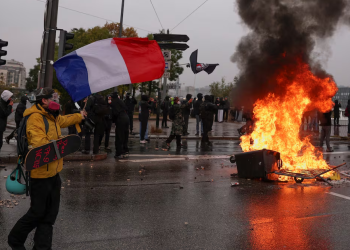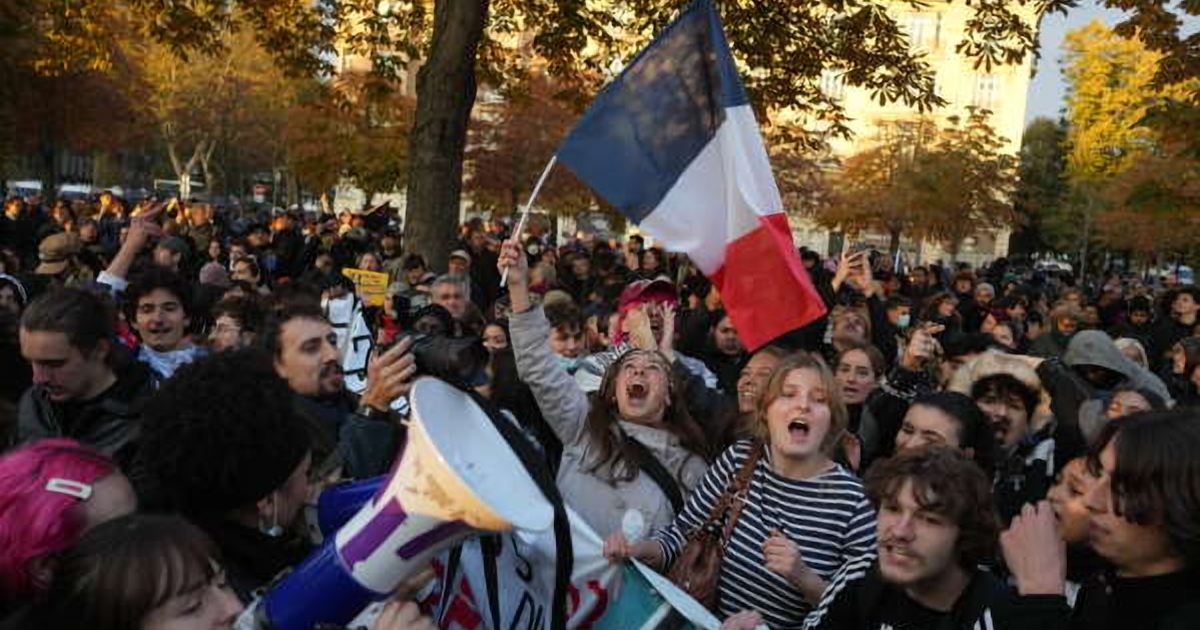
Coordinated influence operations across digital communication channels have moved beyond general election interference to weaponize active civil unrest. According to restricted internal assessments prepared by European Union diplomatic officials and France’s Ministry for Europe and Foreign Affairs, covert foreign disinformation networks systematically exploited October’s violent riots in France. Through fabricated media clips, synthetic audio, and coordinated social accounts, external actors sought to amplify domestic polarization and portray Western democratic institutions as losing operational control.
The investigative findings, initially documented in restricted diplomatic assessments, illuminate how modern information operations leverage spontaneous local grievances. Protests initially triggered by student walkouts, education budget deficits, and surging living costs were reframed online into anti-migrant narratives and systemic institutional failure.
As analyzed across geopolitical and macroeconomic updates on InvestorBytes, information warfare and state-aligned digital manipulation increasingly function as asymmetric tools of economic destabilization. By exploiting structural friction inside core European economies, external influence efforts heighten sovereign risk premiums, disrupt market stability, and distort international sentiment.
The Reach of Foreign Disinformation Networks in France
The internal European Union evaluation, spanning intelligence collected between October 7 and October 21, determined that hostile digital campaigns did not instigate the initial demonstrations or ignite the physical clashes. Instead, the activity represented an opportunistic effort where covert operators amplified sensationalist claims to erode trust in national governance.
The EU assessment detailed how Russian-linked actors operating under a campaign designated as “Operation Overload” pushed fraudulent narratives to target French-speaking digital audiences. These efforts included synthetic videos designed to impersonate legacy Western news organizations, alleging fabricated migrant assaults against demonstrators and warning of imminent terror alerts.
The broader strategic objective of these foreign disinformation networks was to depict French state leadership as fragile, authoritarian, and overwhelmed. By manufacturing panic, foreign operators sought to divide voters and influence political outcomes ahead of upcoming municipal and national elections.
Competing Vectors: Amplification Across Global Spheres
While the covert Russian infrastructure relied heavily on forged assets, a parallel internal assessment by the French foreign ministry revealed that the highest engagement volumes were generated by accounts associated with American political factions and Israeli-linked influencers.
The French intelligence audit revealed striking disparities in engagement volume across platform X (formerly Twitter) between October 16 and October 18:
| Account Affiliation | 10 Most-Viewed Posts | Primary Narrative Framings |
| Pro-Russian Spheres | 2.8 Million Views | State weakness, Ukraine prioritization over domestic needs |
| Israeli Officials & Media | 35.0 Million Views | Links to radical Islamism, cultural clash, border collapse |
| US MAGA-Aligned Influencers | 49.0 Million Views | Uncontrolled immigration, breakdown of law and order |
While the Russian footprint generated significant strategic alarm due to direct media forgery, the scale of attention was eclipsed by cross-border political commentators. Accounts tied to the US MAGA ecosystem and Israeli public figures drove tens of millions of views by framing the unrest through the prism of religious conflict and border security.
Elina Treyger, a senior political scientist at the RAND Corporation, noted that these campaigns wage a persistent “narrative competition.” Over time, the continuous amplification of civil instability by foreign disinformation networks reshapes international perceptions of Western governance while driving domestic electorates toward political extremes.
Operation Overload and the Rise of Synthetic Media
First identified by cybersecurity watchdogs in September 2023, Operation Overload has emerged as a high-volume, automated information pipeline. According to findings published by the Institute for Strategic Dialogue and French disinformation agency Viginum, the operation operates across borders, adapting its narrative architecture to exploit breaking domestic crises across Europe.
Core Techniques Deployed by Covert Operations
- Brand Impersonation: Fabricating authentic-looking lower-thirds, brand typography, and watermarks of recognized European outlets like France 24, Le Monde, and TF1.
- Generative Voice Cloning: Using advanced artificial intelligence tools to clone the voices of domestic defense analysts and political commentators to endorse fabricated quotes.
- Out-of-Context Archival Footage: Repurposing violent riot footage from 2023 or international conflict zones and presenting it as real-time developments from central Paris.
- Distraction Framing: Systematically claiming that European administrations squander taxpayer resources on foreign military assistance while abandoning domestic public services.
French President Emmanuel Macron acknowledged the threat following the unrest, noting that while foreign powers did not organize the underlying demonstrations, the manipulation of digital information by external actors was undeniable. Conversely, Russian diplomatic spokespersons have consistently rejected allegations from French watchdogs, dismissing the findings as political fabrications intended to deflect from domestic policy challenges.
Investors tracking structural risks, European budget negotiations, and capital flows across InvestorBytes Markets will note that narrative-driven polarization introduces unpredictable legislative volatility, which complicates long-term fiscal planning and industrial policy execution across the continent.
Strategic Implications for European Democratic Stability
The weaponization of civil demonstrations indicates a permanent evolution in geopolitical confrontation. Hostile influence actors no longer need to manufacture crises from scratch; they simply inject automated amplification into existing societal fault lines.
When economic grievances over inflation, education, and labor wages are hijacked by foreign disinformation networks, rational policymaking and institutional mediation become significantly harder to achieve. As synthetic production costs decline and automated distribution accelerates, defending democratic infrastructure will require coordinated regulatory standards, real-time attribution capabilities, and advanced cryptographic provenance for digital media. Without institutional safeguards, domestic unrest will remain a prime target for opportunistic information operations.
Disclaimer
The information provided in this article is for educational, journalistic, and informational purposes only and does not constitute formal financial, legal, or investment advice.