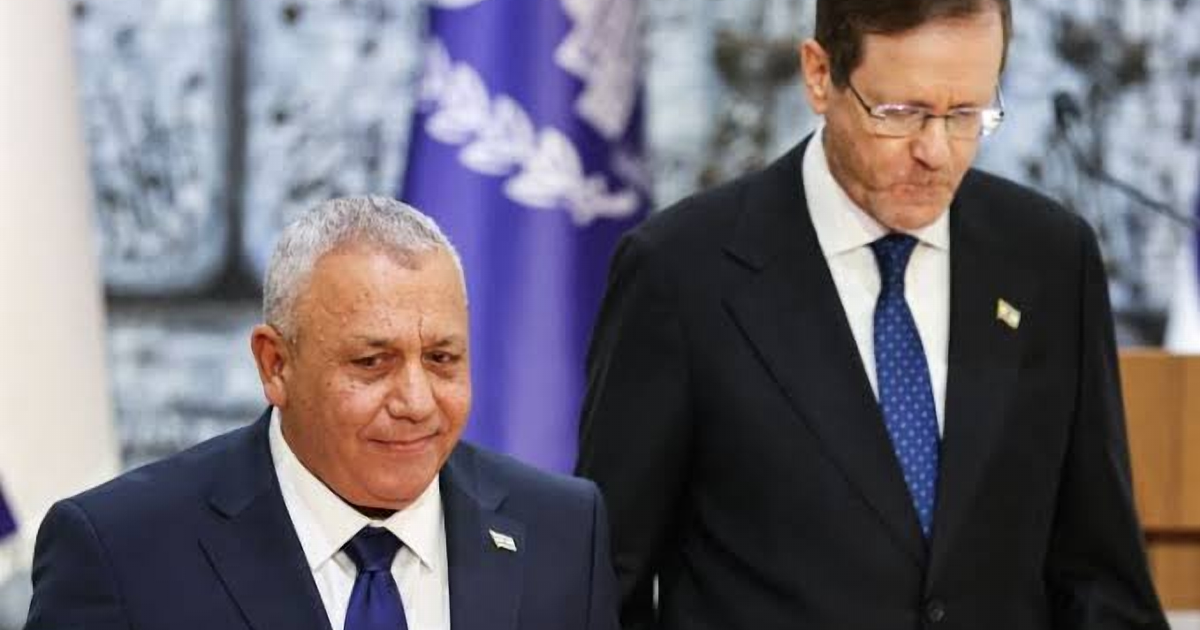
In a decisive political shift that could conclude Benjamin Netanyahu’s extended tenure as prime minister, Israeli President Isaac Herzog has formally designated opposition figure and former military chief Gadi Eisenkot to assemble the country’s next administration. The delicate process of Israel coalition government formation officially commenced following the October parliamentary elections, which dissolved the parliamentary majority of Netanyahu’s right-wing religious bloc and produced a deadlocked 120-seat Knesset.
Herzog announced his determination after concluding formal party consultations at the President’s Residence in Jerusalem. Eisenkot, who helms the centrist Yashar (“Straight”) faction, accepted the task under extraordinary political circumstances.
“Now is the time to form a national emergency government. I will do everything to ensure we are worthy,” Eisenkot stated on public channels following the presidential mandate.
As tracked across international policy analyses and macroeconomic updates on InvestorBytes, prolonged political gridlock in strategic Middle Eastern jurisdictions compounds sovereign risk premiums, elevates regional defense budget allocations, and rattles institutional investor sentiment across global financial centers.
The Arithmetic Behind Israel Coalition Government Formation
The parliamentary arithmetic emerging from the October ballot illustrates the narrow path confronting both major camps. To establish an executive cabinet, a designated prime minister must secure the backing of at least 61 Knesset members.
Neither established camp achieved that threshold autonomously. Netanyahu’s conservative-religious alliance captured 53 seats marking a significant retreat from its former legislative majority while Eisenkot’s broad opposition coalition secured 48 seats. Crucially, Arab-majority parliamentary lists won an unprecedented 19 seats, positioning them as potential kingmakers.
During consultations with President Herzog, Eisenkot received formal endorsements from Arab-led factions, giving him the numerical edge over Netanyahu and securing the initial presidential appointment. However, converting these divergent endorsements into a functional governing coalition presents substantial structural hurdles.
3 Strategic Coalitional Paths Confronting Eisenkot
To navigate the 28-day statutory negotiation window, Eisenkot must engineer an unconventional alliance across deeply fragmented ideological factions. Observers tracking Israel coalition government formation identify three potential structural pathways:
1. External Support or Formal Pacts with Arab-Led Parties
Relying on Arab-majority factions represents the most direct numerical avenue to reaching 61 votes. However, this configuration faces intense internal friction within the opposition itself. Conservative coalition partners, most notably Avigdor Lieberman’s Yisrael Beiteinu party, have flatly refused to sit in an executive cabinet alongside Arab factions.
Furthermore, Eisenkot has instituted strict conditions for full cabinet membership, including formal recognition of Israel as a Jewish state and the explicit designation of Hamas as a terrorist organization. While Arab party leaders may refuse formal ministerial portfolios, they could theoretically provide confidence-and-supply votes from outside the government to dismantle legacy legislative acts.
2. A Grand Power-Sharing Agreement with Netanyahu
Netanyahu issued a public appeal for a “national unity” administration over the weekend. A grand coalition between Likud and Yashar would easily cross the 61-seat parliamentary threshold without relying on peripheral factions.
Nevertheless, previous power-sharing arrangements in Jerusalem have proven fragile, often collapsing over ministerial appointments, prime ministerial rotation schedules, and legal jurisdiction disputes. Eisenkot’s political identity was largely forged in opposition to Netanyahu’s judicial overhaul initiatives, making a shared governance pact politically risky for his core base.
3. Splintering Ultra-Orthodox Factions Over Conscription
Eisenkot could seek to peel ultra-Orthodox factions—such as Shas and United Torah Judaism—away from the Likud orbit. However, this strategy clashes directly with Eisenkot’s signature campaign promise: universal military conscription.
A former Chief of Staff of the Israel Defense Forces (IDF), Eisenkot campaigned aggressively on ending longstanding military draft exemptions enjoyed by religious seminary students. Because Haredi parties demand absolute legislative guarantees shielding their communities from compulsory service, bridging this policy divide appears nearly impossible.
| Coalition Formula | Projected Knesset Seats | Primary Policy Constraint |
| Broad Center-Left + Arab Support | 61–67 Seats | Opposition from right-leaning parties like Yisrael Beiteinu |
| National Unity (Likud + Yashar) | 60+ Seats | Deep personal mistrust and power-sharing rotation disputes |
| Centrist Core + Ultra-Orthodox | 61+ Seats | Incompatibility over universal military conscription mandates |
National Security Doctrines and the Dahiya Legacy
Eisenkot’s military background shapes his approach to statecraft and defense policy. Serving as military Chief of Staff from 2015 to 2019, he formulated the “Dahiya doctrine” during earlier conflicts with Hezbollah—a strategy prioritizing overwhelming, asymmetric force against military and logistical infrastructure in hostile territory.
While taking an uncompromising stance against non-state militant entities in Gaza and Lebanon, Eisenkot has advocated for greater domestic moderation. He has denounced rogue West Bank settler violence as “Jewish terror” and pledged to dismantle extremist influence within state defense institutions.
Despite these moderate domestic positions, Eisenkot maintains a traditional defense orientation, opposing unilateral Palestinian statehood and insisting that security oversight must remain anchored within Israeli state structures.
Investors tracking Middle Eastern sovereign credit ratings, currency dynamics, and debt sustainability on InvestorBytes Markets will note that executive uncertainty in Jerusalem introduces immediate volatility into regional defense spending, bond spreads, and commercial energy contracts.
Legal Inquiries and the 28-Day Countdown
The transition remains shadowed by institutional and legal friction. Netanyahu and his allies have alleged that the vote was compromised by administrative irregularities and high turnout in Arab municipalities.
While the Shin Bet domestic intelligence agency initiated preliminary reviews into potential foreign interference vectors, Israel’s Central Elections Committee and President Herzog affirmed that the balloting was valid and that no irregularities altered the ultimate distribution of seats.
Under Israeli basic law, Eisenkot holds an initial 28-day window to present a confirmed 61-seat roster to parliament. Should negotiations stall, President Herzog retains the constitutional authority to grant a single 14-day extension.
If Eisenkot fails to finalize an agreement and no alternative lawmaker can assemble a majority, parliament will automatically dissolve, forcing the country into its sixth general election cycle since 2019. The coming weeks of Israel coalition government formation will determine whether a new political consensus can take hold or whether legislative deadlock will once again return voters to the ballot box.
Disclaimer
The information provided in this article is for educational, journalistic, and informational purposes only and does not constitute formal financial, legal, or investment advice.