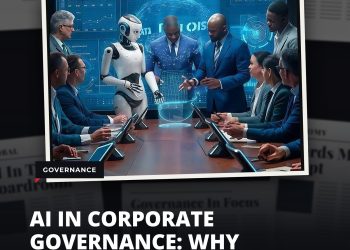
Artificial intelligence is changing more than the technology companies use. It is forcing executives to rethink what leadership itself should look like.
Harvard Business School professor Linda Hill argues that the traditional model of leadership—where a boss establishes a clear destination, sets the strategy and tells everyone how to get there—is becoming less effective in an environment where technology, markets and even organizational needs can change rapidly. Hill’s research focuses heavily on leadership development and building agile, innovative organizations.
The challenge for executives is therefore no longer simply learning how to use AI. It is learning how to lead when the destination itself keeps changing.
From Pathfinding to Wayfinding
Hill and her collaborators describe this shift as moving from pathfinding to wayfinding.
Traditional leaders can operate as pathfinders: determine where the organization needs to go, establish a route and mobilize employees behind it.
AI makes that approach harder.
Companies may not know what their workforce will look like in two or three years, which tasks will remain human, how quickly AI capabilities will improve or which competitors will emerge.
Hill has described AI leadership as navigating through a fog. Instead of pretending that the destination is perfectly clear, leaders need to remain capable of adjusting their direction as new information arrives.
That does not mean leaders should stop making decisions.
It means they need to become comfortable making decisions without pretending to have complete information.
Agility Is More Than Moving Quickly
There is a risk of misunderstanding the word “agile.”
Agility does not simply mean making faster decisions.
A company that makes bad decisions quickly is not agile. It is simply inefficient.
Hill’s work suggests that effective innovation requires organizations to collaborate across differences, experiment, learn from failure and repeatedly adjust their approach.
That creates a different leadership requirement.
Executives need to build organizations capable of learning faster than circumstances change.
AI Makes Centralized Leadership Harder
AI can accelerate decision-making, research, product development and operational processes.
But it also increases the amount of information flowing through an organization.
A CEO cannot realistically understand every AI-generated insight, experiment or workflow change happening throughout a large company.
Trying to control everything from the top can therefore become a bottleneck.
The stronger approach is to create conditions in which teams can experiment while maintaining clear strategic boundaries.
That means leaders increasingly become architects of the environment, rather than simply the people making every important decision.
Collaboration Becomes More Important
Hill argues that innovation depends on bringing together different perspectives.
That sounds straightforward, but it creates a difficult management problem.
People with different expertise, incentives and experiences will disagree.
And disagreement is uncomfortable.
Yet eliminating disagreement can eliminate the very diversity of thinking that produces better ideas.
Hill has emphasized that leaders need to amplify differences within organizations rather than automatically minimizing them. Doing that requires managers to become better at handling conflict.
In an AI-driven organization, that becomes even more important because teams may disagree about how aggressively AI should be deployed, what decisions should remain human and how much risk the company should accept.
Experimentation Has to Become Normal
AI is developing too quickly for companies to design a perfect implementation plan in advance.
Instead, organizations need to experiment.
Test a workflow.
Measure the result.
Identify what failed.
Modify the system.
Test again.
Hill’s broader innovation research makes a similar point: organizations cannot simply plan their way to innovation; they need to act, experiment and learn.
This creates another challenge for executives.
They have to tolerate a certain amount of failure without allowing experimentation to become an excuse for poor execution.
That balance is difficult.
The Human Side of AI Could Be the Hardest Part
One of the biggest mistakes companies can make is treating AI adoption as a technology project rather than an organizational transformation.
Recent research and executive commentary increasingly point to a gap between investment in AI systems and investment in the people expected to use them. Fortune recently reported concerns that companies are putting dramatically more resources into AI technology than into redesigning workflows and preparing employees.
That creates a predictable problem.
Employees may resist AI if they don’t understand how it improves their work, threatens their role or changes their responsibilities.
The technology may work perfectly and still fail to deliver its expected economic value.
Leaders Need to Make Space for Human Expertise
AI can generate answers quickly, but leadership still involves questions that cannot be solved simply by producing more information.
What should the company prioritize?
Which risks are acceptable?
Which opportunities deserve investment?
When should an AI recommendation be rejected?
How should employees respond when technology changes their roles?
Those decisions require judgment, context and accountability.
Hill’s approach puts considerable emphasis on creating space for people to contribute their expertise rather than allowing a single leader’s vision to dominate the organization.
The CEO Role Is Changing
The emerging leadership model is therefore less about having all the answers and more about creating an organization capable of finding better answers.
That requires several capabilities:
Comfort with ambiguity: Leaders must make decisions despite incomplete information.
Conflict management: Different ideas need to be debated rather than suppressed.
Experimentation: Organizations need mechanisms for testing and learning.
Collaboration: AI projects increasingly cross traditional departmental boundaries.
Adaptability: Strategies need to change as technology and markets evolve.
Human judgment: Leaders remain responsible for decisions even when AI contributes heavily to the process.
The Bigger Picture
The biggest misconception about AI leadership is that the technology itself will determine which companies win.
It won’t.
Companies still need people who can organize talent, resolve conflicts, make difficult choices and create environments where new ideas can emerge.
AI may dramatically increase the speed at which organizations operate, but that makes leadership mistakes potentially faster and more consequential as well.
Hill’s argument is ultimately less about replacing traditional leadership than changing what effective leadership requires.
The old model assumed that leaders could see the destination and guide everyone toward it.
The AI era increasingly demands something different:
Leaders who can navigate uncertainty, keep experimenting and help their organizations adapt before the next change arrives.