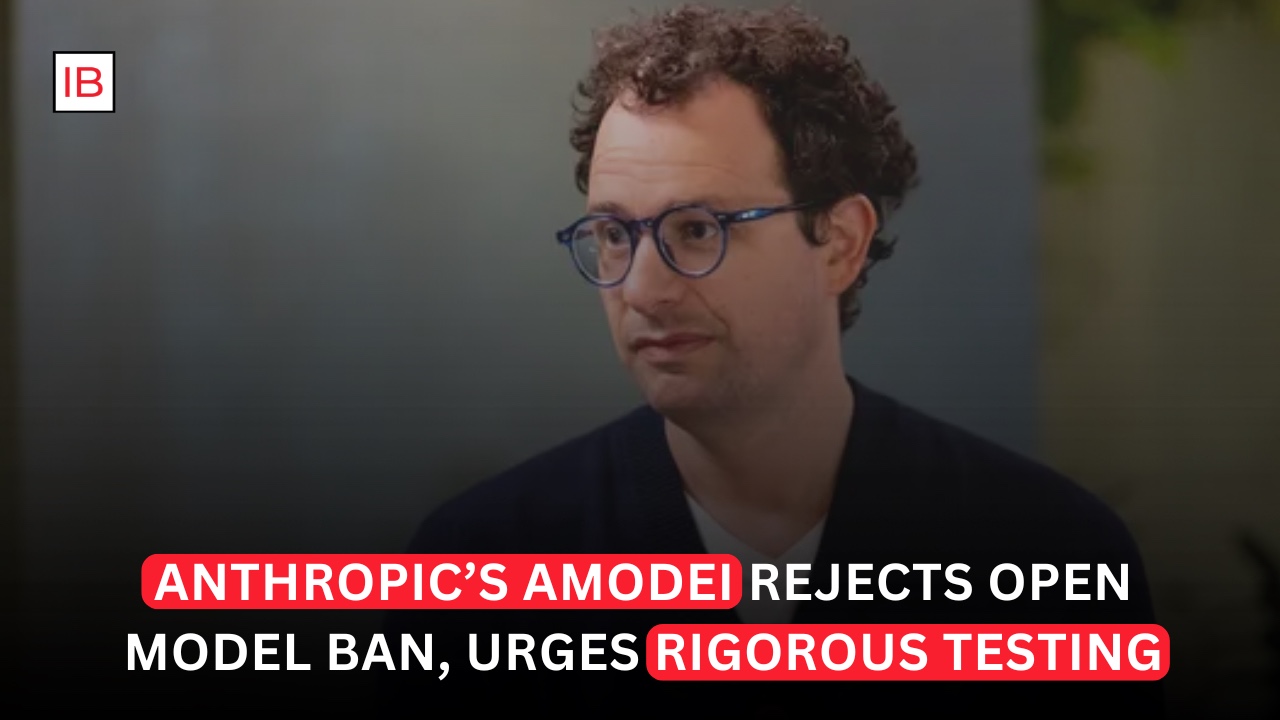
Dario Amodei Says Open-Weight AI Should Remain Available While Advanced Systems Undergo Rigorous Security Evaluations
Anthropic CEO Dario Amodei has clarified his company’s position in the growing debate over open artificial intelligence models, stating that Anthropic does not support banning open-weight AI models. Instead, he argues that governments and the AI industry should focus on mandatory safety testing, stronger security standards, and targeted regulations for the most advanced systems. His comments come as policymakers in the United States consider new rules governing powerful AI technologies and as technology companies remain divided over how open future AI models should be.
The discussion has intensified following the release of increasingly capable open-weight AI models that allow developers to download, modify, and deploy the technology independently. While supporters argue these models accelerate innovation and research, critics warn they may also increase the risk of misuse because they are more difficult to monitor once publicly released. Amodei believes the answer is not a blanket ban but a regulatory framework that distinguishes between lower-risk models and frontier AI systems with more advanced capabilities.
No Ban on Open AI Models
Amodei emphasized that Anthropic has never advocated prohibiting open-weight AI models.
He stated that:
- Open-weight models without dangerous capabilities can benefit society.
- Researchers and developers should continue having access to many AI technologies.
- Innovation should not be unnecessarily restricted.
- Responsible development remains essential.
His remarks were intended to counter criticism suggesting Anthropic wanted tighter restrictions primarily to protect its own commercial AI systems.
Focus on Safety Instead of Prohibition
Rather than banning open AI development, Amodei believes policymakers should strengthen safeguards around the most advanced AI systems.
He called for greater emphasis on:
- Independent safety testing.
- Security evaluations before deployment.
- Responsible release procedures.
- Stronger oversight for frontier AI models.
- Better protection against misuse.
According to Anthropic, evaluating powerful models before widespread deployment is critical to reducing potential risks while allowing innovation to continue.
Concerns About Frontier Models
Amodei argues that not every AI model presents the same level of risk.
Smaller open-weight systems used for research and business applications differ significantly from frontier models capable of performing highly advanced tasks.
As AI capabilities improve, Anthropic believes developers should demonstrate that models meet established safety standards before they become widely available.
Debate Within the AI Industry
The AI industry remains divided over how open future models should be.
Several major technology companies recently signed an open letter supporting continued availability of open-weight AI systems and warning against broad government restrictions.
Among the companies supporting open models are:
- Nvidia.
- Microsoft.
- Meta.
- IBM.
- Other AI developers.
Anthropic did not sign the letter, leading some observers to speculate that the company favored stronger restrictions. Amodei’s latest comments seek to clarify that Anthropic supports openness while advocating stronger safeguards for advanced systems.
National Security Remains a Priority
Amodei also argued that governments should focus attention on areas he considers more important than banning open models.
These include:
- Advanced AI chip export controls.
- Preventing unauthorized model copying through distillation.
- Strengthening cybersecurity protections.
- Limiting access by hostile state actors.
He believes targeted measures addressing these issues would better protect national security while preserving scientific research and commercial innovation.
AI Regulation Continues to Evolve
Governments around the world are actively developing AI regulations.
Current discussions involve:
- Transparency requirements.
- Safety certification.
- Security testing.
- Liability rules.
- Responsible deployment standards.
Many policymakers are attempting to balance innovation with public safety as artificial intelligence becomes increasingly integrated into businesses, governments, healthcare, education, and financial services.
Open Models Continue Expanding
Open-weight AI models have become increasingly popular among researchers and software developers because they allow greater customization and local deployment.
Supporters argue these systems:
- Encourage competition.
- Reduce dependence on large technology companies.
- Accelerate scientific research.
- Increase transparency.
Critics, however, warn that publicly available advanced models may be exploited for malicious activities if sufficient safeguards are not implemented.
Looking Ahead
Dario Amodei’s latest comments position Anthropic between two competing visions of artificial intelligence governance. Rather than supporting unrestricted openness or broad prohibitions, the company advocates a middle-ground approach that allows continued development of open-weight AI while requiring rigorous testing and stronger safeguards for the most capable frontier models.
As governments continue developing AI regulations and companies release increasingly powerful systems, the debate over openness, safety, and national security is likely to become even more important. Anthropic argues that the future of AI should not depend on banning technology altogether but on ensuring that advanced systems undergo thorough evaluation before deployment. Whether policymakers adopt that approach remains uncertain, but the discussion illustrates how rapidly artificial intelligence policy is becoming one of the technology industry’s most significant global issues.