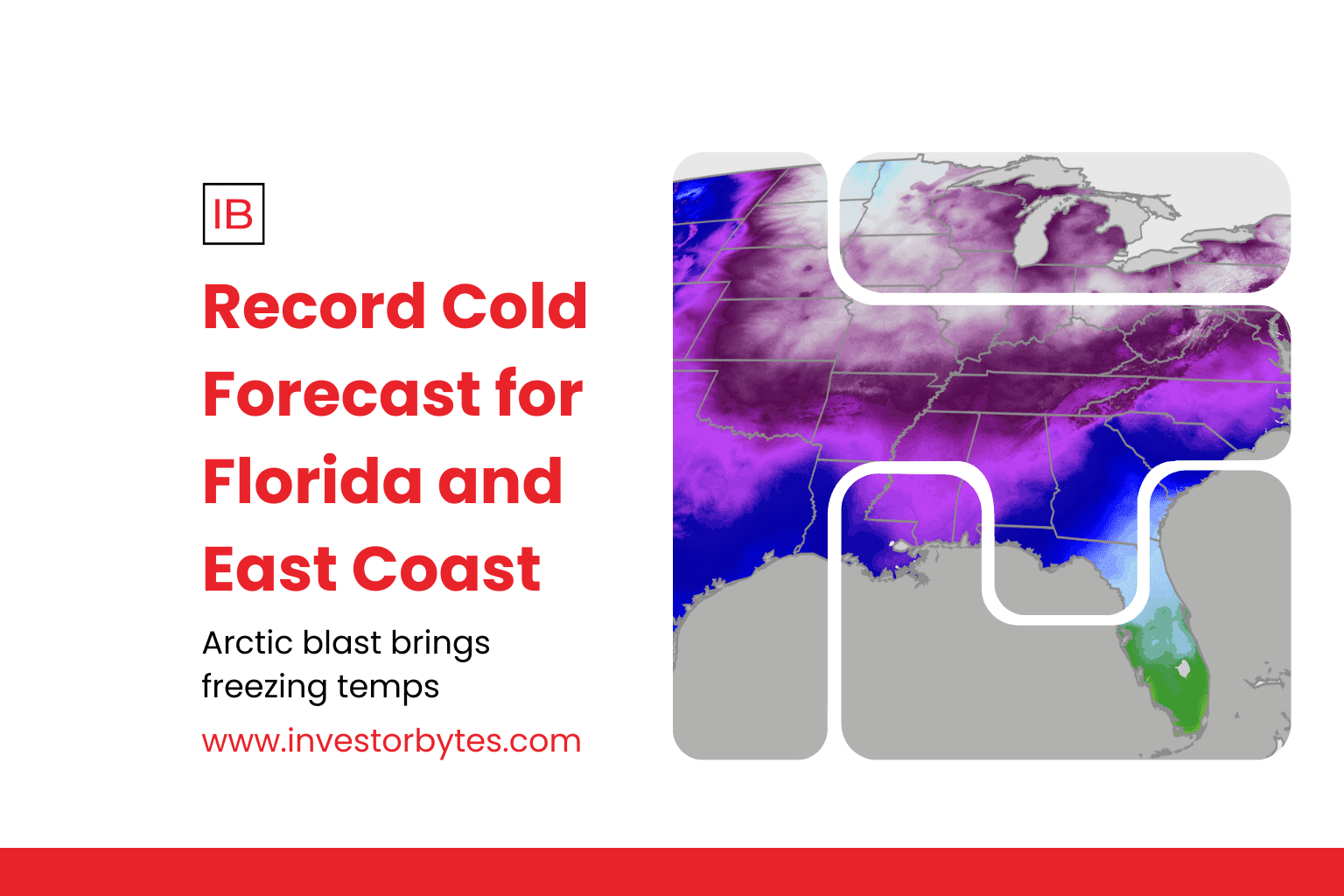
The National Weather Service (NWS) has warned that “numerous record lows” are forecast for this week. While the Northeast is still “digging out” from record snowfall—including 31 inches in some New Mexico peaks and 22 inches in the Hudson Valley—the focus has shifted to the South, where infrastructure is less prepared for sub-freezing durations.
The Deep South: States including Mississippi, Tennessee, and Alabama have already faced significant icing, leading to downed power lines and over 550,000 customers without electricity as of Tuesday.
The Mid-Atlantic: In the D.C. and Virginia areas, temperatures are expected to struggle to leave the teens, with wind chills plunging near or below zero through the weekend.
The Southeast: Georgia and South Carolina are bracing for “treacherous” freezing rain that could paralyze regional travel and further strain the power grid.
Florida Braces for Rare Freeze
Perhaps the most concerning aspect of this 2026 cold wave is its reach into the “Sunshine State.” Meteorologists have issued rare freeze warnings for parts of Central and North Florida, where temperatures are expected to dip into the upper 20s.
Impact on Agriculture
Florida’s $7 billion citrus industry is on high alert. Farmers are working around the clock, using “microjets” to spray warm groundwater onto the trunks and lower limbs of trees.
“Warm water gives off heat, and the ice can actually help insulate and protect the tree,” explained one Central Florida citrus grower. While early-season oranges have mostly been harvested, the Valencia oranges and grapefruit remaining on the trees are at high risk if temperatures stay below 28°F for more than a few hours.
Wildlife and Biodiversity
The Florida Fish and Wildlife Conservation Commission (FWC) has released urgent safety reminders for the state’s vulnerable species:
Manatees: Cold stress is a major threat when water temperatures drop below 68°F. Manatees are congregating in warm-water springs and power plant discharge areas; boaters are urged to observe speed zones to avoid collisions.
Sea Turtles: “Cold-stunning” is expected in coastal areas like St. Joseph Bay. Turtles may appear listless or dead but are often just incapacitated by the chill.
Green Iguanas: Residents are famously warned to watch for “falling iguanas” as the invasive reptiles enter a state of torpor and lose their grip on tree branches.
Preparing for the Cold
Emergency management officials are stressing the “Four P’s” of winter safety as the core of the arctic blast arrives:
People: Check on elderly neighbors and ensure everyone has access to a heated space.
Pets: Bring all animals indoors. If it’s too cold for you, it’s too cold for them.
Plants: Protect sensitive tropicals with frost blankets or move potted plants inside.
Pipes: Wrap outdoor faucets and allow indoor sinks to “drip” slightly to prevent frozen and bursting pipes.
With travel disruptions already claiming lives in New York and Maine this week, authorities are urging residents to avoid unnecessary travel until the “Polar Vortex” expansion begins to retreat late next week.