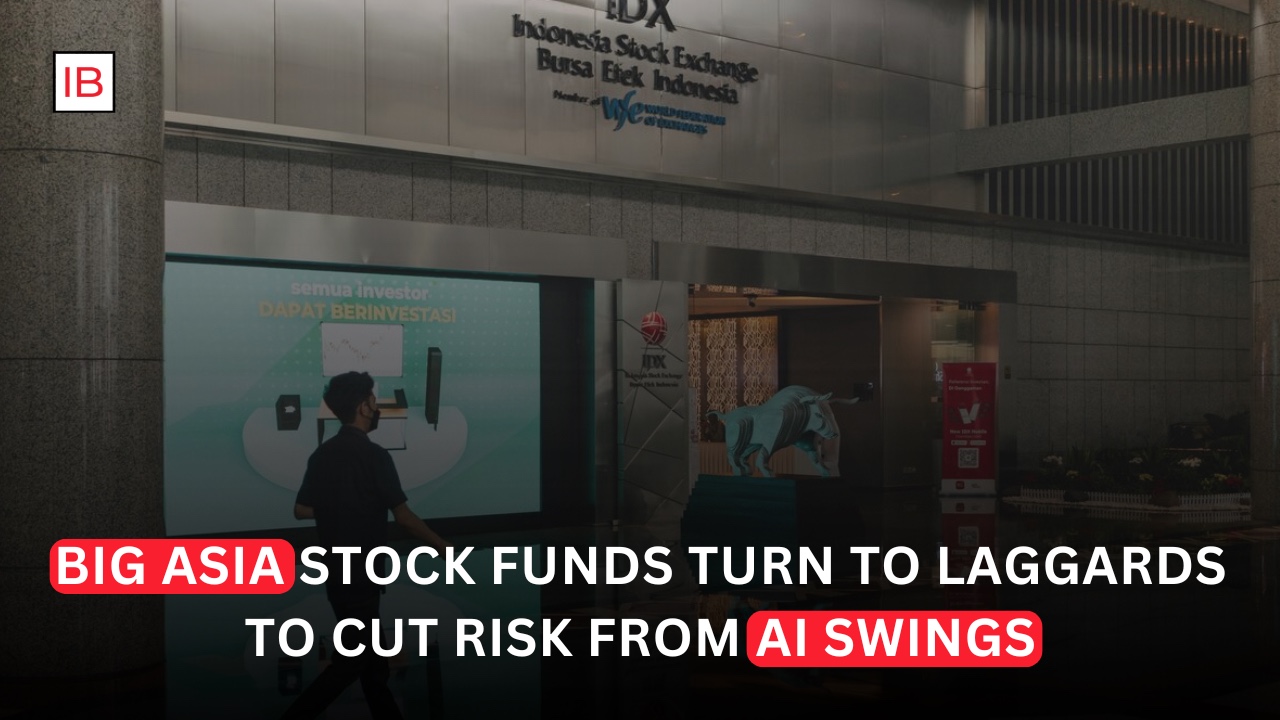
Fund Managers Rotate Into Undervalued Markets as Volatility in Artificial Intelligence Stocks Increases
Some of Asia’s largest investment funds are reducing their exposure to high-flying artificial intelligence stocks and shifting capital into previously underperforming companies and markets, reflecting growing concerns about volatility after an extended AI-driven rally. Investors are increasingly buying shares of Indonesian banks, Chinese internet companies, and Indian technology firms while trimming positions in semiconductor and AI-related stocks that have dominated market gains over the past year.
The rotation signals a broader change in investment strategy rather than a rejection of artificial intelligence. Fund managers continue to believe AI will remain a powerful long-term growth theme, but many are seeking greater diversification after technology-heavy portfolios experienced sharp price swings in recent weeks.
Investors Lock In Profits
AI-related companies, particularly semiconductor manufacturers in South Korea and Taiwan, have delivered exceptional returns over the past year. However, their rapid gains have also pushed valuations higher, increasing concerns that even strong companies could experience significant corrections.
As a result, many institutional investors are:
- Taking profits from AI leaders.
- Increasing exposure to undervalued markets.
- Expanding investments across multiple sectors.
- Reducing portfolio concentration.
- Improving overall risk management.
Portfolio managers emphasize that the move reflects prudent risk control rather than declining confidence in artificial intelligence.
Indonesia Attracts Fresh Interest
One of the biggest beneficiaries of the rotation has been Indonesia.
After becoming Asia’s weakest-performing major equity market earlier in 2026, Indonesian stocks have begun attracting renewed investor interest because of their relatively low valuations and improving economic sentiment.
Fund managers have increased exposure to:
- Major Indonesian banks.
- Consumer goods companies.
- Commodity producers.
- Infrastructure businesses.
Analysts say Indonesia now offers attractive opportunities after months of heavy selling, particularly as concerns surrounding fiscal policy have eased and investor confidence gradually improves.
Chinese Internet Stocks Recover
Chinese technology companies have also attracted renewed buying.
Large internet platforms, many of which significantly underperformed during previous regulatory crackdowns, are now being viewed as relatively inexpensive compared with AI-focused semiconductor companies.
Investors believe some Chinese technology firms may benefit from:
- Improving domestic consumption.
- AI adoption.
- Stable earnings growth.
- Lower valuations.
This has encouraged selective investment into sectors that had previously been overlooked while enthusiasm remained concentrated around AI hardware producers.
AI Remains a Long-Term Theme
Despite reducing exposure to some AI leaders, fund managers are not abandoning artificial intelligence.
Industry analysts continue expecting AI to drive long-term growth across:
- Cloud computing.
- Data centers.
- Software.
- Semiconductors.
- Enterprise technology.
However, investors increasingly distinguish between long-term opportunities and short-term market valuations.
Rather than concentrating portfolios heavily in a handful of semiconductor companies, many institutions now prefer broader exposure across industries expected to benefit from AI adoption over time.
Managing Concentration Risk
One concern among institutional investors is that portfolios became overly dependent on a small group of technology stocks.
Heavy exposure to companies producing AI chips and memory created strong returns but also increased vulnerability whenever market sentiment shifted.
Recent market volatility demonstrated how quickly technology shares can fluctuate, encouraging many funds to rebalance holdings before upcoming corporate earnings reports.
Diversification has therefore become a larger priority than maximizing exposure to a single investment theme.
Market Rotation Rather Than Market Exit
Analysts stress that current trading reflects sector rotation rather than broad market weakness.
Money leaving AI-related investments is often flowing into:
- Financial companies.
- Consumer businesses.
- Industrial firms.
- Emerging markets.
- Previously underperforming technology stocks.
This rotation allows investors to maintain equity exposure while reducing dependence on sectors experiencing elevated volatility.
Looking Ahead
Asia’s largest investment funds appear to be entering a more balanced phase after months of AI-driven market leadership. While artificial intelligence continues to dominate long-term investment strategies, professional investors are becoming increasingly disciplined about portfolio concentration and valuation risk. The recent shift toward Indonesian equities, Chinese internet companies, and other lagging sectors reflects an effort to preserve gains while positioning portfolios for a broader market recovery.
Going forward, artificial intelligence is expected to remain one of the defining investment themes of the decade. However, recent market movements suggest that investors are no longer willing to rely exclusively on AI-related stocks for returns. Instead, many are combining exposure to high-growth technology with undervalued companies that offer greater diversification and potentially lower downside risk. If AI-related volatility continues, this broader investment approach could become increasingly common across global equity markets.