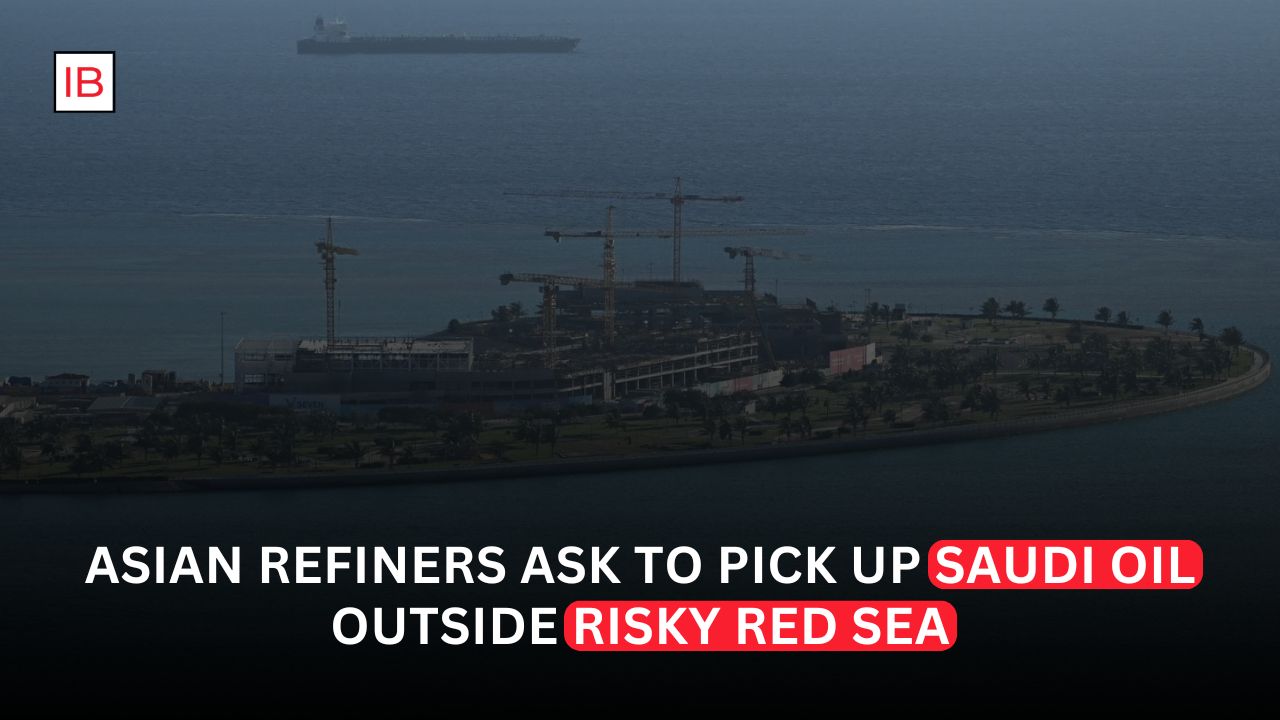
Asian refiners are asking Saudi Arabia to find ways to deliver crude without sending tankers through the increasingly dangerous Red Sea, highlighting how the Iran war is reshaping the global oil trade.
The requests come as attacks linked to Yemen’s Houthis have made the Red Sea increasingly difficult for commercial shipping. At the same time, the Strait of Hormuz remains severely disrupted, leaving Asian refiners facing a supply-chain problem on two major routes.
Saudi Oil Has Become Harder to Move
Saudi Arabia is one of Asia’s most important crude suppliers, but getting that oil to customers has become increasingly complicated.
Saudi Aramco has been handling some September crude allocations to Asian customers on an ad hoc basis because buyers are uncertain whether vessels will be available to load and safely transport the contracted volumes. Some Chinese buyers had not received firm September allocations, while an Indian refiner received its full allocation but still faced uncertainty over whether the cargo could actually be lifted.
That distinction is crucial.
A refinery can have a contractual right to Saudi crude and still struggle to physically receive it.
The Red Sea Was Supposed to Be the Alternative
With Hormuz heavily disrupted, Saudi Arabia has been trying to move more crude through alternative routes.
One important option is to transport oil through the kingdom’s East-West pipeline to Yanbu on the Red Sea, then load tankers there for customers in Asia.
Another option is to move crude north through the Suez Canal and Egypt’s SUMED pipeline, with cargoes loaded at Sidi Kerir on the Mediterranean.
Sidi Kerir has already seen a sharp increase in crude loadings, with Saudi oil accounting for most of the additional volumes.
But there is a problem:
The alternative route isn’t necessarily safe either.
Houthis Have Opened a New Front
The Houthis declared a maritime embargo against Saudi Arabia in July and have claimed attacks against Saudi-linked tankers and energy infrastructure.
That has encouraged shipowners to avoid the Red Sea and particularly the Bab al-Mandeb chokepoint.
Some Saudi crude shipments from Yanbu are now being conducted with vessels switching off their tracking systems, creating so-called “dark voyages.” That makes it harder for traders, governments and international agencies to determine exactly how much oil is moving.
The uncertainty itself has economic consequences.
Asian Refiners Don’t Just Want More Oil
They want reliable delivery.
For a refinery, securing crude isn’t enough. It needs to know:
- Where the cargo will load
- Which route the tanker will take
- How much freight will cost
- Whether insurance will cover the voyage
- When the crude will arrive
- Whether the route will remain open
That is why Asian refiners are pushing Saudi Arabia to consider delivery arrangements that reduce their exposure to dangerous maritime routes.
The negotiations could therefore change not just volumes, but the traditional structure of Saudi crude contracts.
The Cost of Avoiding the Red Sea
Rerouting Saudi crude around Africa is possible, but it adds substantial sailing distance.
Longer voyages mean:
Higher freight costs
More tanker days
Greater working-capital requirements
Higher insurance premiums
Longer delivery times
Those costs ultimately feed into the price refiners pay for crude.
Asian refiners therefore have an incentive to negotiate more flexible terms with Saudi Arabia rather than simply accepting the existing delivery arrangements.
Saudi Arabia Has Already Been Forced to Adapt
Saudi Aramco’s traditional system depends heavily on customers arranging their own shipping after receiving monthly crude allocations.
The current crisis is disrupting that model.
The company has already been offering alternative cargoes and adjusting its approach to customers as shipping risks increase.
That gives Asian refiners more bargaining power.
If Saudi Arabia wants to maintain its market share in Asia, it may have to absorb some of the additional logistical burden.
Asia Is Already Looking Beyond the Gulf
The disruption is accelerating a broader diversification effort.
Asian refiners have recently increased purchases of US crude and other non-Middle Eastern supplies.
South Korean, Japanese and Taiwanese refiners have bought US grades including Mars and West Texas Intermediate, while Taiwan has also sourced crude from West Africa. US crude exports to Asia reached a record 2.35 million barrels per day in July, according to Kpler data cited by Reuters.
That is strategically important.
A temporary shipping crisis can create permanent changes in procurement behavior.
Saudi Arabia Risks Losing Some of Its Traditional Advantage
Saudi crude has historically benefited from its proximity to Asian refineries and long-established supply relationships.
But if shipping routes remain unreliable, refiners may become more comfortable sourcing from the US, West Africa, Latin America and other producers.
That could make competition for Asian demand more intense even after the current conflict ends.
ADNOC Is Already Showing What This Could Look Like
The UAE’s ADNOC has responded to the crisis by becoming more flexible in its crude marketing, including spot sales, new customers and alternative delivery arrangements.
Some Asian buyers are now looking for similar flexibility from Saudi Arabia, including the possibility of loading outside the Strait of Hormuz.
That could gradually change the balance of power between Gulf producers and Asian refiners.
The Bigger Picture
The key issue is no longer simply whether Saudi Arabia has enough oil.
It does.
The problem is how safely and economically that oil can reach Asia.
With Hormuz disrupted and the Red Sea increasingly dangerous, the world’s largest oil-consuming region is being forced to rethink how it secures crude.
That means the current crisis could leave a lasting mark on global oil trade.
Asian refiners are no longer just buying Saudi crude. They are increasingly negotiating for a safer way to receive it.
And if those demands lead to more flexible contracts, alternative loading points and diversified suppliers, the geopolitical map of the Asian oil market could look very different even after the war ends.