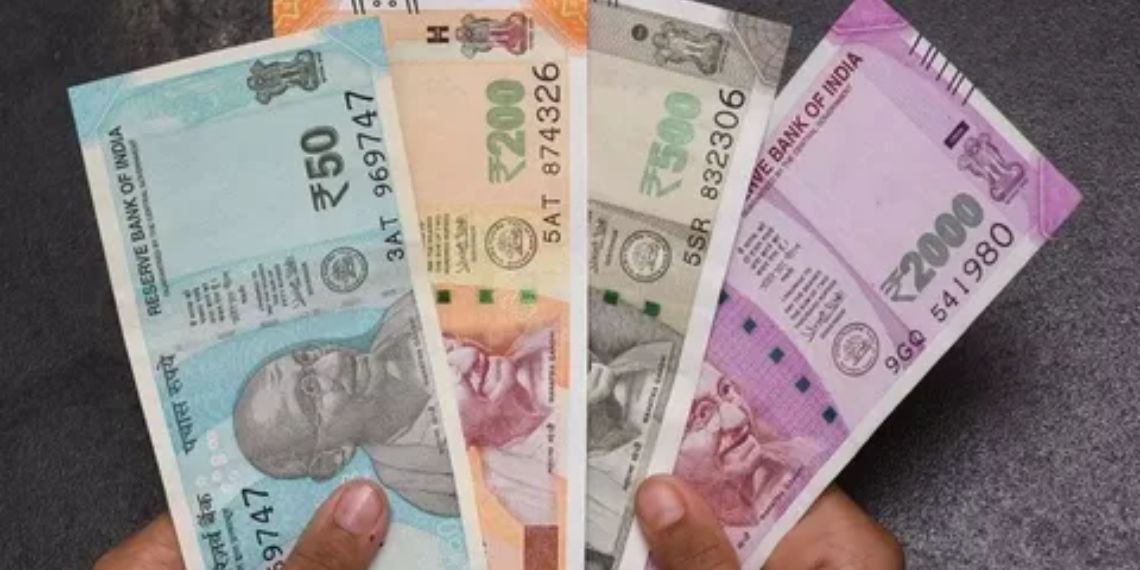
The Indian rupee took a hit on Thursday, driven by corporate withdrawals and significant dollar purchases by oil corporations. This drop brought the rupee close to its record low, raising concerns and curiosity about its causes and implications. In this article, we’ll delve into the factors behind this decline, compare recent data, and analyze global trends influencing the rupee’s performance.
The Rupee’s Recent Decline
Corporate withdrawals and substantial dollar purchases by oil corporations played a pivotal role in the rupee’s recent depreciation. These activities increased the demand for the US dollar, putting downward pressure on the Indian currency. But why do these actions have such a significant impact on the rupee?
Impact of Corporate Withdrawals
When corporations withdraw large amounts of money from the Indian market, it reduces the supply of rupees available, causing its value to drop. This phenomenon is particularly evident when these withdrawals are converted into dollars, increasing demand for the US currency and thus depreciating the rupee.
Role of Dollar Purchases by Oil Corporations
Oil corporations in India often need to purchase dollars to pay for their imports. Given the country’s heavy reliance on oil imports, any significant purchase of dollars by these corporations can lead to a substantial impact on the rupee’s value. This was a major factor contributing to the rupee’s drop on Thursday.
Comparison with Historical Data
To understand the significance of the rupee’s recent performance, let’s look at some historical data. On June 20, the rupee reached its lowest point ever at 83.6650 against the US dollar. In contrast, Thursday’s closing rate was 83.6500, slightly better but still concerning.
Rupee’s Performance on June 20
On June 20, the rupee’s value plummeted to an all-time low. This historical context helps us grasp the severity of its recent decline. Despite not hitting the lowest point, the rupee’s current trend indicates a potential for further depreciation if underlying factors persist.
Analysis of Recent USDINR Closing Rates
Thursday’s closing rate of 83.6500 against the US dollar was down from the previous session’s 83.5825. This consistent decline showcases the rupee’s vulnerability in the current economic climate, driven by both internal and external factors.
Global Currency Trends
The rupee’s decline cannot be analyzed in isolation. Global currency trends, particularly involving the US dollar and bond rates, have a significant impact
on the rupee’s performance. In the recent session, the dollar index fell to a four-month low of 103.6, which should typically support a stronger rupee. However, the opposite occurred.
US Dollar and Bond Rates Decline
The decline in US dollar and bond rates is attributed to growing expectations of a rate decrease by the Federal Reserve. This scenario generally weakens the US dollar against other currencies, giving Asian currencies some respite. Yet, the Indian rupee did not benefit from this trend due to its unique internal pressures.
Impact on Asian Currencies
Other Asian currencies have experienced declines this year, ranging from 1.5% to 5% against the US dollar. Comparatively, the Indian rupee’s decline has been relatively modest at 0.5%. This suggests that while the rupee is not immune to global trends, it is also influenced by specific domestic factors.
Federal Reserve’s Influence
The Federal Reserve’s monetary policies have far-reaching impacts on global currencies. The prospects of a rate decrease by the Fed have created a ripple effect across markets.
Prospects of a Federal Reserve Rate Decrease
Interest rate futures indicate a strong likelihood of the Federal Reserve implementing rate cuts, starting as early as September. These expectations have already begun to affect market dynamics, including the value of the US dollar.
Interest Rate Futures and Market Predictions
Market predictions based on interest rate futures suggest that there will be two-and-a-half rate decreases this year. This anticipated easing of monetary policy by the Fed has led to speculation and adjustments in currency valuations globally.
Rupee vs. Asian Counterparts
In the broader context of Asian currencies, the rupee’s performance has been relatively strong. However, this outperformance may be short-lived.
Comparative Performance of Asian Currencies
Compared to other Asian currencies, the Indian rupee has shown resilience, declining less against the US dollar. Currencies like the Indonesian rupiah and the Malaysian ringgit have faced steeper declines.
Rupee’s Relative Stability
The rupee’s stability can be attributed to various factors, including the Reserve Bank of India’s (RBI) interventions and the country’s economic fundamentals. However, this stability is now being tested by increased dollar demand and corporate withdrawals.
Role of the Reserve Bank of India
The RBI plays a crucial role in managing the rupee’s value through various measures, including market interventions and policy adjustments.