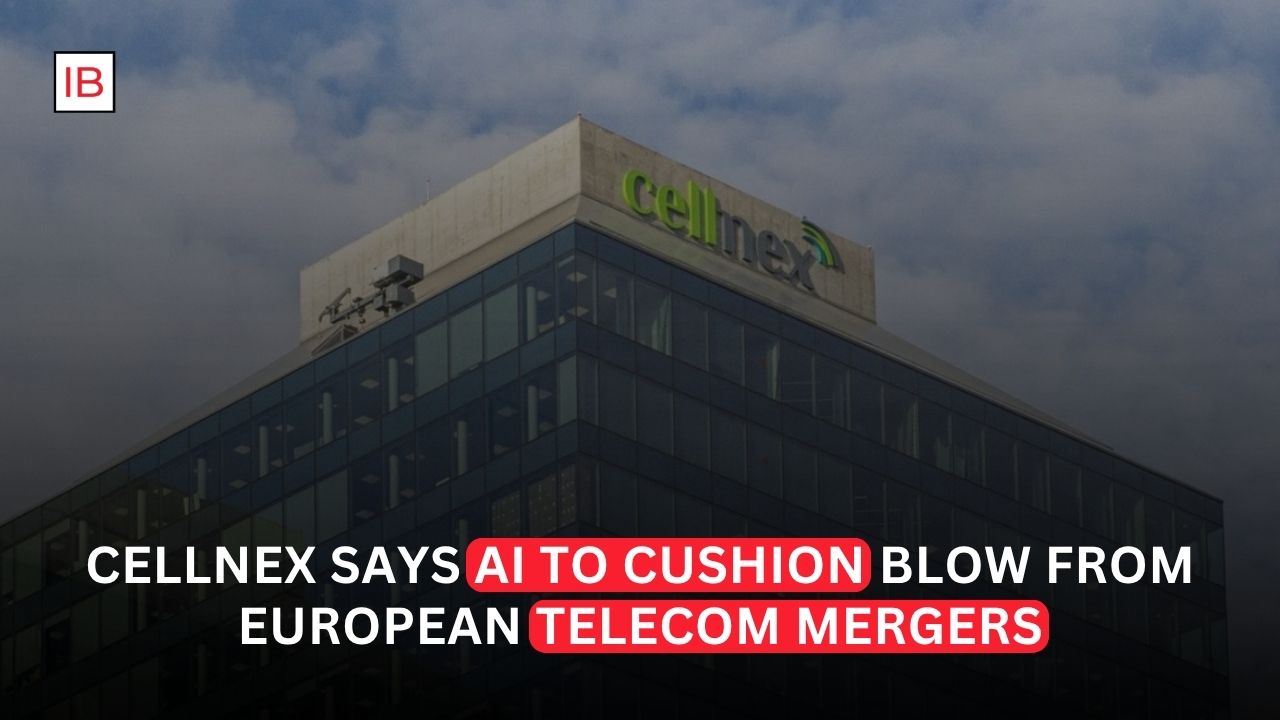
Cellnex Telecom is looking to artificial intelligence and the rapid expansion of digital infrastructure to offset potential pressure from a new wave of European telecom mergers.
The Barcelona based tower operator faces an important shift in its core markets as major telecommunications companies pursue consolidation. Fewer independent mobile operators could eventually mean fewer tenants on some infrastructure networks, creating concerns about future demand for tower sites. Cellnex, however, believes the growing need for AI driven connectivity and network capacity can provide a powerful counterbalance.
The company remains Europe’s largest independent tower operator, with more than 113,000 operating sites across 10 countries at the end of the second quarter of 2026.
European Telecom Consolidation Creates New Risks
Telecom mergers have become increasingly important across Europe as operators seek greater scale and lower costs.
In France, Orange, Iliad and Bouygues Telecom have been pursuing a potential acquisition of SFR, a transaction valued at about €20.35 billion. All four operators are customers of Cellnex, meaning any consolidation could eventually affect the number of tenants using its infrastructure and alter future investment patterns.
Similar consolidation trends are emerging in other European markets.
For tower companies, mergers can create a complicated situation. A combined telecom operator may need fewer duplicate sites because it can rationalize overlapping networks. That could reduce demand for new towers or result in equipment being removed from existing locations.
At the same time, larger operators may have greater financial capacity to invest in 5G, fiber, transport corridors and advanced digital services. Cellnex is therefore facing both a potential threat and an opportunity.
AI Could Increase Demand for Digital Infrastructure
Artificial intelligence is becoming one of the biggest drivers of investment in digital infrastructure.
AI applications require enormous amounts of computing power, data transmission and low latency connectivity. As businesses deploy AI services, networks must handle increasingly heavy traffic between users, cloud platforms and data centers.
That trend could support demand for infrastructure even if the number of traditional telecom customers declines.
Cellnex has already highlighted edge computing and AI inference as areas where future network infrastructure could become increasingly important. Its investor materials emphasize the relationship between higher service quality, AI enabled applications and the need for additional physical infrastructure.
The company is not positioning itself as a traditional data center developer, however. Management has previously said Cellnex does not intend to compete directly in large scale data center projects, where specialized operators have greater expertise and economies of scale.
Instead, the opportunity could lie closer to the network edge.
Cellnex Is Focusing on Its Core Strength
Cellnex has been reshaping its business strategy around its core telecommunications infrastructure operations.
The company has moved away from some noncore assets while emphasizing tower infrastructure, operational efficiency and organic growth. Its strategy is designed to make its existing portfolio more productive while limiting exposure to capital intensive businesses outside its main expertise.
That approach could prove important as AI investment accelerates.
Rather than building massive data center campuses, Cellnex can potentially benefit from the infrastructure connecting those facilities with users and mobile networks.
Its existing tower portfolio provides a significant platform for that strategy.
Strong Financial Performance Provides Flexibility
Cellnex entered the second half of 2026 with improving financial performance.
The company reported €1.994 billion in revenue for the first half of the year. Organic revenue increased 5%, while adjusted EBITDA rose 6.4% and EBITDAaL increased 7.7%. Free cash flow reached €301 million, compared with just €19 million in the same period a year earlier.
The towers business remained the company’s largest growth engine, generating €1.625 billion in revenue and recording 5.2% organic growth.
Those results give Cellnex greater room to invest in technology, improve its infrastructure and return capital to shareholders while European telecom markets undergo structural changes.
The company has also announced an additional €200 million share buyback for 2026, bringing its planned shareholder remuneration for the year to approximately €1 billion.
A Large Pipeline Still Supports Growth
Despite concerns over mergers, Cellnex has a substantial pipeline of future infrastructure projects.
At the end of the second quarter, the company had thousands of build to suit sites planned for completion through 2030. Its portfolio is expected to continue expanding as mobile operators invest in network capacity and coverage.
France remains particularly significant, with long term agreements covering thousands of sites and substantial investment in fiber and edge computing infrastructure.
This means the effects of telecom consolidation are unlikely to be immediate. Existing contracts, new network requirements and growing data consumption can continue supporting Cellnex even as the competitive landscape changes.
AI May Become a New Growth Layer
The bigger question for investors is whether AI can generate enough incremental infrastructure demand to compensate for potential tower rationalization caused by telecom mergers.
The answer will depend on how quickly AI applications become embedded in everyday digital services and how much network capacity they require.
Europe is already investing heavily to expand AI computing infrastructure. The European Union recently awarded a €387.8 million contract for a new AI focused supercomputer in Finland, reflecting the broader push to build additional computing capacity across the region.
As computing capacity expands, the supporting communications infrastructure will also become increasingly important.
Cellnex Faces a Changing European Market
European telecom consolidation presents a genuine challenge for Cellnex, but it does not necessarily undermine the long term tower investment story.
The company has a large existing portfolio, long term customer relationships and a growing pipeline of infrastructure projects. Meanwhile, AI, cloud computing and rising data consumption are creating new demands on digital networks.
Cellnex’s strategy is therefore shifting from simply adding towers toward maximizing the value of a broader digital infrastructure platform.
If AI driven traffic growth accelerates as expected, the technology boom could help compensate for some of the pressure created by telecom mergers.
For investors, the key issue will be whether new sources of network demand can grow faster than consolidation reduces the number of traditional telecom tenants. Cellnex’s financial results suggest the company currently has the resources to navigate that transition.
The European telecom industry is becoming more concentrated, but the amount of data moving through its networks is still expanding rapidly. That imbalance could ultimately give Cellnex a new source of growth.