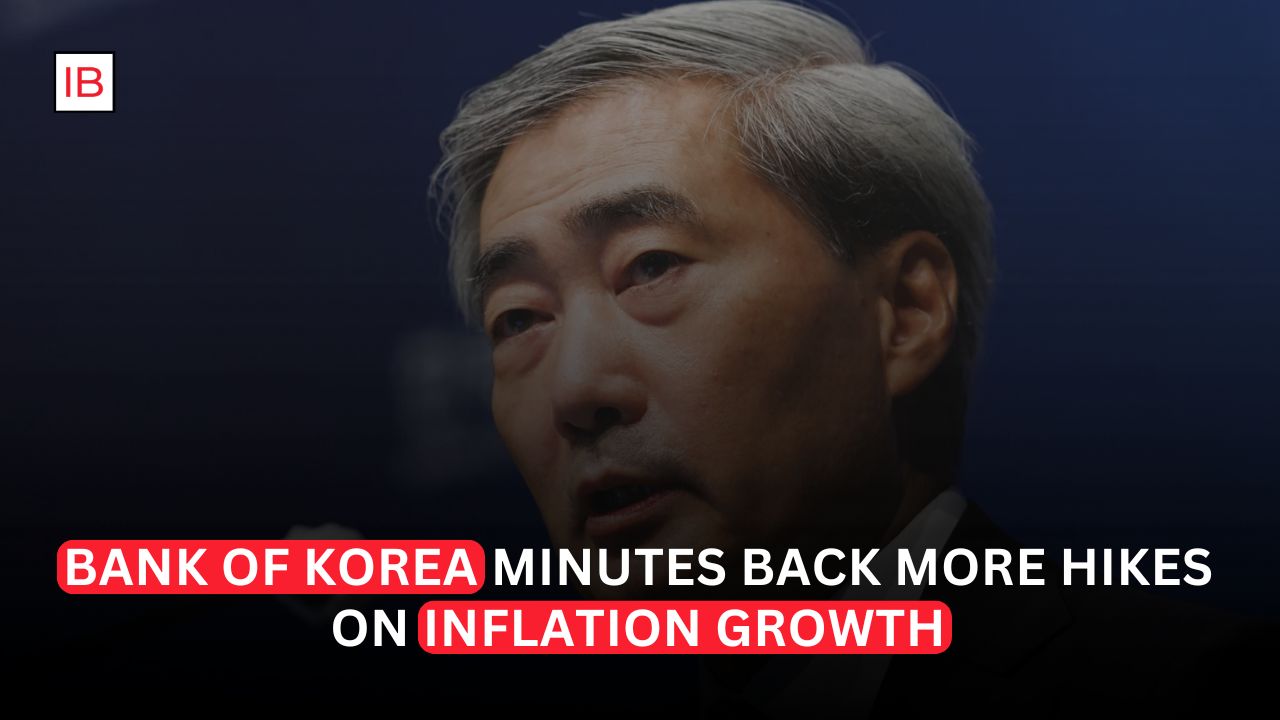
Bank of Korea board members signaled they are prepared to raise interest rates further to tame inflation, with minutes released Tuesday showing at least one policymaker explicitly arguing that July’s rate increase alone would not be enough to bring inflation back to target.
What the Minutes Revealed
The Bank of Korea’s seven-member monetary policy board voted unanimously to raise interest rates at its July 16 meeting, marking the central bank’s first hike in three and a half years. According to the minutes published Tuesday, board members said they would carefully determine the timing and pace of any further tightening, with some suggesting the case for preemptive action. One board member assessed that the July increase alone was unlikely to be sufficient to bring inflation back to target, arguing the base rate would need to rise further in line with the bank’s projected paths for growth and inflation.
Board members pointed to several factors warranting close monitoring, including upside inflation pressure from both cost and demand sides, continued improvement in economic activity, foreign exchange rate movements, and household debt levels.
A Rate Hike Driven by Unusual Strength
The July increase, which lifted the base rate by 25 basis points to 2.75%, came against a backdrop of remarkably strong economic data for Asia’s fourth-largest economy. South Korea’s first-quarter GDP growth reached 3.8%, the strongest performance since the fourth quarter of 2021, prompting the government to sharply raise its full-year 2026 growth forecast to 3% from an earlier 2% projection. June exports surged 71% year-over-year, with export volumes exceeding $100 billion for the first time in the country’s history. Governor Shin Hyun-song has repeatedly pointed to the AI boom, and the surging semiconductor exports that have accompanied it, as the primary driver behind the stronger growth outlook, while acknowledging that same boom has exacerbated inflationary stickiness.
Inflation Cools, But Not Enough to Settle the Debate
South Korea’s consumer price index rose 2.8% year-over-year in July, easing from 3.2% in June and marking a three-month low, according to data released by Statistics Korea. The reading came in below market expectations, driven primarily by falling oil prices. Even so, analysts remain divided over whether the cooling trend will be enough to keep the central bank on hold at its next meeting on August 27. Ahn Jae-kyun, an analyst at Korea Investment Securities, maintained his forecast for another rate hike this month, noting that while the effect isn’t yet clearly visible in the data, there are emerging signs of demand-push inflation building beneath the surface, adding that with inflation already running near 3%, the central bank has room to act preemptively rather than waiting for price pressures to become undeniable.
Markets Split on the August Decision
Views across major securities firms remain notably split on the timing of the next move. Hanwha Investment & Securities has called additional tightening this year a near certainty, forecasting hikes in both October and January, while analysts at NH Investment & Securities and KB Securities have argued that demand-side inflationary pressure and second-round effects from elevated oil prices have not yet clearly materialized, suggesting the central bank may prefer to wait until October rather than hike in consecutive meetings. A KB Securities fixed-income analyst noted that slowing wage growth and a recent strengthening of the South Korean won could give the bank room to skip a back-to-back hike at its August meeting specifically.
The Bank of Korea’s Balancing Act
Governor Shin has been unusually direct in flagging the specific data points the central bank will be watching most closely, telling reporters that second-quarter GDP figures and July inflation data would serve as the key indicators shaping the coming decision. Analysts have credited that clarity with helping reduce market uncertainty around the policy path, even as the central bank continues signaling that back-to-back hikes remain firmly on the table depending on how incoming data evolves. The bank has also separately flagged that August inflation is likely to rebound compared with July, reflecting a base effect tied to large telecom fee discounts that had temporarily suppressed prices a year earlier.
What Comes Next
With most economists still expecting at least one additional rate hike before the end of 2026, potentially pushing the policy rate toward 3% or higher, the Bank of Korea faces the challenge of continuing to tame inflation without unnecessarily choking off the investment vitality currently fueling the country’s AI and semiconductor-driven growth boom. How the central bank weighs July’s cooler-than-expected inflation reading against persistent underlying demand pressures will likely determine whether policymakers opt for another hike at the August 27 meeting or wait until later in the year to resume tightening.